Arizona’s Budget Plan on the Brink of Approval
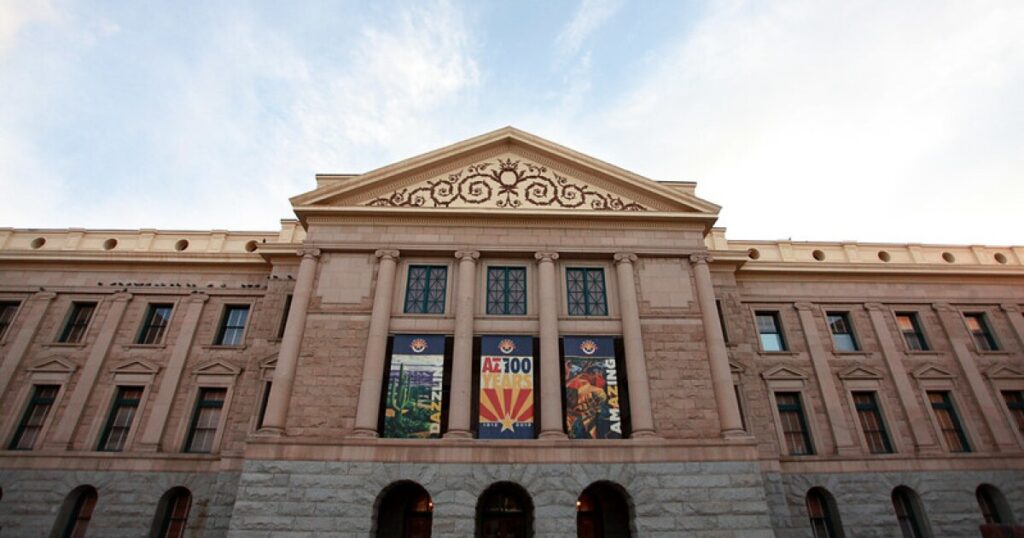
In a significant development in Arizona’s budgetary process, state legislators are nearing a consensus on a $17.6 billion budget proposal. A major breakthrough was achieved when the Senate incorporated additional spending priorities from House Republicans into their plan.
Senate President Warren Petersen, representing Gilbert, highlighted that these additions would not alter the overall financial framework. The Senate’s budget already allocated $90 million for the House’s requests. However, certain legislative changes proposed by the House, such as limiting Attorney General Kris Mayes’ abilities in political cases, reducing university tuition without compensating state funds, and freezing Family Court judges’ salaries, will not be in the final budget.
Petersen emphasized that only those policy modifications approved by the governor will be included in the budget set for a Senate vote on Thursday.
This upcoming budget, although $300 million higher than the House’s version, remains contentious. Some Republicans, like Rep. Justin Olson from Mesa, are advocating for further cuts amounting to $108 million.
Rep. David Livingston, who leads the House Appropriations Committee, is optimistic about the Senate’s more costly plan passing, provided it includes the House’s desired items.
The state Senate’s proposed budget for the new fiscal year significantly exceeds the House’s version by $300 million.
Additional Legislative Challenges
Beyond the budget, lawmakers face decisions on several critical issues, including a proposal to redirect sales tax revenue for renovations at Chase Field, home of the Arizona Diamondbacks. The stadium, owned by Maricopa County, reportedly requires urgent repairs, sparking debate over funding responsibility.
Discussions also continue on whether to extend Proposition 123, which channels over $300 million annually to K-12 schools from a state land trust but is set to expire this year. An extension is broadly supported but complicated by demands for constitutional amendments on school vouchers.
Another contentious issue is legislation allowing developers to purchase water rights from farmers to satisfy legal requirements for housing projects.
‘We have a lot of good things in there for members’
The budget remains the most pressing issue, as failure to approve a plan by month’s end could halt state spending, affecting numerous non-essential services. Sen. John Kavanagh, chair of the Senate Appropriations Committee, noted the intent to collaborate with the Democratic governor, given the GOP’s lack of a two-thirds majority to override a veto.
Kavanagh also mentioned that negotiations began relatively late, encouraging sincere discussions over posturing. The House initially proposed a more conservative budget, but Rep. Livingston expressed satisfaction with the current package, suggesting it might gain substantial support.
“We have a lot of good things in there for members,” Livingston remarked.
Senate President Petersen underscored the bipartisan nature of the budget, focusing on public safety, education, transportation, business protection, and maintaining a balanced budget without raising taxes.
Opposition remains, including from Sen. Sally Ann Gonzales, who criticized the $24.7 million allocation for the Gang and Immigration Intelligence Team Enforcement Mission (GITEM), citing concerns over racial profiling and lack of transparency.
“If you vote for this budget, you are voting against the very people who elected you,” Gonzales warned her Democratic colleagues. Other Democrats have also raised alarms over the absence of new funding for affordable housing and insufficient support for K-12 education.
—
Read More Arizona News