The next chancellor at the University of Michigan-Dearborn will helm an institution flourishing on two fronts: expanding research and innovative learning, while honoring deep-rooted community ties. Established in 1959, UM-Dearborn was founded with support from Ford Motor Co., initially focusing on automotive skills like industrial and mechanical engineering and business administration.
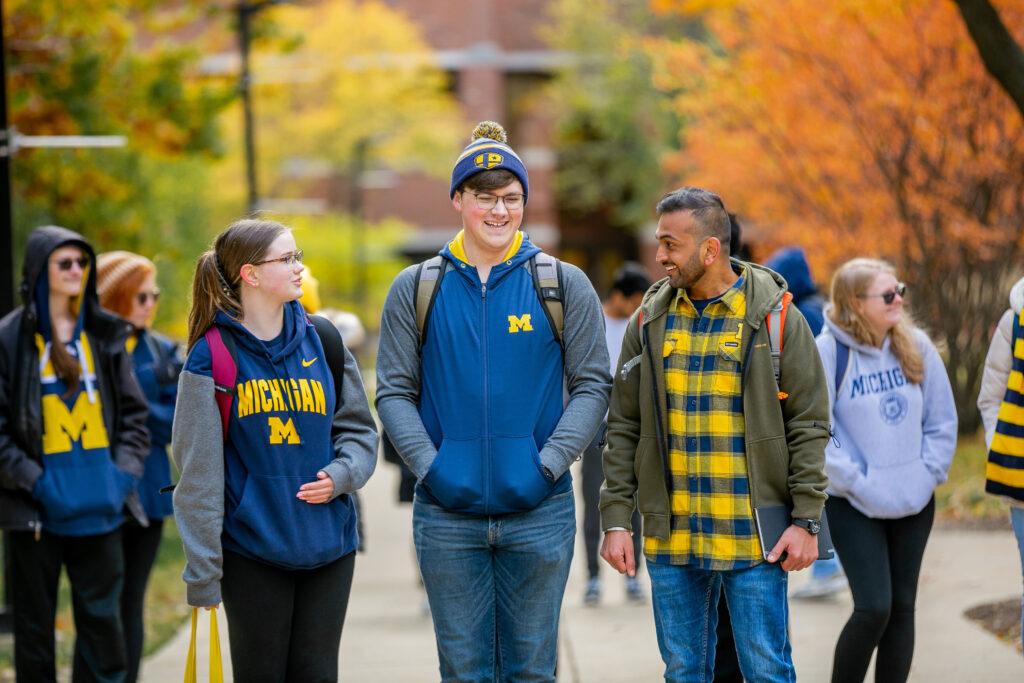
Sixty-six years later, the university offers 97 degrees from undergraduate to doctoral programs, maintaining a student body reflective of Michigan:
- 94% of students are Michigan residents from 47 counties.
- 44% are first-generation college students.
- 53% qualify for Pell Grants.
As Michigan’s only fully commuter public university, UM-Dearborn serves over 8,000 students, operating independently from Ann Arbor and Flint with its own priorities and accreditations.

A learning, research hub
U.S. News & World Report ranks UM-Dearborn as the top regional public university in Michigan and third in the Midwest. The 2026 rankings show UM-Dearborn rising to 14th in Midwest regional universities, marking its 23rd consecutive year as a regional leader. Faculty excellence is evident as they increasingly secure large grants from agencies like the National Science Foundation and National Institutes of Health. Total research awards reached $12.4 million in FY ’25, and research spending grew by 16% from the previous year to $13.8 million.
This growth earned UM-Dearborn a “Research 2 (R2)” designation by the Carnegie Foundation and American Council on Education, one of only five Michigan schools with this status. “As a regional public university, the University of Michigan-Dearborn emphasizes practical research, often driven by collaboration with industry and community partners,” said Armen Zakarian, interim dean of the College of Engineering and Computer Sciences. “This designation will bolster our efforts to continue to grow that enterprise, with direct benefits for the people of southeast Michigan and our state, as well as nationally and internationally.”

Tailored student support, results
UM-Dearborn’s curriculum centers on practice-based learning, integrating hands-on and collaborative methods. This approach ensures graduates are workforce-ready, with over 95% of alumni working in Michigan. Affordable college education is a key focus; the Dept. of Education College Scorecard lists UM-Dearborn as having the lowest average cost among Michigan’s public universities.
UM-Dearborn was named a top-tier “Opportunity University” by the Carnegie Foundation for its access and earnings for students from lower socioeconomic backgrounds. The university supports students balancing work, family, and economic challenges through programs like mentorship, mental health services, and basic needs assistance. The university ensures 35% of full-time in-state undergraduates have tuition covered by scholarships, and eligible students benefit from the Go Blue Guarantee for free tuition.
Proactive learning strategies contribute to a six-year graduation rate of 60%, the highest in UM-Dearborn’s history.

Looking to the future
The University of Michigan’s Look to Michigan initiatives aim to redefine public higher education’s role. UM-Dearborn’s GoBLUEprint for Success aligns with this vision, focusing on:
Student Experience and Success
Promotes a supportive environment in academics and personal life.
Holistic Excellence
Fosters a culture of belonging and inclusion.
Faculty and Staff Distinction
Invests in attracting and retaining top talent.
Economic Sustainability
Ensures financial stability through sustainable practices and diverse revenue sources.
—
Read More Michigan News