The University of Michigan has made significant strides in its sustainability and carbon neutrality efforts, as detailed in the latest Campus Sustainability and Carbon Neutrality Update. Released by the Office of the Associate Vice President for Campus Sustainability, the report outlines progress in renewable energy, campus energy systems, building efficiency, transportation, and waste reduction. It also highlights the university’s commitment to addressing indirect (Scope 3) emissions alongside its expanding facilities, research, and academic activities.
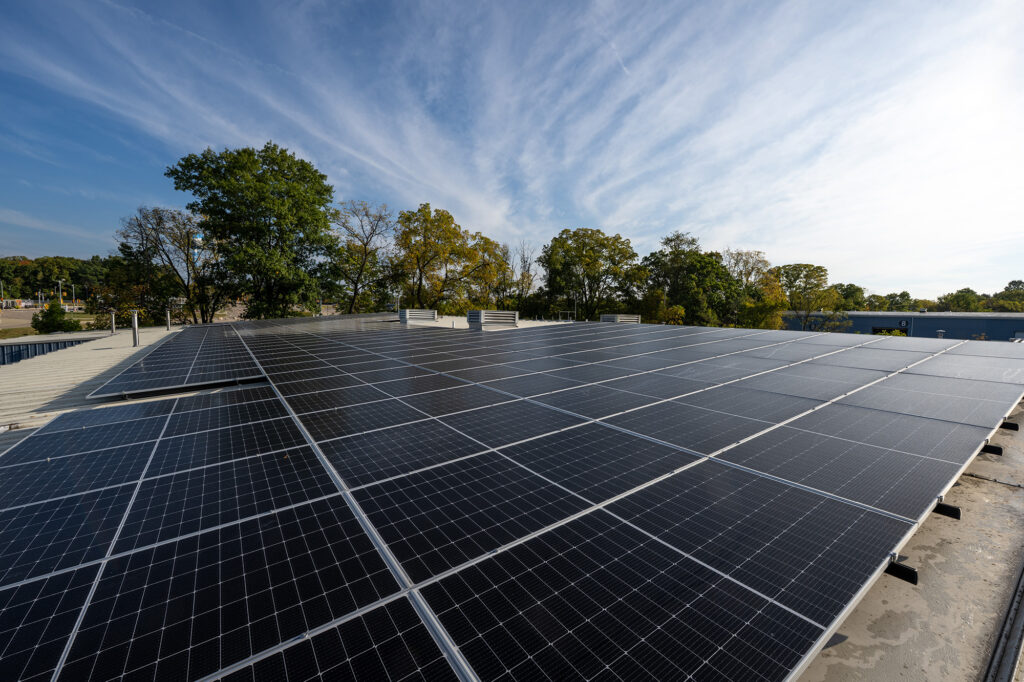
The update emphasizes advancements such as the Maize Rays solar initiative, aimed at achieving net-zero emissions from purchased electricity by 2027. U-M is working towards 25 megawatts of solar capacity across its campuses, including Michigan Medicine and Athletics. The first two solar arrays on North Campus are now operational, with plans to support local solar projects. The university is also expanding heat pump and geoexchange systems to reduce fossil fuel use, with new installations at key campus locations like the Leinweber Computer Science and Information Building.
Investments in energy efficiency include $1.1 million dedicated to campus upgrades, primarily in lighting and HVAC systems. These initiatives build on previous LED enhancements across 13 million square feet of space. The university’s low-carbon transportation efforts have grown with the addition of four battery-electric buses, totaling 12 in service, and the expansion of EV infrastructure to 230 charging stations.
Waste reduction has been enhanced through partnerships with research, event, and student life teams. Initiatives like the Lab Swap Shop have diverted significant amounts of waste, and the Zero Waste Program supported over 1,000 campus events. Compost infrastructure expanded to 1,300 bins, and new native landscapes were installed to support biodiversity.
The update also covers foundational work on Scope 3 emissions, with U-M collaborating with experts to improve data quality and tracking in areas like business travel and construction materials. A renewed partnership with Delta Airlines is part of efforts to reduce emissions from university-related air travel.
These initiatives align with U-M’s commitment to using the campus as a living-learning lab, integrating operational investments with research and educational opportunities. Looking to the future, the university plans to continue its solar and geoexchange projects, expand low-carbon transportation, and finalize Scope 3 goals.
MORE INFORMATION
—
Read More Michigan News