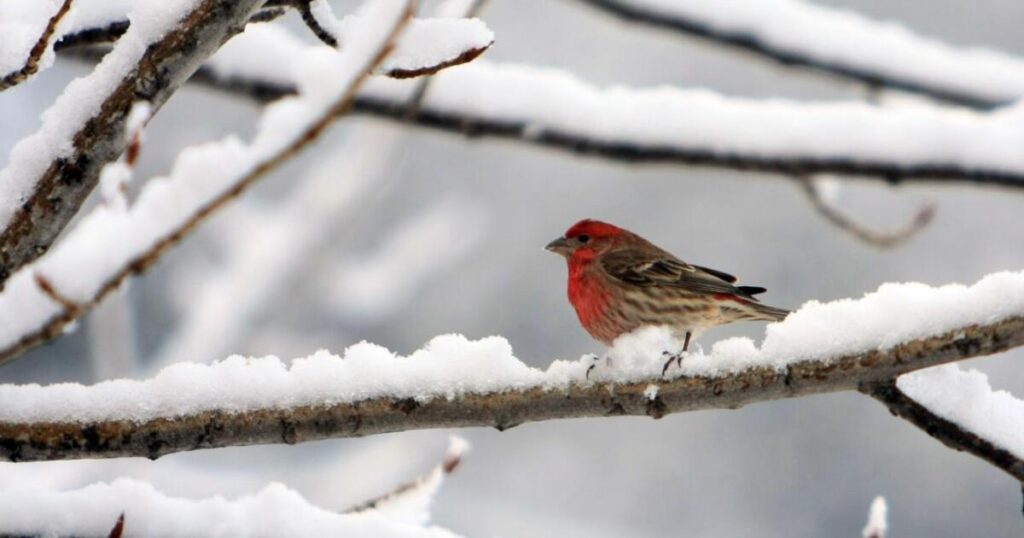
The Resilient Journey of House Finches Across America
House finches, with their distinctive brown-streaked feathers and robust beaks, are so prevalent that they often go unnoticed. Yet, their story is one of remarkable adaptability and survival.
Originating from the arid regions of the southwestern United States and Mexico, house finches were illegally captured and transported to pet stores in Boston and New York during the early 20th century. Marketed as “Hollywood Finches,” these birds found themselves far from home.
In 1939, a New York pet store was reported for selling these birds. To avoid penalties, the store staff released the finches, leading to the unexpected establishment of a wild population beginning in Central Park. Despite the initial release of only around forty birds, they thrived and expanded their range extensively by the 1950s, reaching as far as Quebec, the Florida Keys, and eventually across all U.S. states, including Alaska and Hawaii.
Characterized by their social nature, house finches are strict vegetarians. They even raise their young on a plant-based diet. The males’ plumage displays a vibrant array of colors—yellow, orange, red, or deep purple—depending on their diet’s pigment content.
A significant challenge arose in 1994 when house finches encountered a bacterial eye disease, initially from poultry. This illness, causing swollen eyes and respiratory issues, impaired their ability to forage and evade predators, resulting in millions of deaths. Despite these setbacks, house finches continue to battle for survival, with their immune systems striving to outpace new bacterial strains.
The ongoing saga of house finches is a testament to their enduring resilience and adaptability.
—
Read More Arizona News