The hidden depths of the Grand Canyon offer more than breathtaking vistas—they provide insights into the climate of the future. Beneath the surface, intricate cave formations reveal patterns of historical rainfall.
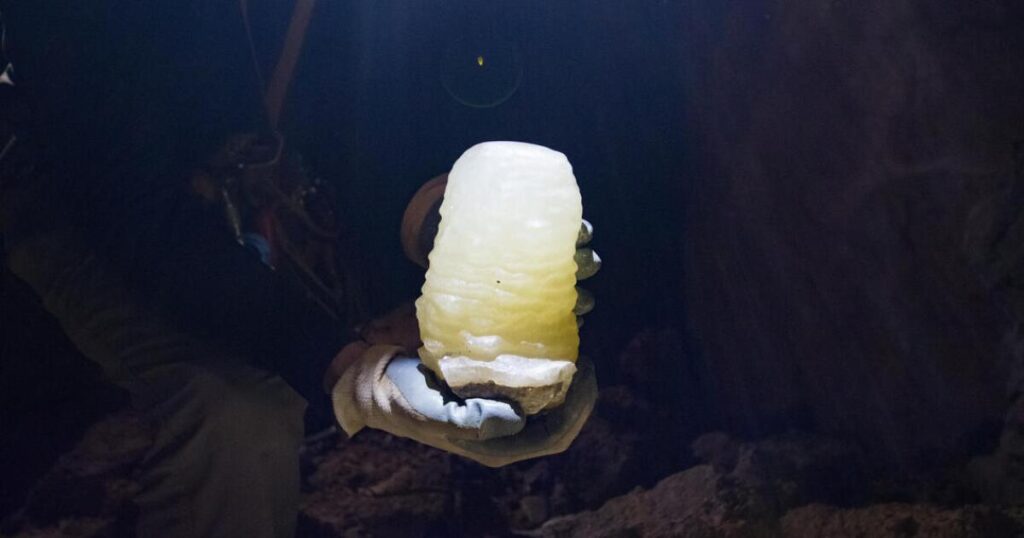
Over thousands of years, groundwater has seeped through the rock layers, dissolving calcium-rich minerals to form stalactites and stalagmites—structures that hold a layered record of precipitation much like tree rings.
These water-formed deposits contain oxygen molecules, which naturally occur in two isotopic forms: the lighter version and a heavier one with additional neutrons. The lighter isotope is more prone to evaporation in warmer conditions, allowing researchers to distinguish between seasonal rainfall over millennia.
In 2017, Matthew Lachniet, heading a research project at the University of Nevada Las Vegas, descended into a South Rim cave to extract a stalagmite for analysis. By examining both oxygen and uranium isotopes, his team determined the age and rainfall patterns recorded in the stalagmite’s layers.
The analysis indicated that during the rapid warming period following the last Ice Age, between 8,500 and 14,000 years ago, summer rains significantly contributed to groundwater replenishment—a phenomenon less common today, where winter snowmelt predominantly accounts for recharge.
These findings propose that ongoing climate change might increase summer rainfall and groundwater recharge in the Colorado Plateau. However, how this will interact with anticipated reductions in winter precipitation and snowpack, alongside heightened evaporation during warmer summers, remains uncertain.
This Earth Note was composed by Diane Hope and produced by KNAU in partnership with the Sustainable Communities Program at Northern Arizona University.
—
Read More Arizona News