In the heart of the arid Southwest, Ancestral Puebloans devised sophisticated water management strategies that were essential for their survival. Mastering the cycles of rainfall and natural water sources, they crafted sustainable systems to support their agriculture and daily life.
Among their key methods were the use of check dams and stone terraces strategically placed across washes and slopes. These structures not only slowed the runoff from summer rains but also reduced erosion, allowing water to infiltrate and enrich the soil. This moisture was crucial for growing staple crops like maize, beans, and squash.
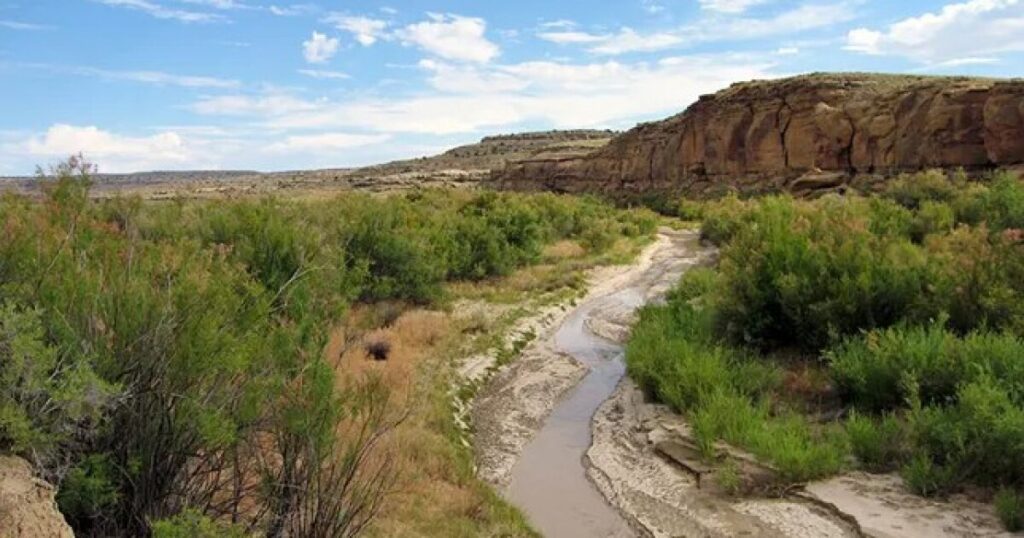
In locations such as Chaco Canyon, the Puebloan communities implemented diversion dams and canals to channel seasonal floodwaters into their fields, thereby extending their agricultural reach beyond the limits of natural precipitation.
Storage solutions were another remarkable innovation. The Ancestral Puebloans carved cisterns into the sandstone bedrock and constructed sandstone reservoirs to store rainwater. In sites like Mesa Verde, Colorado, and Bandelier, New Mexico, archaeologists have uncovered plastered tanks believed to minimize seepage and evaporation, securing water for dry periods. Additionally, multi-story pueblos featured catchment systems directing rainwater from rooftops into collection basins.
These water management practices were deeply rooted in a cultural ethos of balance and sustainability. The legacy of the Ancestral Puebloans continues to influence contemporary water management approaches in Pueblo communities today.
This Earth Note was written by Carrie Calisay Cannon and produced by KNAU and the Sustainable Communities Program at Northern Arizona University.
—
Read More Arizona News