Climate Change Threatens the Resilience of Iconic Saguaros
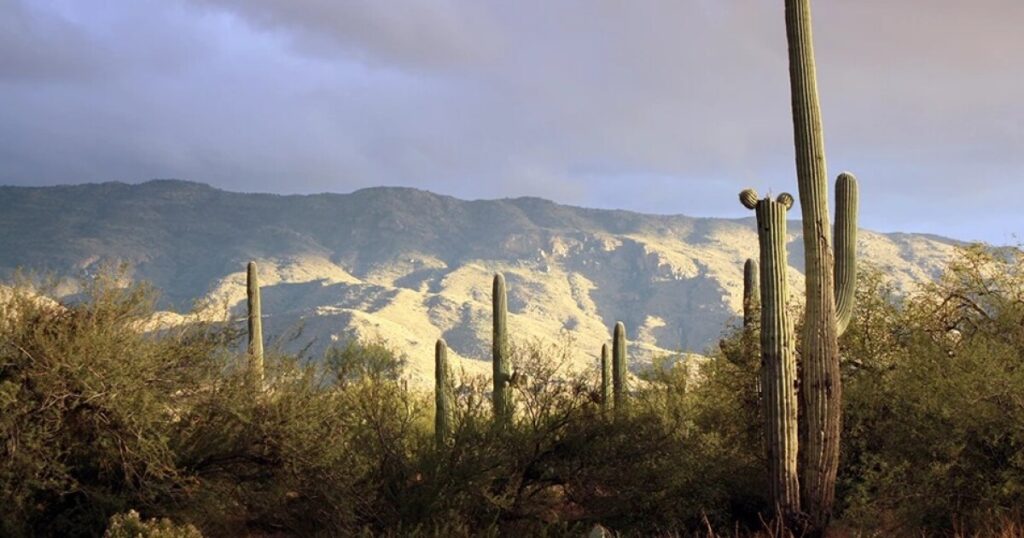
The towering saguaro cacti, emblematic of the American Southwest, are facing unprecedented challenges as climate change alters their environment. Stretching from Sonora, Mexico, to Kingman, Arizona, these cacti can be found up to elevations of nearly 5,000 feet. However, their survival is increasingly threatened by shifting climate patterns.
Recent years have seen extreme heat and drought take a toll on saguaros, particularly the older and larger specimens at lower elevations. Many have lost limbs or collapsed entirely under these harsh conditions. While saguaros can live for up to two centuries, they require specific weather patterns—adequate summer monsoon rains followed by wet winters—to thrive. Unfortunately, these conditions are becoming scarce.
One can assess a saguaro’s hydration status by its appearance. Well-hydrated saguaros boast green, rigid ribs that are well-separated. In contrast, if the ribs appear wiggly and the skin has a yellow or purplish hue, the cactus is likely suffering from water stress.
In an effort to understand the resilience of saguaros, researchers at the Desert Botanical Garden conduct monthly health surveys. Their focus is on determining how much heat these plants can withstand and their ability to absorb water during the brief but intense storms that are replacing the more frequent, smaller monsoon rains of the past.
Encouragingly, findings reveal that saguaros can quickly rehydrate from these intense bursts of rain, regaining their green and plump stature. This adaptability offers hope for the continued survival of these desert sentinels.
This report was authored by Diane Hope and produced by KNAU and the Sustainable Communities Program at Northern Arizona University.
—
Read More Arizona News