Measles Resurgence Threatens U.S. Status Amid Ongoing Outbreaks
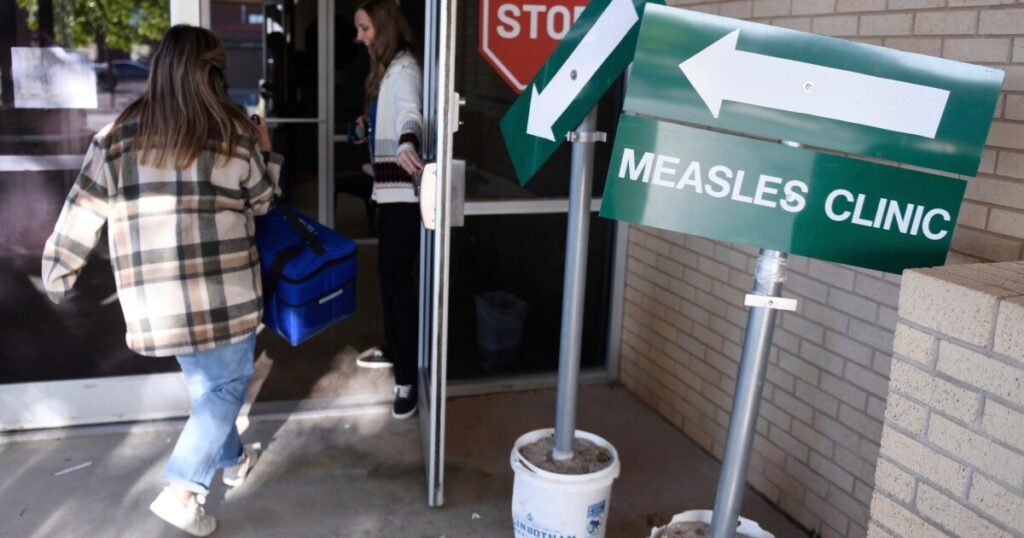
As the anniversary of a significant measles outbreak in West Texas approaches, health experts are on edge about the potential loss of the U.S.’s measles-free status. This follows a pattern seen in Canada, raising concerns about the virus regaining a stronghold.
The upcoming international meeting in April will determine if the U.S. retains its measles-free label, a status that could be affected by a persistent measles chain lasting over a year within the country.
Investigations are ongoing to trace connections between the Texas outbreak and other active cases in Utah, Arizona, and South Carolina, highlighting the broader measles issue in North America.
Dr. Jonathan Temte, involved in the original certification of the U.S. as measles-free in 2000, noted, “It is really a question of semantics.” He emphasized the critical role of vaccination in preventing such outbreaks.
In 2024, the Centers for Disease Control and Prevention recorded 2,242 cases across 44 states, the highest since 1991, spanning nearly 50 outbreaks. This reflects a troubling trend in vaccination rates due to factors like misinformation and reduced access to healthcare.
Under the previous administration, figures such as Health Secretary Robert F. Kennedy Jr. publicly cast doubt on vaccine safety, which compounded these challenges by defunding local vaccination initiatives.
“The most important thing that we can do is to make sure the people who aren’t vaccinated get vaccinated,” stressed Jennifer Nuzzo, director of Brown University’s Pandemic Center.
Despite no current evidence of an uninterrupted measles chain, the CDC is actively monitoring the situation. Dr. Ralph Abraham comments on the issue of vaccine hesitancy, stressing the personal freedom some communities exercise in choosing not to vaccinate.
In regions like Colorado City, Arizona, and Hildale, Utah, outbreaks continue, exacerbated by the area’s historical ties with the Fundamentalist Church of Jesus Christ of Latter-day Saints.
Challenges in Containing MeaslesMeasles, one of the most infectious diseases, requires a 95% vaccination rate for community protection, but current national rates stand at 92.5%. The initial case in Texas was reported on January 20, 2025, and the outbreak quickly escalated, particularly in rural Gaines County, resulting in over 762 cases and two child fatalities.
The data from these outbreaks reveal significant underreporting, making it challenging to track the virus’s spread effectively. Barriers include healthcare access and governmental distrust, complicating contact tracing efforts, which are notably costly.
While CDC data remains robust, the U.S.’s shifting public health investment has hindered traditional case tracking methods. Genetic sequencing offers some insights but falls short in connecting outbreaks due to the virus’s genetic stability.
According to Sebastian Oliel from the Pan American Health Organization, the same strain is present across several North American regions, complicating the task of determining if outbreaks are interlinked.
Dr. Andrew Pavia anticipates the possible loss of the U.S.’s elimination status, citing the tenuous nature of continuous transmission evidence.
PAHO’s review will also consider Mexico’s status, where the largest outbreak originates from an 8-year-old visiting Texas. Since February 2024, over 6,000 cases have been reported in Mexico, illustrating the cross-border complexities of containment.
Measles has infiltrated various public spaces in the U.S., including schools, daycares, and healthcare facilities. States like New Mexico, Kansas, Ohio, and others have been significantly affected, with ongoing outbreaks in Utah, Arizona, and South Carolina.
Noel Brewer, chair of the U.S. measles data committee, reflects on the past year’s challenges, pondering whether 2026 will see a rise or fall in measles cases, a question yet unanswered.
—
Read More Arizona News