Article Summary –
The Wisconsin program will distribute $10 million over two years to support hunger relief groups in collaboration with local food producers, filling the gap left by abrupt federal cuts to the Local Food Purchase Assistance Cooperative Agreement Program. The new state funding provides stability and ensures access to nutritious food for Wisconsin’s children, families, and communities while benefiting local farmers who lost market opportunities due to the federal cuts. This initiative helps smaller farms gain a stable income and aids in overcoming logistical challenges, enhancing the state’s competitiveness with neighboring regions in the agriculture sector.
A Wisconsin initiative is allocating $10 million over two years to link hunger relief groups with local food producers, following last year’s abrupt federal cuts.
Wisconsin organizations were surprised when the USDA terminated the Local Food Purchase Assistance Cooperative Agreement Program in March.
“Honestly, it was a disaster,” said Tara Roberts-Turner of the Wisconsin Food Hub Cooperative. “Producers had already invested in resources based on the program.”
Efforts began to see if the state could bridge the gap. Over the summer, Gov. Tony Evers and the Legislature approved a biennial budget, granting $5 million annually to the Food Security and Wisconsin Products Grant Program.
In a news release, Evers stated this funding offers stability amid federal uncertainty, ensuring access to healthy food year-round.
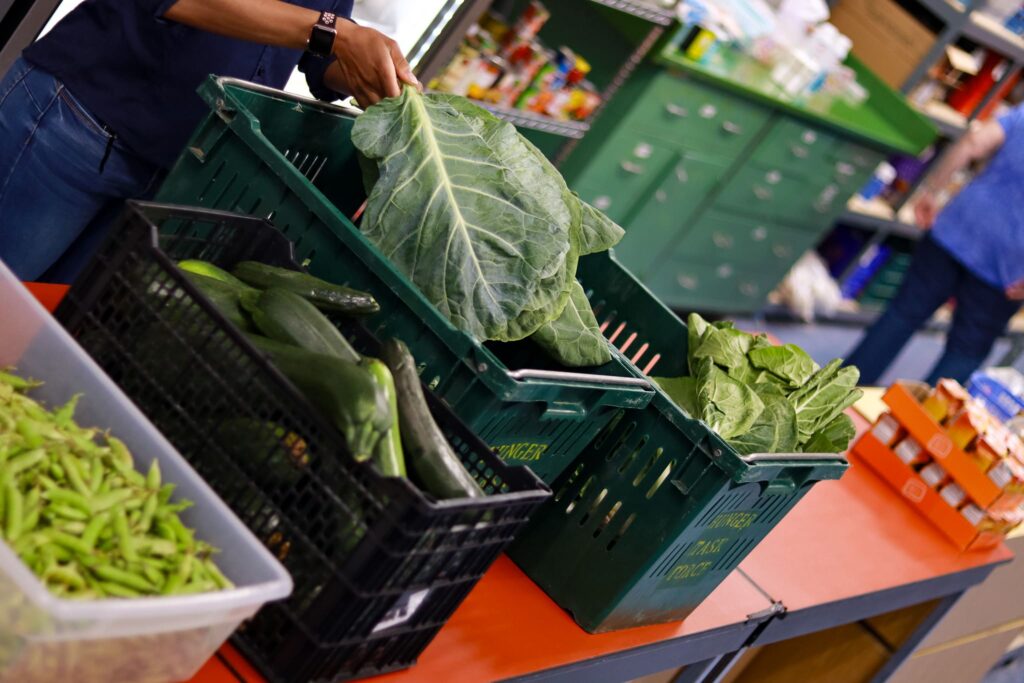
Reno Wright from the Hunger Task Force shared that $2.5 million will procure food from local farmers for pantries and meal programs “at no cost.”
“It’s a stable source for families needing food and supports small and mid-sized farmers,” Wright added.
The Task Force lost $250,000 due to federal cuts. By the time news broke, many farmers had purchased seeds, suddenly losing an expected market.
The USDA stated to Politico that previous programs “no longer effectuate the agency’s goals.”
Roberts-Turner noted the Wisconsin Food Hub Cooperative aids farmers’ sales and operates a transport company enhancing supply chain efficiency.
Previously serving as a federal program contractor, Roberts-Turner said the cooperative was midway in a plan to strengthen Wisconsin’s infrastructure, lagging behind states like Michigan with established wholesale producers.
Lowering transportation costs and helping local farmers compete can help Wisconsin improve its market position.
Roberts-Turner expressed relief and pride in the state’s new funding initiative.
Wright highlighted economic benefits: smaller farms gain financial stability, and he advocates for universal access to healthy food.
“No one should choose between food and essentials,” Wright stressed, citing difficulties faced by families due to rising costs.
—
Read More Wisconsin News

![Jody White’s Unconventional Michigan Supreme Court Candidacy Explored[embed]https://www.youtube.com/watch?v=8NfxFIPE4ac[/embed]](https://www.kitchentablenews.org/wp-content/uploads/2026/10/Jody-Whites-Unconventional-Michigan-Supreme-Court-Candidacy-Exploredembedhttpswwwyoutubecomwatchv8NfxFIPE4acembed.com2F842F0e2Fc7223daa43c9876b36a4e00773a42Fme-supc.png "Jody White’s Unconventional Michigan Supreme Court Candidacy Explored[embed]https://www.youtube.com/watch?v=8NfxFIPE4ac[/embed]")