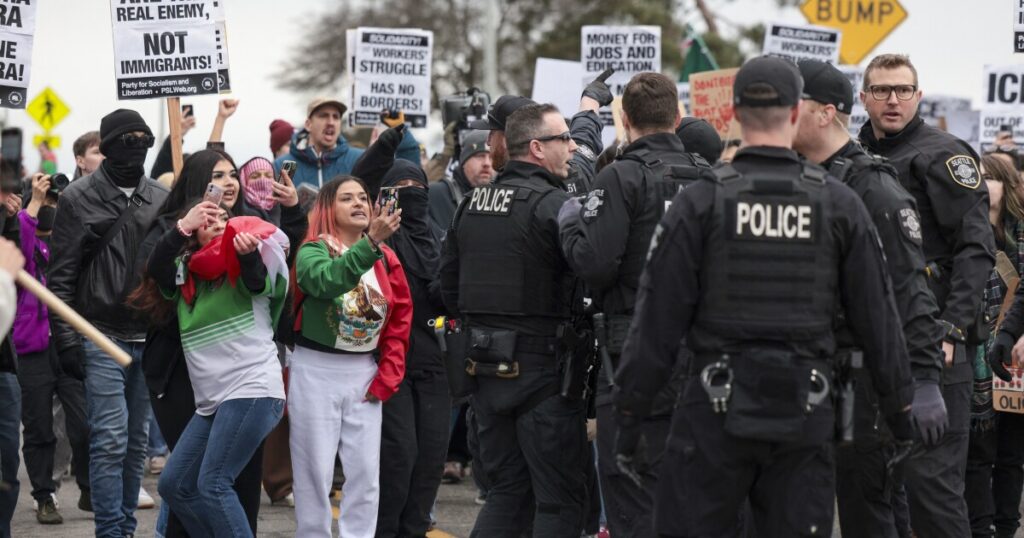
The rapid spread of videos documenting the death of Alex Pretti, a 37-year-old, at the hands of federal immigration agents in Minneapolis has sparked widespread attention. This incident, captured from multiple angles by bystanders and shared widely on social media, underscores the evolving role of video footage in shaping public discourse around law enforcement actions.
Historically, bystander videos have served as pivotal tools in bringing transparency to incidents involving police actions. Darrell M. West of the Brookings Institution emphasizes, “It’s still all about the videos…a video might be worth 100,000 words.” This reflects the power of visual media in influencing public narratives.
A Historical Shift in Video Documentation
In 1991, George Holliday’s footage of Rodney King’s beating by Los Angeles police officers became a national sensation after being broadcasted by KTLA. The acquittal of the officers involved led to the infamous 1992 LA riots. Similarly, in 2009, the unprovoked shooting of Oscar Grant by a BART officer in Oakland was captured by multiple bystanders and went viral on YouTube, marking the onset of social media’s influence.
In 2020, the world was galvanized by the video of George Floyd’s death, which was widely shared on Facebook. This event significantly amplified the Black Lives Matter movement’s reach. More recently, the deaths of Renee Macklin Good and Alex Pretti have also been documented by bystanders and disseminated rapidly on social platforms.
The Role of Social Media in Dissemination
The proliferation of smartphones has transformed everyday citizens into potential news broadcasters. Darrell M. West notes, “There are distribution mechanisms out there that allow hundreds of thousands or millions of people to see them.” This capability has revolutionized how news spreads, with social media platforms becoming primary sources of information for many, as reported by the Pew Research Center.
Notably, a YouGov poll indicated that 70% of Americans have viewed videos of the Good shooting on social media, highlighting the power of these platforms in shaping public opinion.
Impact on Public Perception and Government Accountability
Videos have the power to challenge official narratives, as seen following the Pretti and Good shootings. According to West, this footage “made it impossible for the administration’s initial narrative to hold.” Such transparency can lead to increased public scrutiny and demands for accountability.
However, experts caution that videos can be misleading and may not provide the full context of events. As Mary Beth Oliver from Penn State University points out, they allow for varied interpretations based on viewers’ preconceived notions. The emergence of artificial intelligence and deepfake technology further complicates the authenticity of visual media.
In closing, while videos are invaluable in documenting real-time events, they are but one piece of a larger puzzle. The challenge remains in distinguishing authentic content from manipulated footage, as Dhavan Shah from the University of Wisconsin-Madison suggests, “The idea of image as truth is also deeply in question.”
—
Read More Michigan News