In a digital age where recordings are at everyone’s fingertips, the power of bystander videos is more profound than ever. Recent events in Minneapolis highlight how these videos have become central to public discourse and accountability, especially when it comes to law enforcement actions.
On a recent Saturday, federal immigration officers shot and killed Alex Pretti, a 37-year-old man, in Minneapolis. The incident was captured from various angles by bystanders, with videos swiftly spreading across social media platforms. This phenomenon has become crucial in shaping how the public perceives and understands such occurrences.
According to Darrell M. West, a senior fellow at the Brookings Institution, “It’s still all about the videos. People would say a picture is worth a thousand words. Well, if that’s true, a video might be worth 100,000 words.” The widespread availability of smartphones has transformed the landscape, allowing immediate recording and dissemination of images and videos.
A Historical Perspective on Video Evidence
The impact of bystander videos is not new. In 1991, George Holliday used a camcorder to capture Los Angeles police officers brutally beating Rodney King. This footage was pivotal in bringing national attention to the incident and contributed to the 1992 LA riots after the officers’ acquittal. Fast forward to 2009, when videos from multiple bystanders documented the fatal shooting of Oscar Grant by a BART officer in Oakland, California. These recordings were shared on emerging social media platforms like YouTube.
More recently, the 2020 recording of George Floyd’s death under the knee of officer Derek Chauvin in Minneapolis went viral, significantly boosting the Black Lives Matter movement. Earlier this month, another incident involving Renee Macklin Good and U.S. Immigration and Customs Enforcement in Minneapolis was also captured and quickly shared online, demonstrating the continued relevance of bystander videos.
The Role of Social Media in Video Distribution
Social media plays a critical role in the rapid dissemination of videos, as highlighted by West. “There are distribution mechanisms out there that allow hundreds of thousands or millions of people to see them,” he noted. This ease of access means that any significant event is likely to be recorded and shared quickly.
Mary Beth Oliver, a media studies professor at Penn State University, pointed out the shift from a few major broadcast channels to a diverse array of social media content creators, leading to varied interpretations of events. With platforms like Facebook and YouTube, videos can reach wide audiences rapidly, influencing public opinion and understanding.
A recent YouGov poll revealed that 70% of Americans viewed the videos of the Good shooting on social media, underscoring the platform’s reach.
Impact on Public Perception and Government Transparency
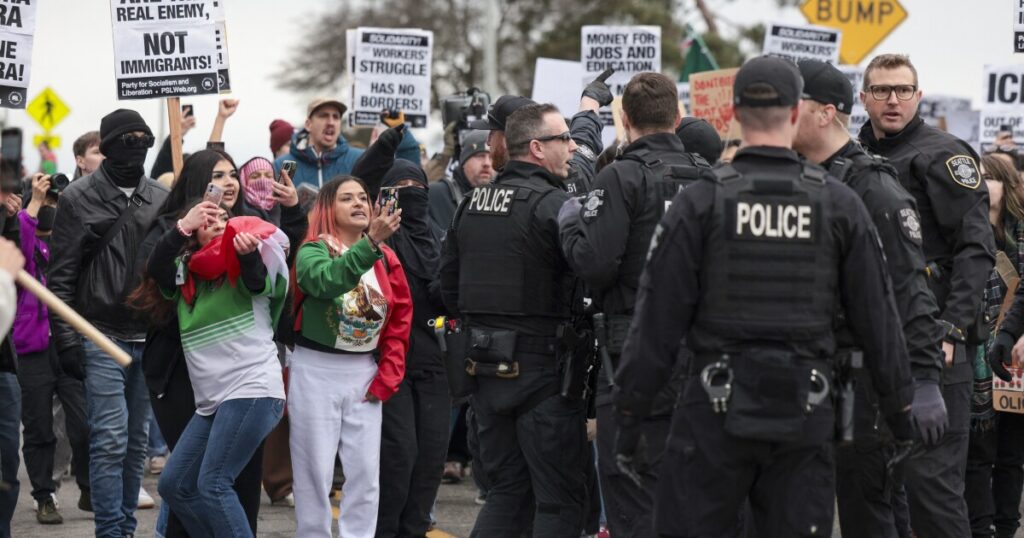
According to Dhavan Shah, a communication research professor at the University of Wisconsin-Madison, videos on social media are pivotal in mobilizing political protests and public engagement. In 2020, the Pew Research Center found that following George Floyd’s death, two-thirds of U.S. adults supported the Black Lives Matter movement, with many discussing race and equality.
Bystander videos can challenge official narratives, as seen with the Pretti and Good incidents. “It made it impossible for the administration’s initial narrative to hold because people could see with their own eyes,” West stated. This transparency provides the public with more detailed information than ever before.
Challenges and Future Considerations
While videos offer a window into events, they can also raise questions. Oliver noted that any ambiguity might lead to different interpretations based on personal biases. Short clips often miss context, leaving gaps in the narrative. The rise of artificial intelligence and deepfake videos adds another layer of complexity, making it increasingly difficult to discern truth from manipulation.
As Shah points out, the notion of image as truth is under scrutiny, and the public may grow skeptical of video content. As technology evolves, the challenge will be ensuring these videos are used responsibly to inform and engage the public truthfully.
Copyright 2026 NPR
“`
—
Read More Michigan News