The political landscape around healthcare in the U.S. is once again under the spotlight as discussions about extending the enhanced subsidies under the Affordable Care Act (ACA) have hit a stalemate in the Senate. Initially, there was hope for a bipartisan agreement, with a three-year extension passing the House, but negotiations have since stalled.
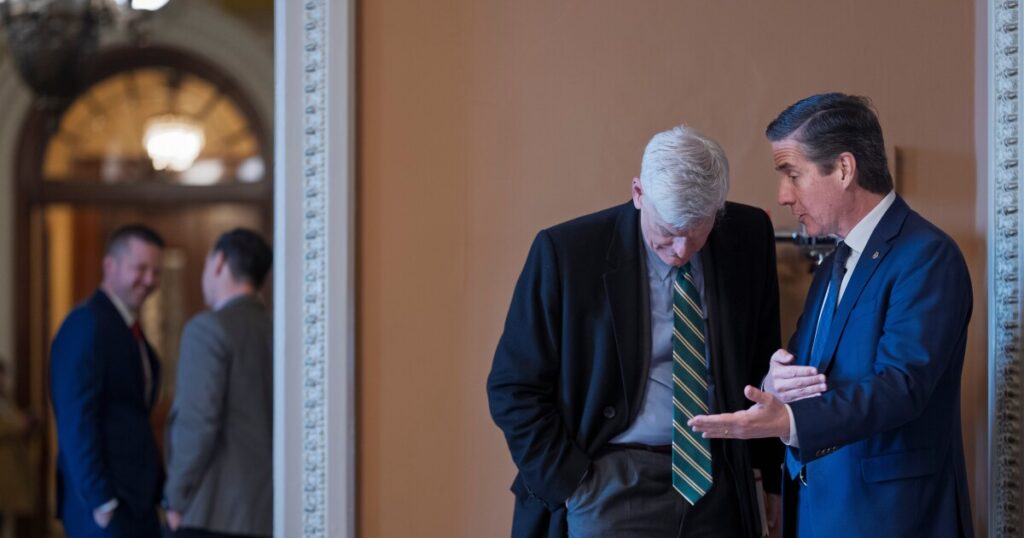
Republicans attribute these difficulties to the ACA’s original passage back in 2010. “You gotta remember, Democrats created Obamacare,” remarked Sen. Bernie Moreno, R-Ohio. “It’s been an abject failure in terms of lowering costs.” Moreno has been at the forefront of bipartisan efforts in the Senate, seeking solutions to alleviate the impact of losing these subsidies, which has seen premiums significantly increase.
The lingering controversy from the ACA’s enactment continues to influence current legislative efforts. Political scientist Jonathan Oberlander from the University of North Carolina notes, “Congressional Republicans can’t seem to quit the Obamacare repeal fight, even though the politics of the Affordable Care Act have changed a lot over the past 15 years.” Oberlander highlights the popularity of the ACA and warns of the political risks associated with letting the subsidies lapse.
The potential political fallout is underscored by a recent poll by KFF, which indicates that two-thirds of Americans believe Congress was wrong to let the enhanced subsidies expire. The poll, conducted with 1,400 participants, revealed that healthcare costs are a predominant concern, even surpassing expenses like groceries.
“What our poll is showing is that health care costs are something that voters want to see candidates address,” explained Ashley Kirzinger, KFF’s director of survey methodology. This sentiment is expected to heavily influence voter preferences in the upcoming midterms.
Despite the political gridlock, the Senate continues to see some negotiations. The uncertainty over subsidy extensions has caused stress among enrollees, with many unsure if their premiums will jump from $400 to $2,000 a month. Miranda Yaver of the University of Pittsburgh highlights the anxiety this uncertainty breeds, especially amid broader economic challenges.
Currently, 23 million people are enrolled in ACA plans, but this number is expected to drop if subsidies are not reinstated. According to the Department of Health and Human Services, there has already been a decline of over a million enrollees from the previous year, and experts predict further reductions.
The Congressional Budget Office (CBO) estimates that the expiration of enhanced subsidies could lead to 4 million losing their insurance, potentially expanding to 15 million with Medicaid cuts next year. “That is the largest increase in the uninsured population we have ever had in a short period of time,” says Oberlander, emphasizing the scale of the potential impact.
While Republicans are not actively attempting to repeal the ACA, Yaver points out they are “finding more subtle ways to undermine its effectiveness.” Oberlander cautions that these actions, even if less overt, may not sit well with the electorate. “A lot of Americans are not going to welcome the news that Congress is making their health insurance less affordable,” he concludes.
Copyright 2026 NPR
—
Read More Michigan News
![Jody White’s Unconventional Michigan Supreme Court Candidacy Explored[embed]https://www.youtube.com/watch?v=8NfxFIPE4ac[/embed]](https://www.kitchentablenews.org/wp-content/uploads/2026/10/Jody-Whites-Unconventional-Michigan-Supreme-Court-Candidacy-Exploredembedhttpswwwyoutubecomwatchv8NfxFIPE4acembed.com2F842F0e2Fc7223daa43c9876b36a4e00773a42Fme-supc.png "Jody White’s Unconventional Michigan Supreme Court Candidacy Explored[embed]https://www.youtube.com/watch?v=8NfxFIPE4ac[/embed]")