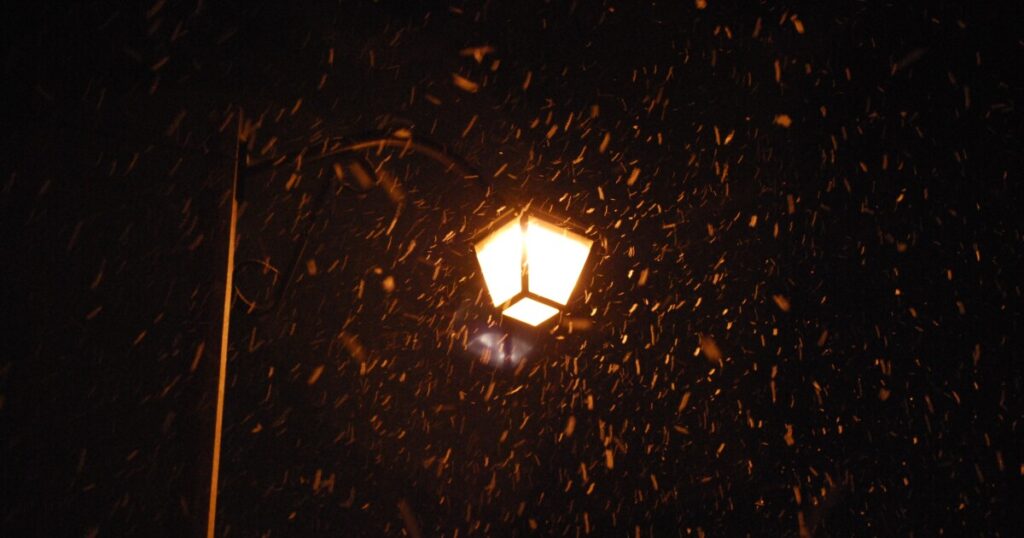
The Science Behind Insects’ Attraction to Artificial Light
For centuries, the sight of moths and other flying insects drawn to the glow of flames and artificial lights has intrigued observers. Ancient records from the Roman Empire already noted this behavior, but only now have researchers uncovered the mechanics behind it.
Scientists at Imperial College London used high-resolution motion-capture technology to meticulously track the movements of insects both in a controlled laboratory environment and outdoors. The study focused on understanding the intricate flight patterns of these insects when exposed to artificial light sources.
Contrary to popular belief, insects do not fly directly towards the light. Instead, they tend to orient the backs of their bodies towards the light source. This results in them flying at perpendicular angles relative to the light, often causing them to circle it erratically. This disoriented flight pattern can lead to stalls or crashes.
In their natural environment under the sky’s light, insects have an instinct to align their backs with the brightest part of the horizon, which helps them navigate. When an artificial light source shines from below, insects may even flip upside down, providing evidence that they are not mistaking these lights for celestial bodies like the moon, nor are they attracted by the heat emitted by these lights.
This discovery sheds light on the potential role of artificial lighting in the decline of insect populations as light pollution continues to grow. To mitigate the impact, it is advisable to use amber, yellow, or red LED lights for outdoor lighting, as these attract fewer insects compared to white, blue, or UV lights.
This Earth Note was written by Diane Hope and produced by KNAU and the Sustainable Communities Program at Northern Arizona University.
—
Read More Arizona News