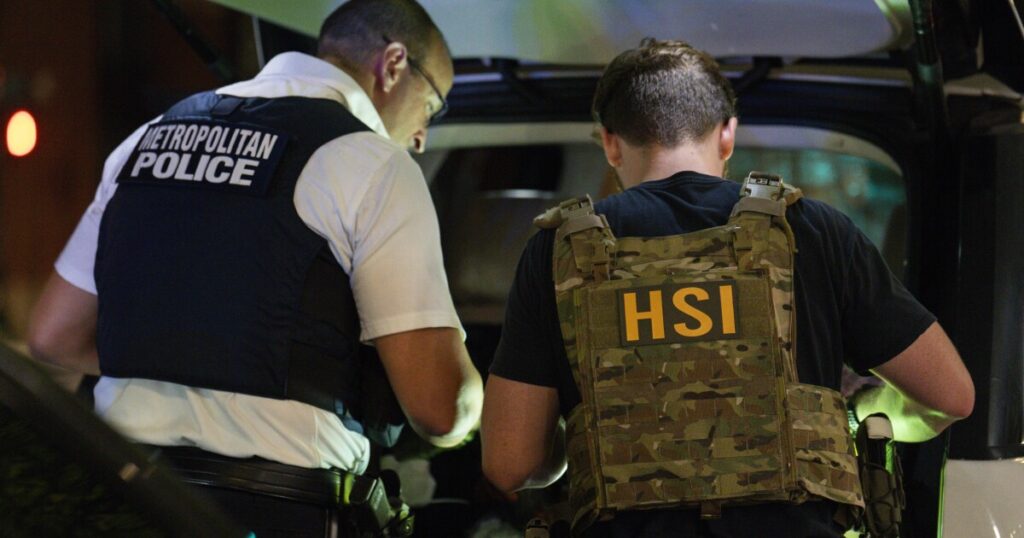
The implementation of a federal program that enables local law enforcement to act as immigration agents has seen significant growth during President Donald Trump’s second term. This expansion of the 287(g) program represents a notable shift in the administration’s immigration strategy.
On his first day in office, Trump signed an executive order titled “Protecting the American People Against Invasion,” which directed the DHS secretary to fully utilize 287(g) agreements in enforcing federal immigration laws.
The results have been immediate and impactful. ICE data reveals that while only 45 agreements existed in 2019, this number surged to 1,412 by February 2025, with over 1,130 agreements signed that year alone.
Understanding the Role of 287(g) Programs
Originating in 1996, the 287(g) program allows local police to question, investigate, and sometimes arrest individuals for immigration violations, a role traditionally held by federal officers. This approach has been used by various administrations but never at the scale seen under Trump.
Doris Meissner, former head of the Immigration and Naturalization Service, remarked on the unprecedented mobilization of government resources around immigration enforcement, describing it as putting 287(g) “on steroids.”
Despite the administration’s enthusiasm, the program’s effectiveness is debated. DHS Assistant Secretary for Public Affairs, Tricia McLaughlin, stated that the partnerships help “arrest criminal illegal aliens” and enhance safety, though the specific impact on arrests and deportations remains unclear.
Operations in states like Florida and West Virginia have reported thousands of arrests, highlighting the program’s reach and its role in the administration’s broader immigration crackdown.
Operation Models and Challenges
The 287(g) program includes three primary models:
- Jail enforcement model: Local jails check the legal status of individuals and notify ICE of those in the country illegally.
- Warrant service officer model: Trained local police execute administrative warrants on migrants in jails.
- Task force model: Officers can arrest individuals for immigration violations with ICE supervision.
Critics argue that these agreements strain local resources and raise concerns about racial profiling. Annie Lai, an immigration law professor, highlights the potential for civil rights violations, citing costly legal consequences for cities involved in such programs.
Despite criticism, DHS offers financial incentives to participating agencies, covering salaries and providing performance-based awards. However, the Government Accountability Office has noted a lack of clear performance metrics for the program.
Historical Context and Current Use
The 287(g) program was established under the 1996 Illegal Immigration Reform and Immigrant Responsibility Act. Previous administrations used the program sparingly, focusing on serious crimes, but never expanded it to the extent seen under Trump.
Though the program was largely left intact by President Biden, Trump’s administration has aggressively expanded its use, despite opposition from some states. Virginia and Maryland are moving to end these partnerships, reflecting ongoing debates over state involvement in federal immigration enforcement.
While proponents argue that the program helps target violent criminals, critics point to instances of U.S. citizens being mistakenly detained and the program’s broader social and legal implications.
—
Read More Michigan News