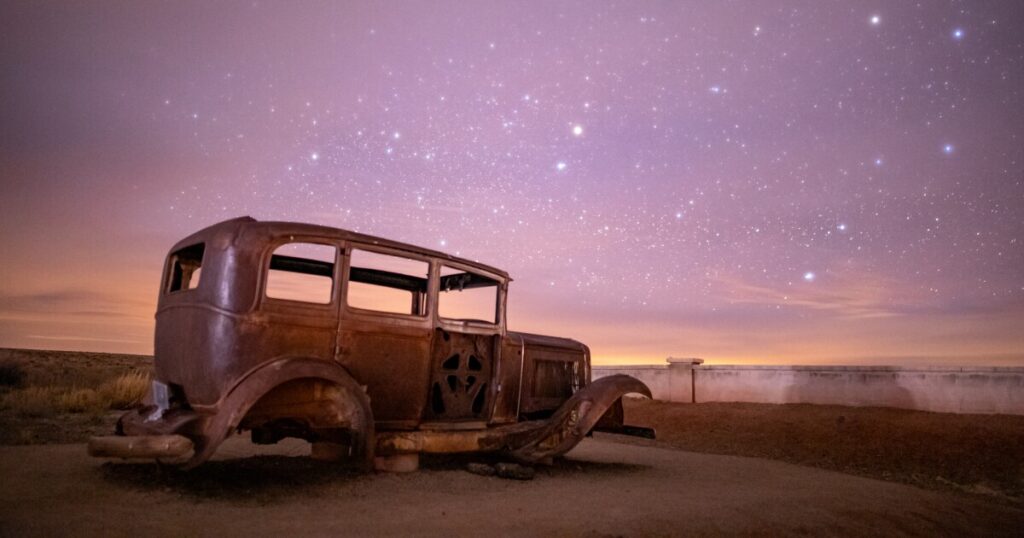
The iconic Route 66, a symbol of American road adventures stretching from Chicago to Los Angeles, celebrates its 100th anniversary this year. This storied highway made its way through northern Arizona and what is now Petrified Forest National Park.
While modern sensibilities may frown upon it, early travelers left behind traces of their journeys through acts that are now considered inappropriate, especially within the bounds of a national park.
David Purcell, an archaeologist from the Museum of Northern Arizona, along with his team, recently concluded a five-year examination of a six-mile segment of Route 66 within the park. Their findings challenge the romanticized version of the highway popularized by film and music.
During their investigation, the team cataloged over 11,000 items in piles of roadside refuse. A substantial number of these items were liquor bottles, beer cans, auto parts, and remnants of wrecked vehicles.
The journey along Route 66 was perilous, earning it the nickname “Bloody 66” due to frequent accidents. The road roughly followed the path of the Beale Wagon Road from the 1850s, the Santa Fe railroad tracks, and the National Old Trails Highway. Within the Petrified Forest, Route 66 navigated through a narrow strip to bypass a high ridge and a muddy section of the Puerco River.
When Petrified Forest was still a recently expanded national monument, it had minimal staffing and basic checkpoints along Route 66. After paying a 50-cent fee for an annual permit, tourists could admire the vibrant hues of the Painted Desert. However, they also took home petrified wood as keepsakes and indulged in significant amounts of alcohol.
Route 66 offers a tapestry of narratives—some filled with nostalgia, others rooted in reality.
This Earth Note was written by Rose Houk and produced by KNAU and the Sustainable Communities Program at Northern Arizona University.
—
Read More Arizona News