Article Summary –
President Trump can still leverage other tariff powers despite the Supreme Court’s rejection of his broad claims of authority to impose tariffs, utilizing statutes like Section 301 of the Trade Act of 1974, which allows for tariffs without size limits, and Section 232 of the Trade Expansion Act of 1962, which pertains to national security threats. The U.S. Court of International Trade has limited the president’s use of emergency powers for tariffs concerning trade deficits, but other options like the seldom-used Section 122 and Section 338 from Depression-era laws remain. Although Section 301 is beneficial in dealing with large countries like China, employing it against numerous smaller countries is a labor-intensive process.
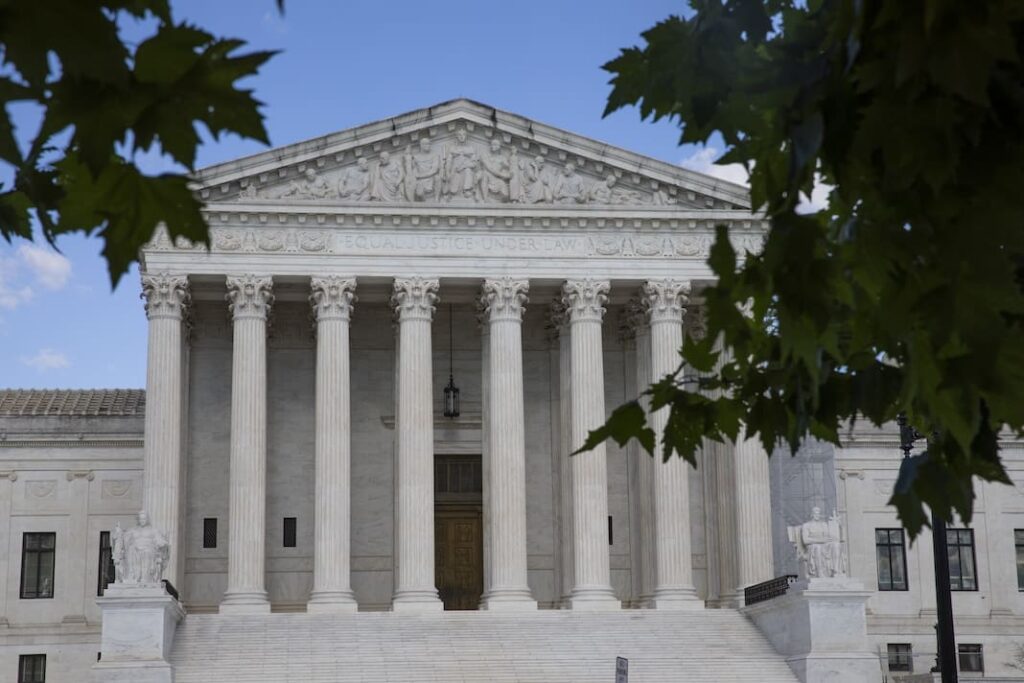
WASHINGTON (AP) — President Donald Trump retains options to continue applying tariffs on imports even after the Supreme Court struck down tariffs he imposed on nearly all countries.
Justices rejected Trump’s broad claims of authority to impose tariffs at his discretion. However, Trump can utilize tariff powers from his first term and others, including one from the Great Depression.
Georgetown trade law professor Kathleen Claussen noted, “It’s hard to see any pathway here where tariffs end. I am convinced he could rebuild the tariff landscape using other authorities.”
Trump asserted vast authority to impose tariffs under the 1977 International Emergency Economic Powers Act (IEEPA). However, opponents argued before the Supreme Court that Congress already granted tariff power to the White House in other statutes, albeit with restrictions.
Tariffs have been a key component of Trump’s foreign and economic policy, with significant “reciprocal” tariffs on most countries, justified by declaring America’s trade deficits a national emergency.
The average U.S. tariff increased from 2.5% to nearly 17%, the highest since 1934, according to Yale University’s Budget Lab.
Trump acted independently, despite the U.S. Constitution delegating the power to tax and impose tariffs to Congress.
Countering Unfair Trade Practices
The U.S. uses Section 301 of the Trade Act of 1974 against “unjustifiable” trade practices. Trump aggressively applied it, especially against China, to challenge Beijing’s tactics against U.S. technological dominance. Section 301 powers also address unfair Chinese shipbuilding practices.
No limits exist on Section 301 tariffs, which expire after four years but can be extended. The trade representative must investigate and hold a public hearing before imposing 301 tariffs.
Experts say Section 301 is effective against China but labor-intensive for smaller countries targeted with reciprocal tariffs.
Targeting Trade Deficits
When the U.S. Court of International Trade struck down Trump’s tariffs in May, it ruled the president couldn’t use emergency powers to combat trade deficits. Congress had given limited authority in Section 122 of the Trade Act of 1974, allowing tariffs up to 15% for 150 days without prior investigation.
Section 122 has never been used for tariffs, creating uncertainty about its functioning.
Protecting National Security
Trump used Section 232 of the Trade Expansion Act of 1962 to impose tariffs on imports threatening national security. In 2018, he levied tariffs on foreign steel and aluminum, expanded them, and added sectors like autos, copper, and lumber. In September, tariffs on kitchen cabinets and furniture were imposed.
Section 232 tariffs require a Commerce Department investigation; however, the administration controls the outcome.
Reviving Depression-era Tariffs
The 1930 Tariff Act, known for the Smoot-Hawley tariffs, allows the president to impose tariffs up to 50% on discriminatory countries. No investigation is needed, and there’s no limit on tariff duration. Although unused, Section 338 was considered a backup plan if the Supreme Court ruled against Trump’s emergency tariffs.
—
Read More Michigan News