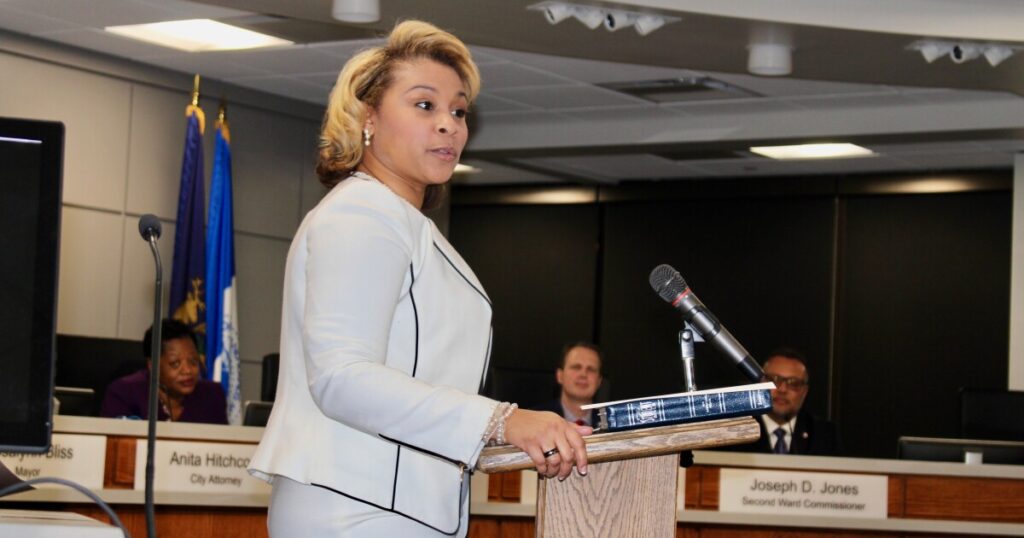
As Black History Month unfolds, Morning Edition highlights the trailblazing Black women in Michigan’s political landscape.
Back in 2013, Senita Lenear carved her name in history as the first African-American woman to be elected to the Grand Rapids City Commission. Her tenure spanned nine years, culminating upon reaching her term limit. In a conversation with Morning Edition producer Caoilinn Goss, Lenear shared insights into her journey.
Caoilinn Goss: You represented the city’s Third Ward, and you also grew up there. What was that like?
Senita Lenear: Moving to Grand Rapids at the age of nine, I take pride in being a Creston Polar Bear, and I graduated from Creston High School. Staying local, I completed my education at Cornerstone University.
Courtesy of Senita Lenear
CG: You’re a business owner. You’ve served on nonprofit boards. You’ve sat at union bargaining tables and worked in the corporate sector. How did those experiences lead you to run for city commissioner?
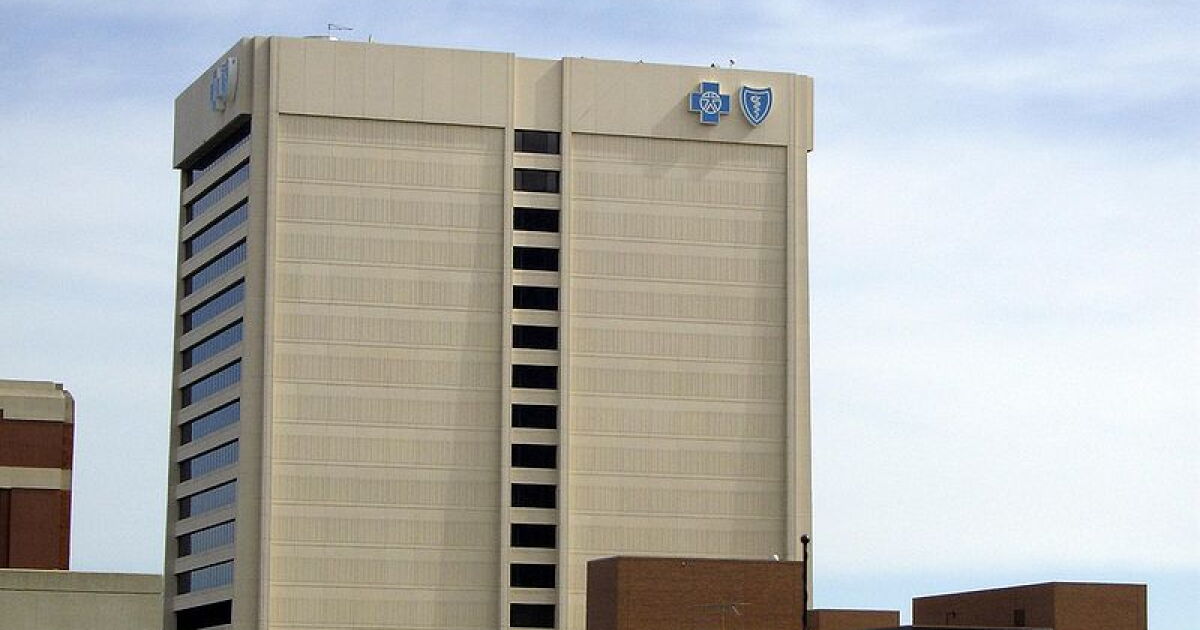
SL: My 14-year tenure at Michigan’s largest medical insurance provider exposed me to numerous roles, including a regional community affairs position. It was this exposure that sparked my interest in community service, though initially not through political office.
The opportunity arose when a position opened on the Grand Rapids school board. My sister urged me to consider it, noting my active involvement in my nephews’ and niece’s school conferences. This experience propelled me into public service and ultimately led to my election as a city commissioner.
CG: The Third Ward historically saw a lot of unequal investment compared to the rest of Grand Rapids. And while in office, you created the Third Ward Equity Fund and led an effort to grow the Southtown business development district. Why do you think many of these inequities were not tackled sooner?
SL: The Forbes article highlighting Grand Rapids as one of the worst places economically for Black residents resonated deeply. The Third Ward, predominantly Black, faced significant underinvestment. This spurred a strategic planning meeting to prioritize resources, where David Allen and I protested the lack of proposed projects in the Third Ward. This opened a dialogue for change, leading to the creation of the Third Ward Equity Fund, which funded significant renovations like the one at MLK Park Lodge.
“When I’m driving through the city and I’m seeing the things that are happening, it makes me proud because I know that my fingerprints are a part of that.”
Former Grand Rapids City Commissioner Senita Lenear
CG: While you were on the city commission, you also served on several task forces and committees, such as the Great Housing Strategies Committee. You were chairwoman of the Mayor’s Safe Alliance for Everyone Task Force, which focuses on funding efforts to reduce violence in the community. What are some of your proudest accomplishments while in office?
SL: The Southtown Corridor Improvement Authority started as a struggling single business district. Recognizing its potential, we expanded it across six business districts, now capturing half a million dollars annually. Witnessing these developments as I drive through the city fills me with pride.
CG: You ran for mayor in 2024 and lost to current Mayor David LaGrand. Do you think you’ll run again?
SL: That’s an intriguing question, Caoilinn. Although many encouraged my mayoral run, and I still feel I have more to contribute, it’s too early to decide on running again. There are numerous ways to impact the community beyond elected office.
CG: Since you took office, more Black women have also been elected to the city commission: Kelsey Perdue, Lisa Knight. Looking back, why do you think it took so long to break through?
SL: Ensuring my work served as a foundation for others was crucial. While it’s unclear if Kelsey Perdue and Lisa Knight pursued their roles because of my example, it gratifies me to know I shattered a glass ceiling. Additionally, I supported Milinda Ysasi, the first Latina on the city commission. It’s vital to understand that making a difference doesn’t always require public office; sometimes, influence comes from outside the system.
—
Read More Michigan News


![Jody White’s Unconventional Michigan Supreme Court Candidacy Explored[embed]https://www.youtube.com/watch?v=8NfxFIPE4ac[/embed]](https://www.kitchentablenews.org/wp-content/uploads/2026/10/Jody-Whites-Unconventional-Michigan-Supreme-Court-Candidacy-Exploredembedhttpswwwyoutubecomwatchv8NfxFIPE4acembed.com2F842F0e2Fc7223daa43c9876b36a4e00773a42Fme-supc.png "Jody White’s Unconventional Michigan Supreme Court Candidacy Explored[embed]https://www.youtube.com/watch?v=8NfxFIPE4ac[/embed]")