In a significant political move, Congress is gearing up to deliberate on bipartisan war powers resolutions intended to curtail President Trump’s military initiatives in Iran. These resolutions, which seek to restore congressional authority over war declarations, confront significant challenges before they can be enacted into law.
Despite facing potential hurdles, the initiative has garnered support from the majority of Democrats and a select number of Republicans. Their advocacy for limiting presidential military authority follows recent U.S. and Israeli military actions in Iran, which resulted in the first reported American casualties.
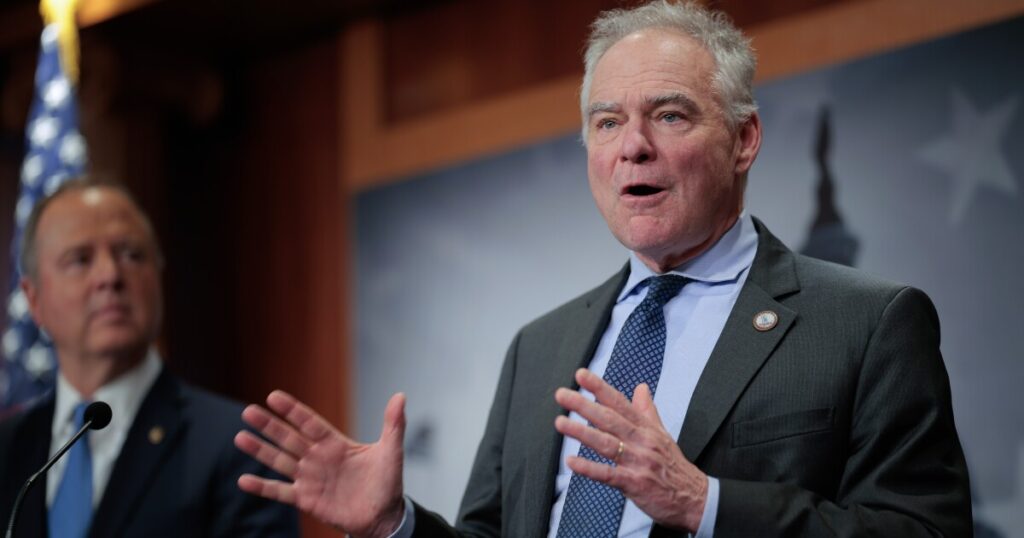
Senator Tim Kaine, a Democrat from Virginia and a leading advocate in the Senate for the resolution, emphasized the constitutional necessity of congressional approval for war declarations. In a conversation with NPR’s Weekend Edition, he stated, “The Constitution says we’re not supposed to be at war without a vote of Congress. This is important. The lives of our troops are at risk. We ought to come back to Washington right away and vote on this.”
The resolutions were slated for discussion prior to the unexpected military actions targeting Iranian leaders. With the conflict already in motion, the immediate impact of any approved resolution remains uncertain. Despite this, votes are anticipated to take place midweek as Kaine advocates for an expedited congressional return.
For the war powers measures to be enacted, Congress may need to counter a potential veto from President Trump. Achieving the necessary two-thirds majority in both chambers to override a veto remains uncertain.
Should these measures pass, they would prohibit further U.S. military actions in Iran without legislative consent, adhering to the 1973 War Powers Resolution established during the Vietnam War to check presidential war-making powers.
Senator Mark Kelly, a Democrat from Arizona and former Navy pilot, also expressed his backing for the resolution. He noted his concern over the absence of a strategy to prevent escalation, stating “Trump has no plan to avoid escalation into a wider conflict that puts more servicemembers in harm’s way.”
In contrast, President Trump has declared the continuation of military operations in the Middle East until certain unspecified objectives are achieved, as conveyed in a video shared on Sunday.
The White House announced that key administration figures, including the CIA director and the defense and state secretaries, will brief lawmakers on the situation in the Middle East on Tuesday.
“A Disastrous Vote for Any Democrat”
Representative Ro Khanna, a Democrat from California, estimated the likelihood of the House resolution advancing as between 40% and 60%. He shared with NBC News’ Meet the Press, “It depends if we can keep several Democrats in line. But I believe that this is a disastrous vote for any Democrat — to vote for Donald Trump’s war in the Middle East.”
Khanna highlighted Representative Josh Gottheimer’s reservations, as Gottheimer, a Democrat from New Jersey, fears that such resolutions might limit necessary military flexibility. Gottheimer did not immediately respond to requests for comment on his voting intentions.
A majority of Republicans are predicted to support President Trump’s stance on Iran. Senator Tom Cotton, a Republican from Arkansas, expressed confidence in Republican backing for the president’s military actions during a CNN appearance.
However, there are notable exceptions, such as Representative Thomas Massie from Kentucky, who argued against the conflict, stating it is not “America First.” Massie has consistently opposed certain Trump administration policies.
In the Senate, a few Democrats like Senator John Fetterman from Pennsylvania have announced their opposition to the resolution, viewing it as symbolic. Fetterman told Fox News, “It’s not necessary. Honestly, though, the entire thing, it’s really an empty gesture.”
These legislative efforts follow previous unsuccessful attempts to limit President Trump’s military authority without congressional approval. Past initiatives, including ones addressing U.S. actions in Iran and Venezuela, failed to secure the necessary support.
—
Read More Michigan News


![Jody White’s Unconventional Michigan Supreme Court Candidacy Explored[embed]https://www.youtube.com/watch?v=8NfxFIPE4ac[/embed]](https://www.kitchentablenews.org/wp-content/uploads/2026/10/Jody-Whites-Unconventional-Michigan-Supreme-Court-Candidacy-Exploredembedhttpswwwyoutubecomwatchv8NfxFIPE4acembed.com2F842F0e2Fc7223daa43c9876b36a4e00773a42Fme-supc.png "Jody White’s Unconventional Michigan Supreme Court Candidacy Explored[embed]https://www.youtube.com/watch?v=8NfxFIPE4ac[/embed]")