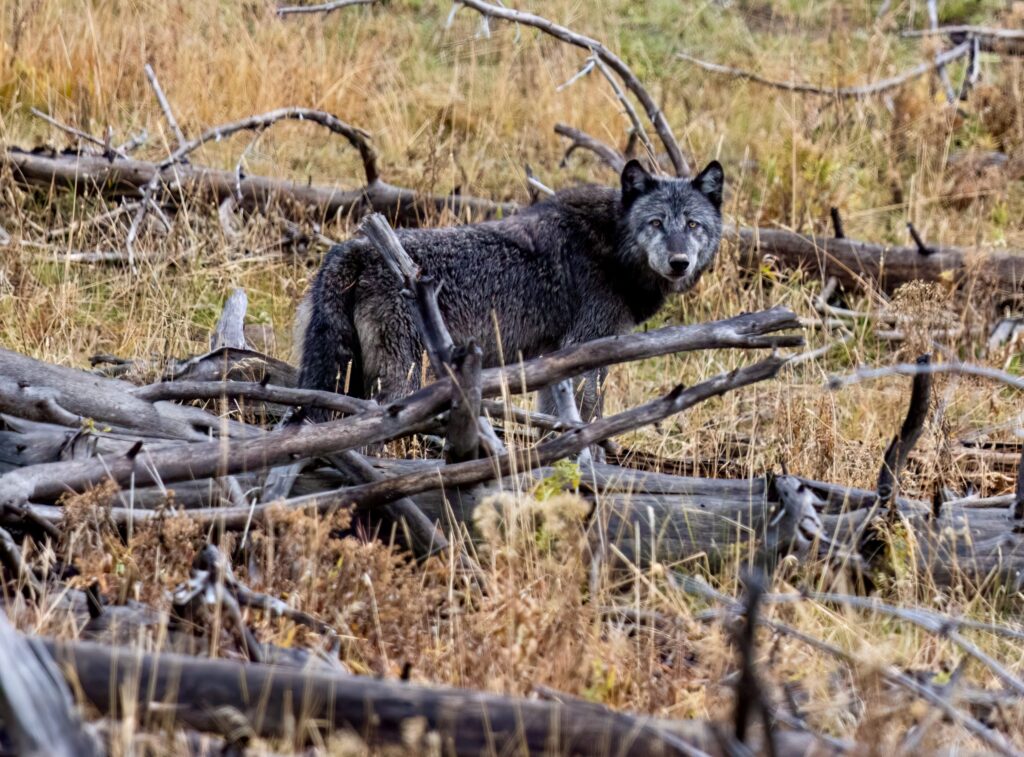
Hiking near Gardiner, Montana, on a warm February day, slushy snow revealed tracks of deer, elk, and surprisingly, wolves. A hunter descended the hill, rifle in hand, in search of the elusive wolves, the only species in season. This encounter sparked curiosity about how the unusual dry winter affected wolf hunting both in Greater Yellowstone and across Montana.
Before spring, Montana’s six-month wolf season concluded on March 15, with hunters and trappers taking 247 wolves, below the decade average of 278. State officials noted this as typical variation, despite nine wolves being killed illegally since September. Since 2009, after legal battles, hunting has been used as a management tool for wolves, seen both as ecosystem saviors and livestock threats.
The Montana Wolf Hunt
The tension around wolf hunting increased in 2021 when lawmakers sought to decrease the wolf population without a clear target. This led to regulations easing hunting methods, yet yielded fewer kills. Most hunters are opportunistic, buying licenses while pursuing other game, with consistent license sales showing most hunters only take one wolf. A restricted wolf-trapping season aims to protect grizzlies, limiting the season’s length.
Weather played a crucial role this season. Record-breaking warm temperatures affected wildlife movement, scattering prey and predators across higher elevations and complicating hunting efforts. Trappers faced challenges with snowmobile access, while warm weather allowed hunters to reach typically inaccessible areas. Although some hunters succeeded, many found the conditions challenging.
Weird Weather
Despite the mild weather, state debates over wolf management persist. The 2021 legislative mandate to reduce numbers cites a population target between 450 and 1,100 wolves, but the exact goal remains undefined. As Montana considers further measures, wolf management remains a divisive topic. Wolf season regulations are reviewed annually, ensuring ongoing discussions about sustainable wolf population levels.
The Greater Yellowstone-area Hunt
The Greater Yellowstone area sees consistent interest in wolf hunting, with specific units near the park boundary designed to protect park wolves. This year, hunts occurred further from the park, with fewer Yellowstone-based wolves killed. The mild winter forced wolves to roam further for food, increasing their exposure outside park boundaries. Yellowstone biologists reported a 22% drop in park wolves due to low pup survival.
‘Sustainable Levels’
With the relatively low number of wolves taken, future debates about wolf management are anticipated. The latest population projections are due in June, influencing potential regulation changes. The Fish and Wildlife Commission will finalize next season’s rules in August. The wolf population’s limits are known, but the precise management target remains uncertain, amidst differing opinions on wolf conservation.
—
Read More Montana News