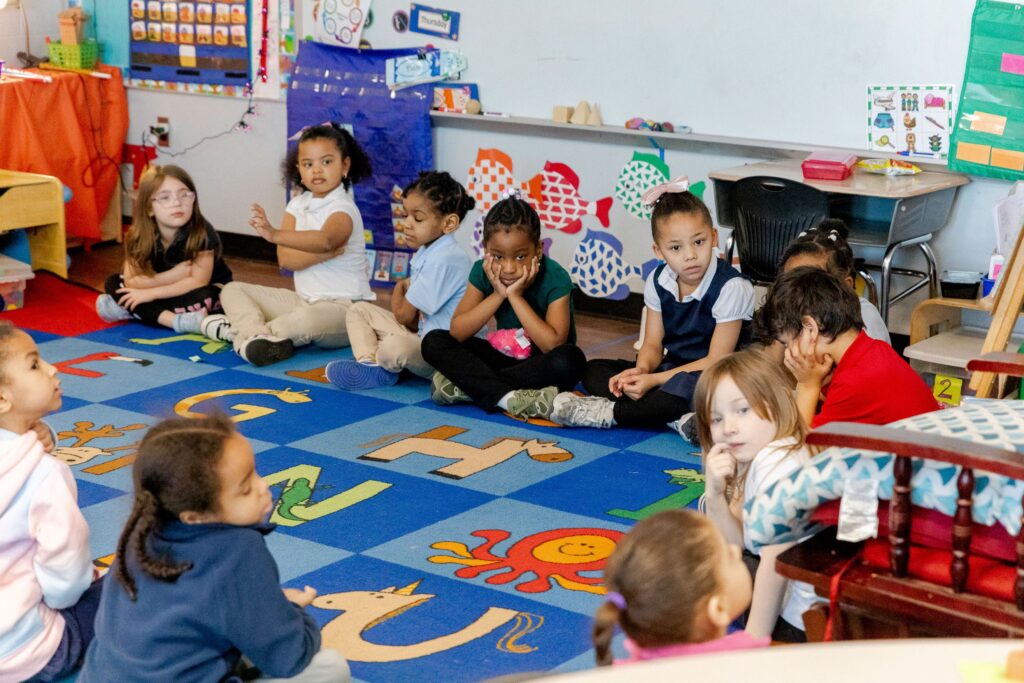
TOLEDO, Ohio — In William Werner’s first-grade class at McKinley STEAM Academy, students were restless. Some were completing reading worksheets, while others built pyramids with red cups, worked on puzzles, or played with Legos, causing the classroom noise to rise. To manage this, Werner often uses “brain breaks,” short activity bursts to regain students’ focus.
“Give me 10,” Werner instructed, prompting students to perform 10 jumping jacks, which brought laughter and restored attention. Werner explained, “Their attention spans are short. Any way to get up and move, reset their brains so they can sit down and focus for a couple more minutes.”
Teachers report increasing difficulties in maintaining students’ attention in recent years. A survey of over 3,000 teachers worldwide revealed that 88% believe attention spans are shortening. In the U.S., 75% of K-2 teachers noted a decline since the Covid pandemic, coinciding with a surge in technology use for education.
Research indicates excessive screen time and short-form content like TikTok videos are contributing factors. Over 36 states, including Ohio, have implemented some form of cellphone ban in schools. Debate exists over whether screen time affects focus ability or desire, but many experts believe attention spans can be improved.
To address this, educators are using various strategies including brain breaks, reducing screen time, limiting activity durations, and adding engaging hands-on projects. Meditation is also being introduced to help students regain focus. At McKinley STEAM, students benefit from these techniques, and some teachers, like Andrea Bennett, report small improvements in focus: “We can’t undo all of the other distractions that are around in that six-and-a-half hours a day that we see our babies here,” Bennett said.
Emily Elliott, a psychology professor at Louisiana State University, emphasizes the importance of focus duration for memory retention. She explained that long-term memory requires repeated attention, and “cramming” is ineffective for sustained retention.
At McKinley STEAM, Laurel Daniels structures her computer science lessons into “microlessons” to maintain student focus. Daniels said, “Having such easy access to technology is a detriment to our students. They don’t have what I tell them is the ‘productive struggle.’ So we have to build that as teachers.”
Engagement in education is now often referred to as “edutainment,” as described by Curtis Finch, superintendent of Deer Valley Unified School District in Arizona. Teachers are being encouraged to deliver lessons that are interactive and applicable to keep students engaged.
In a practical application, McKinley’s fifth-grade science class uses movement to teach the difference between Earth’s rotation and revolution, which helps students like Nyilah Carter remember the lesson more vividly. Elliott notes that interactive and entertaining lessons are effective for engaging students’ brains.
Kindergarten students begin their day at McKinley with meditation, which helps them focus. After meditating, they participate in breathing exercises and affirmations, reinforcing their capabilities and setting a positive tone for the day.
—
Read More Kitchen Table News



![Jody White’s Unconventional Michigan Supreme Court Candidacy Explored[embed]https://www.youtube.com/watch?v=8NfxFIPE4ac[/embed]](https://www.kitchentablenews.org/wp-content/uploads/2026/10/Jody-Whites-Unconventional-Michigan-Supreme-Court-Candidacy-Exploredembedhttpswwwyoutubecomwatchv8NfxFIPE4acembed.com2F842F0e2Fc7223daa43c9876b36a4e00773a42Fme-supc.png "Jody White’s Unconventional Michigan Supreme Court Candidacy Explored[embed]https://www.youtube.com/watch?v=8NfxFIPE4ac[/embed]")