A Shift in Voting Rights Sparks Debate on Congressional Representation
In a pivotal move, the U.S. Supreme Court’s recent decision may herald a significant decrease in Black representation in Congress. This development follows the court’s reinterpretation of parts of the Voting Rights Act, which has historically safeguarded against racial discrimination in voting.
The court’s conservative majority has called for a re-evaluation of Section 2 of the Voting Rights Act, prompting Republican-led states to consider redrawing congressional district maps. With the midterm elections fast approaching, it’s uncertain how much redistricting will occur in time, as several states have already conducted or are nearing their primary elections.
Experts predict that Southern states, controlled by Republicans, might reduce the number of districts with substantial racial minority populations. These districts, traditionally represented by Black Democrats, were previously shielded by the Voting Rights Act’s older provisions. An NPR analysis indicates that up to 15 such districts are at risk, spanning from Louisiana to North Carolina, and possibly more if recent changes in Missouri and Texas are considered.
The implications of these changes remain uncertain. While some Democratic states may dismantle majority-minority districts to gain more seats, Republican states might retain them to concentrate Democratic voters. However, the potential elimination of these districts could lead to an unprecedented decline in Black congressional representation, a situation not seen since the late 19th century.
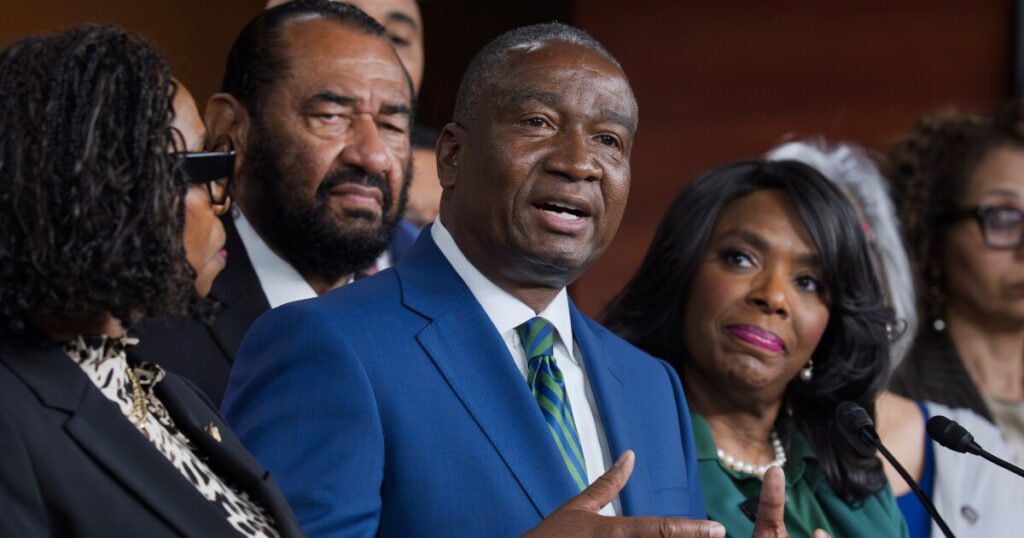
The Voting Rights Act of 1965 had increased the number of Black-represented districts to 63, approximately 14% of the House. The possibility of reducing this figure has prompted criticism from the Congressional Black Caucus. “This is an outright power grab,” declared Rep. Yvette Clarke, chair of the caucus, reacting to the court’s decision in Louisiana v. Callais. “It’s about silencing Black voices, dismantling majority Black districts and rigging the maps so that politicians can choose their voters instead of the other way around.”
The court’s ruling deemed a Louisiana district, previously compliant with Section 2, as an unconstitutional racial gerrymander. This decision shifts the focus of Section 2 to intentional racial discrimination. In response, Rep. Terri Sewell of Alabama is revising her legislative efforts to strengthen the Voting Rights Act, despite the challenges posed by recent court decisions. “We cannot give up,” Sewell asserts, “We’re not going to give up.”
Meanwhile, Atiba Ellis, a law professor at Case Western Reserve University, foresees increased partisan conflicts over gerrymandering. “This could distort politics in Washington substantially by preventing communities of color from genuinely being heard,” he notes, highlighting the irony of a “colorblind” Constitution potentially silencing diverse communities.
—
Read More Michigan News