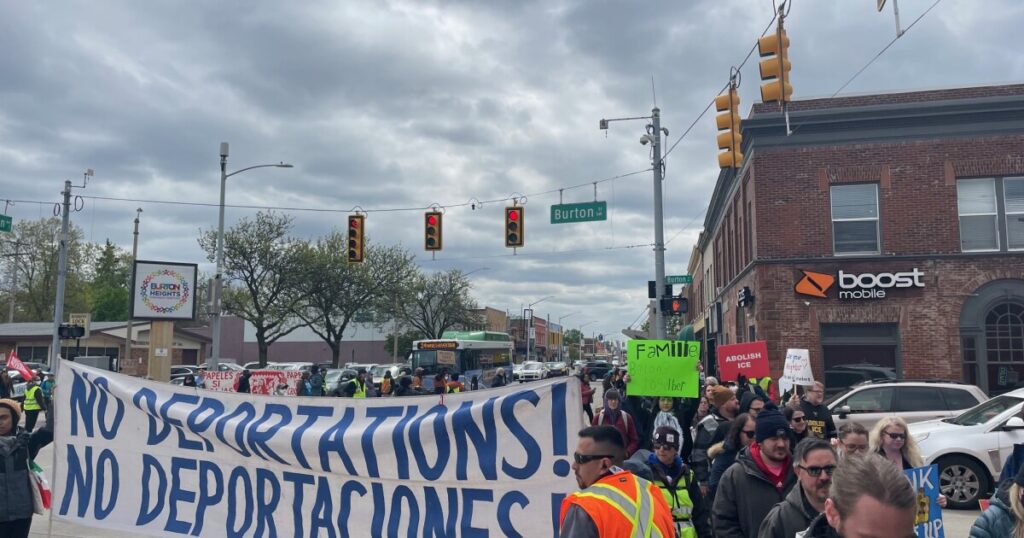
A recent decision by the 6th Circuit Court of Appeals has challenged a significant immigration policy from the Trump era, which required individuals in immigration detention to remain in custody until their cases were resolved. This ruling is the latest in a series of judicial decisions examining the legality of mandatory detention policies.
Appeals Court Decision
On Monday, the 6th Circuit Court, overseeing Michigan, Ohio, Kentucky, and Tennessee, ruled in a two-to-one decision that the mandatory detention policy contravened constitutional rights. The court emphasized that long-term residents should not face mandatory detention without the chance for a bond hearing, asserting that the policy contradicted historical precedents.
According to the American Civil Liberties Union of Michigan, this decision is poised to impact thousands of non-citizens detained across the four states.
My Khanh Ngo of the ACLU commented, “The courts have yet again correctly rejected the Trump administration’s inhumane mandatory detention policy, concluding its reinterpretation of our country’s detention laws is illegal. We are thrilled for our clients and their families.”
Broader Judicial Context
Notably, similar rulings have been made by two other federal appeals courts, while two others have supported the Trump administration’s stance. This ongoing division suggests the U.S. Supreme Court may eventually need to resolve the matter.
Case Spotlight: Lopez-Campos
The issue of unlawful detention was highlighted in the case of Juan Manuel Lopez-Campos, a Mexican father of five U.S. citizens, detained for almost two months following a minor traffic incident. A federal judge in Detroit ordered his release in August, after determining his detention violated due process rights. Lopez-Campos, who has no criminal record, was detained at one of Michigan’s county jails holding immigrants for ICE.
Since mid-February, over 800 habeas corpus petitions have been filed in Michigan’s U.S. District Courts, primarily from detainees at the North Lake Processing Center, indicating widespread discontent with the current detention practices.
The Trump administration has criticized these judicial decisions, suggesting that judges are acting beyond their authority, as the law requires detention of immigrants without legal status. However, analysis indicates that judges’ decisions in Michigan’s Western District were not influenced by political affiliations.
Even when bond is granted, release is not assured due to high costs and government appeals, as reported by Michigan Public.
Adam Yahya Rayes contributed to this reporting.
—
Read More Michigan News