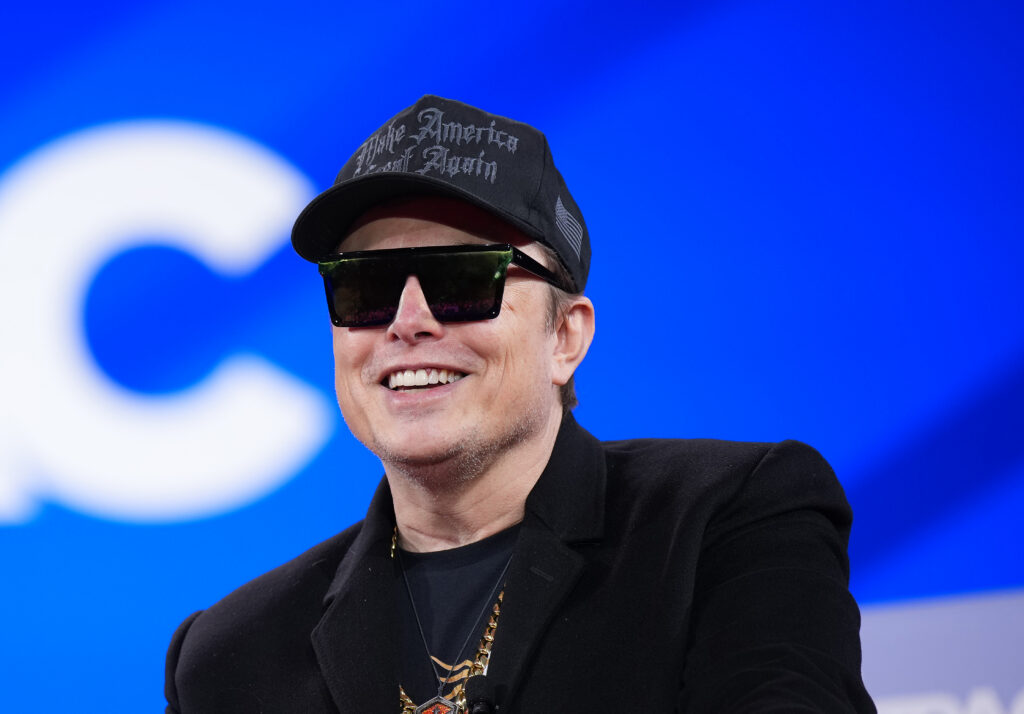

CEO of Tesla and SpaceX Elon Musk speaks last year at the Conservative Political Action Conference in Maryland. Last week’s SpaceX IPO, which made Musk the world’s first trillionaire, is a vivid illustration of wealth concentration in the United States, which has been accelerating since 2022. (Photo by Andrew Harnik/Getty Images)
The SpaceX IPO propelled Elon Musk to become the world’s first trillionaire, highlighting a growing trend of wealth concentration in the U.S. since 2022. The wealthiest 1% of Americans now hold nearly a third of the nation’s total wealth, a figure that has surged from 22.5% in 1990 to 31.9% by the end of 2025. This trend suggests a return to the severe wealth inequality seen in the late 19th and early 20th centuries.
French economist Thomas Piketty notes the richest 1% held nearly half of the nation’s wealth in 1928 and 1929, before the Great Depression led to a decline in their share due to high marginal tax rates and corporate investments in expansion and wages. However, wealth concentration began climbing again in the 1970s. Piketty emphasizes that policy decisions, not natural economic forces, drive this trend.
Economist Emmanuel Saez attributes the recent wealth spike to the stock market boom. Saez, from the University of California, Berkeley, focuses on the wealth of California billionaires, noting the proposed taxes on high incomes and capital assets in various states, including a one-time tax initiative on billionaires in California.
New taxes proposed
Legislators in at least a dozen states, including Illinois and Virginia, have proposed new taxes targeting wealthy individuals. Meanwhile, California’s billionaires are at the center of a proposed one-time tax initiative, potentially generating $101 billion.
Despite some billionaires leaving California, new wealth creation has added 23 billionaires to the state this year. States with the highest shares of wealthy households include Hawaii, the District of Columbia, and Washington state.
Experts agree the booming stock market and business profits have favored the wealthy, while inflation has negatively impacted middle-class and lower-income Americans. Trump’s tariffs and tax cuts are seen as benefiting the wealthy disproportionately.
The Federal Reserve’s Beige Book highlights a divide in spending behavior due to inflation, with higher-income households less affected than middle- and low-income groups. The concentration of wealth at the top has been fueled by stock market gains and rising real estate prices.
White Americans hold a disproportionate share of assets, while Millennials and Gen X carry significant liabilities. Despite this, economists suggest debt can be beneficial as young professionals build careers and eventually increase their wealth.
Stateline reporter Tim Henderson can be reached at thenderson@stateline.org.
This story was originally produced by Stateline, which is part of States Newsroom, a nonprofit news network which includes Daily Montanan, and is supported by grants and a coalition of donors as a 501c(3) public charity.
—
Read More Montana News


![Jody White’s Unconventional Michigan Supreme Court Candidacy Explored[embed]https://www.youtube.com/watch?v=8NfxFIPE4ac[/embed]](https://www.kitchentablenews.org/wp-content/uploads/2026/10/Jody-Whites-Unconventional-Michigan-Supreme-Court-Candidacy-Exploredembedhttpswwwyoutubecomwatchv8NfxFIPE4acembed.com2F842F0e2Fc7223daa43c9876b36a4e00773a42Fme-supc.png "Jody White’s Unconventional Michigan Supreme Court Candidacy Explored[embed]https://www.youtube.com/watch?v=8NfxFIPE4ac[/embed]")