The University of Michigan significantly influences Michigan’s economy, starting from classrooms and labs and extending to startups, manufacturing, hospitals, and industries statewide. At the Reindustrialize Summit in Detroit, President Domenico Grasso emphasized U-M’s role in shaping the nation’s industrial ecosystem. He described U-M as a vital part of Michigan’s economic infrastructure, highlighting its capacity to transform research innovations into technologies, companies, and industry partnerships.
“Today, we are one of the greatest research universities in the world … and this makes the University of Michigan a real hotbed for innovation and technology development,” he said. “We can show that we can take discoveries from the bench to commercialization.”
A recent study by the Michigan Association of State Universities revealed that the state’s public universities drive nearly $45 billion in economic activity. U-M stands out by converting public investment and federal research support into high-growth companies and high-wage jobs.
High-growth startups with deep Michigan roots
U-M’s research enterprise fuels regional economic growth by turning lab breakthroughs into real-world assets. In fiscal year 2025, these efforts resulted in 673 inventions, 31 startup launches, and $31.4 million in licensing revenue. These startups contribute over 2,500 jobs in Michigan, with U-M’s Innovation Partnerships ranking second nationally for startup creation.
“At the University of Michigan, we are launching world-changing startup companies whose innovations are not only improving the lives of people in our communities, but are also creating new jobs and diversifying Michigan’s economy,” said Kelly Sexton, associate vice president for research – innovation partnerships and economic impact.
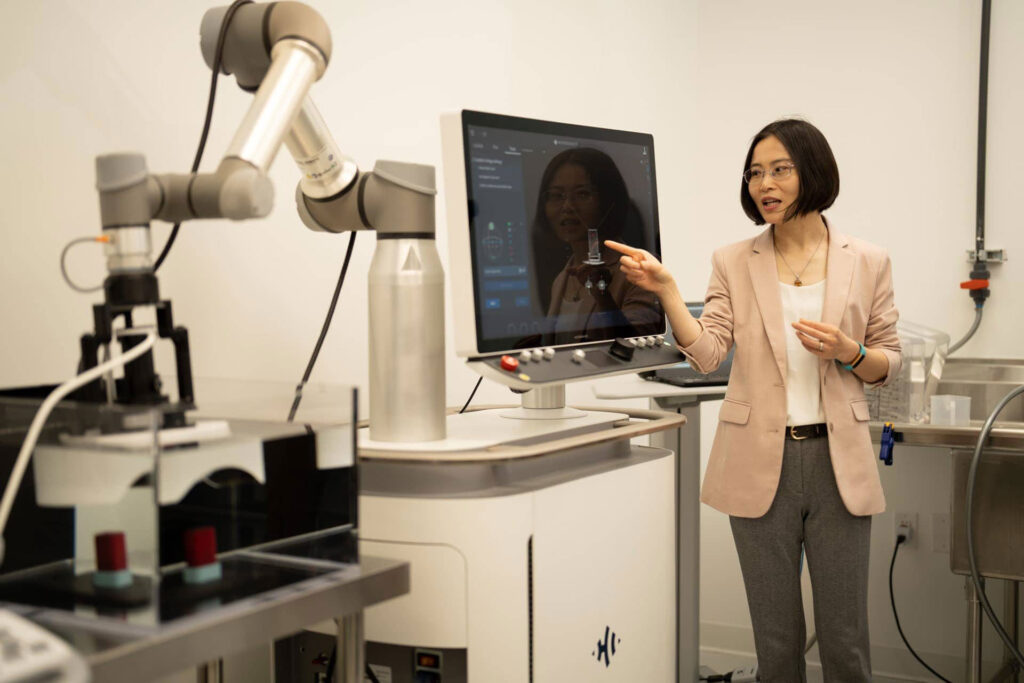
HistoSonics and May Mobility exemplify U-M’s impact on the economy. HistoSonics, founded in 2009, uses histotripsy to destroy targeted tissue and has grown into a $3.75 billion company with a $60 million R&D center in Ann Arbor. May Mobility, launched in 2018, develops autonomous vehicle fleets, employing 340 people globally, with nearly 200 in Michigan.
“HistoSonics is a Michigan success story,” said Mike Blue, president and CEO of HistoSonics. “Our technology was invented and pioneered at the University of Michigan, and the entrepreneurial ecosystem, talent base and community support throughout the state helped transform a bold scientific idea into a company impacting patients around the world.”
Research funding as startup fuel
U-M’s startup ecosystem benefits from one of the largest university research enterprises, supported by federal grants that fund research personnel, equipment, and partnerships. According to a report from the Institute for Research on Innovation and Science, U-M’s federal grants supported over 16,000 jobs and generated nearly $396 million in research-related spending nationwide last year.
Michigan-based vendors received over $164 million, benefitting businesses across all 13 congressional districts. Students, comprising 43% of the research workforce, gain valuable experience, preparing them for careers in Michigan’s growing tech and startup sectors.
Building Michigan’s talent pipeline
Economic growth relies on new discoveries and skilled individuals to advance them. U-M graduates thousands of engineers, scientists, health professionals, entrepreneurs, and business leaders annually to meet workforce demands. By merging research excellence with talent development, U-M ensures Michigan companies have the skilled workforce needed for competition and growth.
Investing in public higher education yields more than degrees; it generates a pipeline of innovations, companies, skilled workers, and economic opportunities. Federal research funding leads to groundbreaking discoveries that evolve into startups, creating jobs and strengthening Michigan’s competitiveness. U-M’s contributions demonstrate its pivotal role in driving statewide economic growth, transforming research into real-world impact, and fostering innovation, opportunity, and prosperity in Michigan.
—
Read More Michigan News