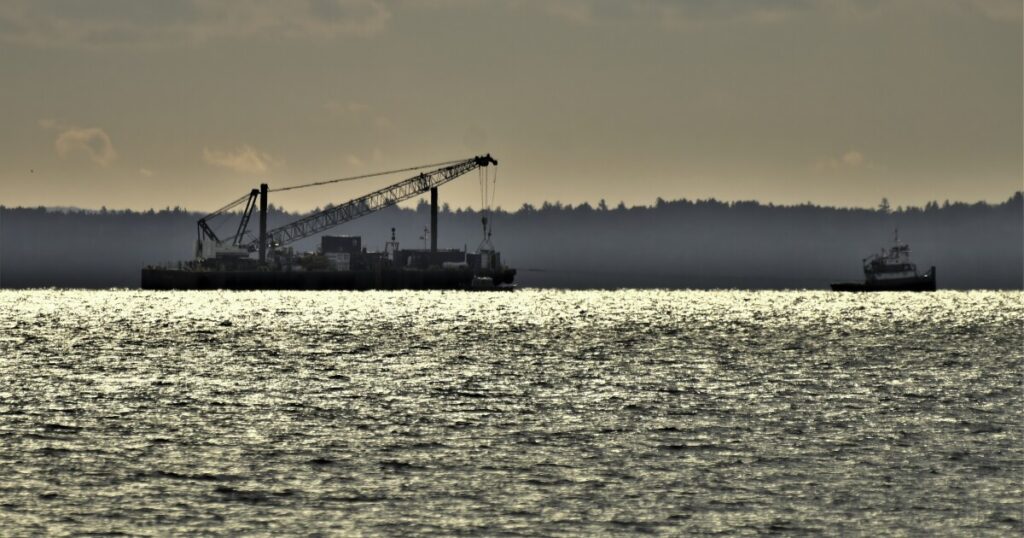
In a significant development for Michigan’s energy sector, two crucial permits have been granted to Enbridge Energy for their ambitious tunnel project. The tunnel, intended to replace aging pipelines under the Straits of Mackinac, has been the subject of extensive regulatory scrutiny.
The Michigan Department of Environment, Great Lakes, and Energy (EGLE) confirmed that Enbridge’s plans passed a thorough evaluation, satisfying various regulatory criteria, including strategies to mitigate impacts on wetlands and cultural sites.
EGLE assessed that “the public and private need for the proposed activity outweighed other public interest criteria.” However, Enbridge must enhance its wetland mitigation plan as part of the permit requirements.
Similarly, the Michigan Department of Natural Resources (DNR) has issued a permit pursuant to Part 365 of the Natural Resources and Environmental Protection Act, necessary for the tunnel’s construction.
Environmental advocacy group Flow Water Advocates criticized the permit approvals, arguing non-compliance with the Michigan Wetlands Protection Act and other environmental statutes. They expressed concerns over prioritizing a foreign company’s interests over local environmental concerns.
Liz Kirkwood, executive director of Flow Water Advocates, remarked, “That these heartbreaking permit decisions were announced during a period of dangerously bad air quality due to climate change-related wildfires is sadly poetic.” She emphasized the broader implications of fossil fuel reliance.
Conversely, Enbridge’s spokesperson, Ryan Duffy, hailed the permits as pivotal for continuing the project, which aims to safeguard the Great Lakes while ensuring energy reliability for the region.
The DNR’s permit imposes specific measures to protect threatened species, including the Houghton’s goldenrod and dwarf lake iris, along with bat habitats. The U.S. Fish & Wildlife Service has also reviewed these impacts and found no threat to the species’ survival.
Enbridge must adhere to several conditions, such as:
- Retaining topsoil and collecting seeds for post-construction restoration of plant populations.
- Monitoring these areas for five years to ensure regrowth.
- Limiting tree clearing to winter months to protect bat populations.
- Avoiding damage to sensitive plant areas during construction.
- Minimizing herbicide usage to maintain natural vegetation.
- Exploring conservation easements for long-term plant protection.
- Seeking further opportunities to aid in plant recovery efforts.
Several additional permits, including a National Pollutant Discharge Elimination System permit renewal, are still pending, which regulate pollutant discharge into surface waters to safeguard water quality.
EGLE noted ongoing legal actions concerning the existing Line 5 pipelines. The U.S. Supreme Court has allowed Michigan’s Attorney General’s lawsuit to proceed in state court, questioning the pipelines’ future operations.
EGLE stated, “The broader dispute involves questions about state authority and long-standing concerns related to environmental and public trust impacts. A final decision in these proceedings will determine whether the existing pipelines may continue to operate.”
For more details on the Line 5 project and related state initiatives, visit Line 5 in Michigan.
Editor’s note: Enbridge is among Michigan Public’s corporate sponsors.
—
Read More Michigan News