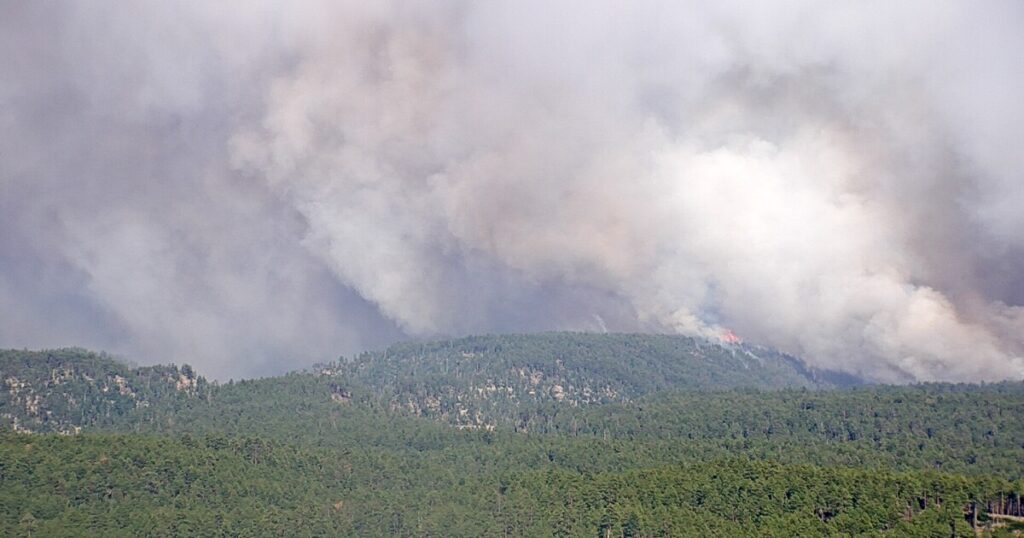
Arizona’s Fire Season Intensifies Amidst Nationwide Surge in Wildfires
As wildfires continue to ravage vast landscapes across the United States, Arizona finds itself in the midst of a slightly more active fire season than the previous year. This mirrors a broader national trend of increased wildfire activity, raising concerns about federal preparedness.
In Arizona alone, there have been 883 reported fires by mid-July, marking an increase from the 839 fires during the same period last year, according to Tiffany Davila, spokesperson for the state’s Department of Forestry and Fire Management. Despite this uptick, Davila maintains, “It’s about on track. It’s nothing crazy.”
Human activity has been a significant factor, responsible for 714 of these fires. Notable incidents include the Pocket Fire near Sedona, the Sycamore Fire close to Roosevelt Lake, and the Hazen Fire near Buckeye, all of which are either fully contained or nearing containment.
Nationally, the situation is more dire. Over 113,000 wildfires have erupted across the country, devastating more than 3.6 million acres in states such as Arizona, Utah, Minnesota, and Oregon. The scale of the destruction has sparked debates about the readiness of federal agencies.
“We’ve had other early years like this, but it’s never a good thing,” says Riva Duncan, president of Grassroots Wildland Firefighters, a nonprofit organization. Duncan highlights challenges such as understaffing and resource limitations, exacerbated by budget cuts from the quasi-governmental DOGE agency, impacting federal fire management efforts.
Despite these national challenges, Davila insists Arizona’s response hasn’t been hindered. “We’ve not seen any implications from that,” she asserts, emphasizing strong partnerships with federal entities like the U.S. Forest Service and the Bureau of Land Management.
National Firefighting Efforts Under Strain
Currently, over 17,000 personnel are engaged in battling 46 large, uncontained fires nationwide. The federal government has even deployed military air tankers to assist, indicating that private firefighting resources are stretched to their limits. The National Interagency Fire Center has elevated the national preparedness level to four, just one step below the maximum.
Duncan anticipates the potential need for international aid, such as assistance from Canadian firefighters, amidst the prolonged and intensifying fire season. The impact of climate change is evident, with wildfires becoming more extensive and destructive over recent years.
“We talk about a fire year instead of a fire season now, because summer is always burning,” notes Duncan, pointing to the ongoing challenges faced by federal fire agencies, including staffing shortages and inadequate facilities.
Adding to Arizona’s challenges, meteorologists forecast an El Niño weather pattern, which could bring hotter, drier conditions and potential flooding as the monsoon season progresses.
—
Read More Arizona News