The economic landscape between the United States and Canada faces potential upheaval as President Donald Trump announces a significant increase in tariffs. Citing perceived discrimination against American goods, Trump has imposed a 50% tariff on most Canadian imports, sparking concerns of rising inflation and strained bilateral relations.
According to a senior administration official, Canada has been singled out along with China for retaliating against previous U.S. tariffs. These latest tariffs, enacted under Section 338 of the 1930 Trade Act, bypass energy products, potash, fish, and critical minerals. However, they encompass products previously exempted under the U.S.-Mexico-Canada Agreement (USMCA), which was not renewed by the U.S., necessitating new trade discussions.
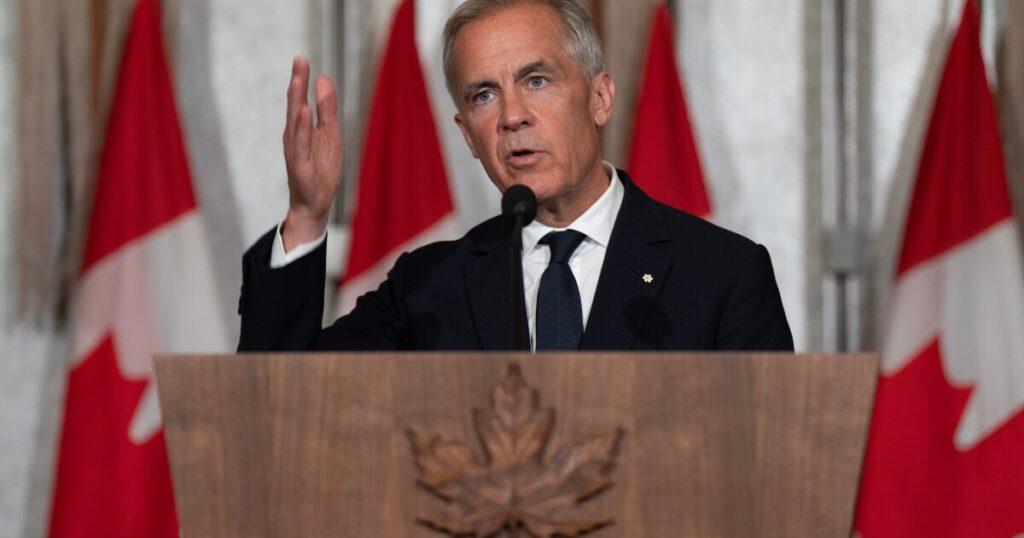
A White House fact sheet indicates a 30-day window before these tariffs take effect, allowing time for potential negotiations. Canadian Prime Minister Mark Carney has expressed readiness to engage in dialogue with the U.S., emphasizing Canada’s commitment to “free and fair trade.” Carney stated, “Canada stands ready to engage intensively to address outstanding issues with the U.S. to the mutual benefit of our citizens.”
Canada Faces the Threat of a Broader Trade Conflict
The potential for a full-scale trade war looms, with Canadian officials warning of possible reciprocal measures. Ontario Premier Doug Ford suggested a tit-for-tat response, stating, “If these tariffs proceed, Canada should respond tariff for tariff, dollar for dollar,” on social media.
Candace Laing, CEO of the Canadian Chamber of Commerce, has called for meaningful negotiations within the next month to avoid further escalation. Similarly, Chris Swonger, CEO of the Distilled Spirits Council of the United States, urged a negotiated resolution to protect market access and avoid damage to the U.S. hospitality sector.
Scott Lincicome from the Cato Institute highlighted the broader economic risks, noting that the invocation of Section 338 could extend beyond Canada, creating “massive uncertainty” globally. Lincicome remarked, “The invocation of 338 is the nuclear option for Trump tariffs.”
Political and Economic Implications for Trump
As midterm elections approach, the tariffs present significant challenges for Trump, with potential economic repercussions such as inflation and recession. The Supreme Court previously determined that Trump lacked the authority to impose tariffs under an economic emergency, prompting alternative legal strategies to implement import taxes.
Tariffs, essentially import taxes, often translate to higher consumer prices. Critics, including Rep. Suzan DelBene, warn that these measures could backfire, leading to retaliatory tariffs against U.S. industries. DelBene stated, “These new taxes will raise prices on American families and likely lead to retaliation against the very industries Trump purportedly wants to protect.”
The tariffs may exacerbate Trump’s economic approval ratings, with rising inflation rates linked to tariffs and global tensions, including the conflict in Iran, affecting oil prices.
Ongoing Trade Tensions with Canada
The Trump administration continues to scrutinize Canada’s trade practices. Allegations include unfair treatment of American autos, alcohol, and dairy products. Specific grievances include a 25% Canadian tariff on certain U.S. vehicles and restrictions on American alcoholic beverages by most Canadian provinces.
The relationship between Trump and Carney remains tense, with past exchanges underscoring the friction. During the World Economic Forum, Carney criticized powerful nations’ economic coercion, prompting Trump to assert, “Canada lives because of the United States.”
Copyright 2026 NPR
—
Read More Michigan News