States Face Water Reductions as Colorado River Management Plan Unfolds
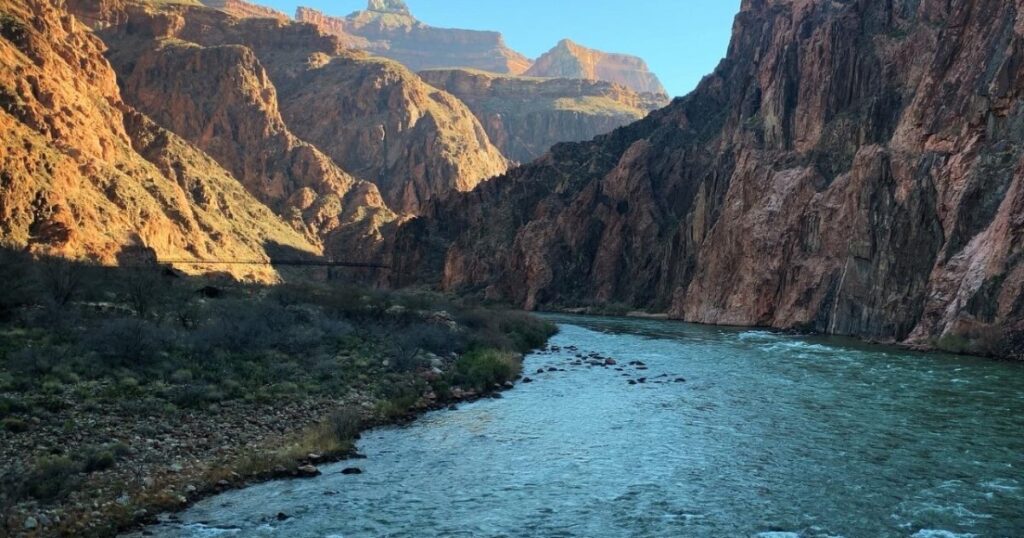
The U.S. Department of the Interior has unveiled a new scheme to manage the dwindling resources of the Colorado River, compelling three states to cut back on water usage while encouraging voluntary conservation efforts from four others. This initiative aims to protect the critically low water levels at Lake Powell and Lake Mead, reservoirs vital to the region.
Under the new directive, Arizona, California, and Nevada are set to collectively trim their water consumption by 1.25 million acre-feet annually for the next two years. This measure comes with a conditional clause for further reductions if circumstances deteriorate. In response, Nevada has taken legal action against the Interior Department, seeking to halt the plan.
Conversely, Colorado, Utah, New Mexico, and Wyoming are not under the mandate for obligatory reductions. Instead, these states are devising programs to voluntarily cut back on water usage. Colorado’s river representative, Becky Mitchell, emphasized the shared responsibility to preserve the water system, stating, “Not because we have to, or that we feel like we legally have to, but because the importance of this system and the survival of this system is a responsibility for everyone.”
The federal strategy anticipates contributions of up to 200,000 acre-feet annually from the Upper Basin, contingent upon favorable conditions. Additionally, $100 million is allocated to encourage reduced water use among farmers, cities, and other stakeholders in the Upper Basin. Colorado, Wyoming, and Utah are also initiating state-level programs to support these efforts, with project applications expected to open soon.
“Our position has been and continues to be that we’re going to be part of the solution,” remarked Amy Ostdiek of the Colorado Water Conservation Board. She highlighted the need for collaborative efforts without compromising their own water security.
Among the proposals is the creation of a “conservation pool” within Lake Powell, allowing conserved water from the Upper Basin to be stored. John Berggren from Western Resource Advocates views this inclusion positively but notes that operational specifics remain undecided. The framework also permits agreements to draw from reservoirs when Lake Powell’s levels threaten hydropower capabilities, a situation that prompted water releases from Flaming Gorge Reservoir this year.
As these plans unfold, crucial questions pertain to the allocation and crediting of conserved water, particularly in addressing shortages and fulfilling legal water delivery obligations.
This article is a product of the Mountain West News Bureau, with contributions from several regional public radio stations and NPR, supported by the Corporation for Public Broadcasting and Eric and Wendy Schmidt.
—
Read More Arizona News

![Botched Ad Mix-Up: Super PAC Error in Arizona Congressional Race[embed]https://www.youtube.com/watch?v=bEMgIlCkHz0[/embed]](https://www.kitchentablenews.org/wp-content/uploads/2026/10/Botched-Ad-Mix-Up-Super-PAC-Error-in-Arizona-Congressional-RaceembedhttpswwwyoutubecomwatchvbEMgIlCkHz0embed.com2F0e2F962Fe971102f49e7a4f2a64fd3cc60a22Fjonatha.png "Botched Ad Mix-Up: Super PAC Error in Arizona Congressional Race[embed]https://www.youtube.com/watch?v=bEMgIlCkHz0[/embed]")