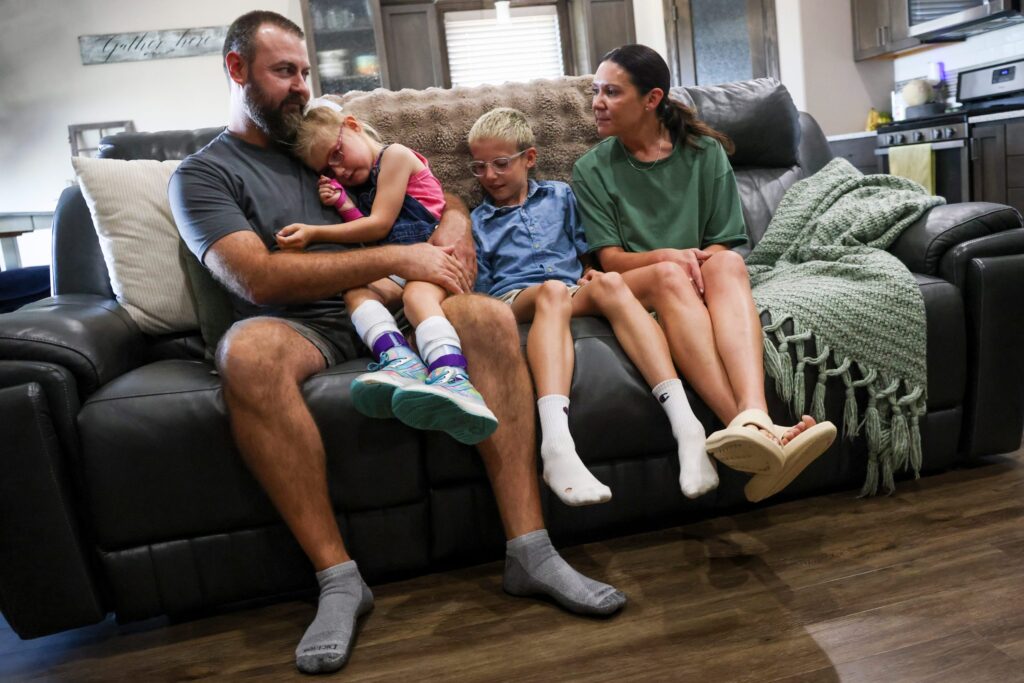
Before Kris and Matthew Ferderer could take their 9-month-old daughter, Elliott, home for the first time, they had to receive specialized training to manage her oxygen equipment, feeding tubes, and a catheter delivering medication directly to her heart.
Elliott, now 6, was born with a rare heart defect requiring a transplant. Complications led to seizures, strokes, and cerebral palsy, affecting her mobility. Blood flow loss during the transplant resulted in the loss of her toes and heel.
“We were full-on ICU in our home,” said Kris from Mandan, North Dakota. “We were doing everything they were doing.”
Elliott’s complex needs qualify her for Medicaid-funded care. However, finding reliable home care aides was challenging; Kris once found an aide intoxicated. Consequently, Kris left her nonprofit job to care for Elliott herself.
In response to a shortage of home aides for children with complex needs, 30 states are paying parents to care for their children. According to the American Academy of Pediatrics, such care is essential for these children to attend school and integrate into the community.
States face challenges in crafting programs that balance cost-control with the need to support families adequately. A key issue is determining what Medicaid considers “extraordinary care,” which surpasses typical parental responsibilities.
The Ferderers applied to North Dakota’s Family Paid Caregiver Pilot Program in April 2024. Despite Elliott’s extensive needs, their application was denied, scoring too low on the state’s assessment of extraordinary care.
In contrast, Toby Lunstad from Mandan qualified for the program, providing care for her 11-year-old daughter, Addilynn, who has epilepsy and developmental delays. Lunstad, among 75 families accepted from over 550 applicants, noted the program’s financial and personal validation benefits.
Paying parents for caregiving might seem unusual, but qualified workers are scarce. This presents challenges, as many eligible children can’t safely attend regular child care programs.
Dr. Mark Brittan from the University of Colorado notes that for many parents, caregiving is their sole income source, as they cannot leave home. He coauthored a study on Colorado’s program, which allows parents to be certified as nursing assistants, enabling Medicaid payments.
Federal Medicaid typically doesn’t pay family caregivers, but pandemic-era rules allowed 37 states to seek exemptions, continuing after temporary rules ended. Although popular, states decide how many parents can participate.
In Arizona, more than 6,000 parents were paid to care for their children as of June 2024. Oregon initially funded 155 participants, adding 75 more when costs proved lower than expected.
North Dakota parents can earn about $166 daily, up from $77 when the program began in 2024. They can bill five days a week, earning up to $43,000 annually. Veronica Zietz, from the North Dakota Protection & Advocacy Project, emphasized the need for more funding to prevent families from falling into poverty.
Defining “extraordinary care” helps control costs and prevent fraud. Idaho cited fraud allegations when ending its parental caregiver program. Indiana faced a lawsuit over program changes but reinstated payments for two mothers.
Kim Musheno from The Arc of the United States argues against using fraud claims to justify funding cuts. Arizona’s family caregiving program initially lacked restrictions, causing budget issues. Jon Meyers from the Arizona Developmental Disabilities Planning Council noted the need for stricter rules.
Arizona legislators capped parental care payments at 40 hours weekly, despite children being authorized for more Medicaid care hours. New age-based restrictions were announced but paused after backlash.
In North Dakota, the Ferderers appealed their program exclusion, arguing the extraordinary care assessment didn’t consider Elliott’s medical complexity. The North Dakota Supreme Court ruled the state failed to follow proper rulemaking procedures, prompting officials to restart the process.
For the Ferderers, challenging the system is about getting it right for Elliott and others. Though Elliott’s medical needs remain complex, she’s eager to start kindergarten with a full-time aide, whom Kris plans to train.
—
Read More Kitchen Table News