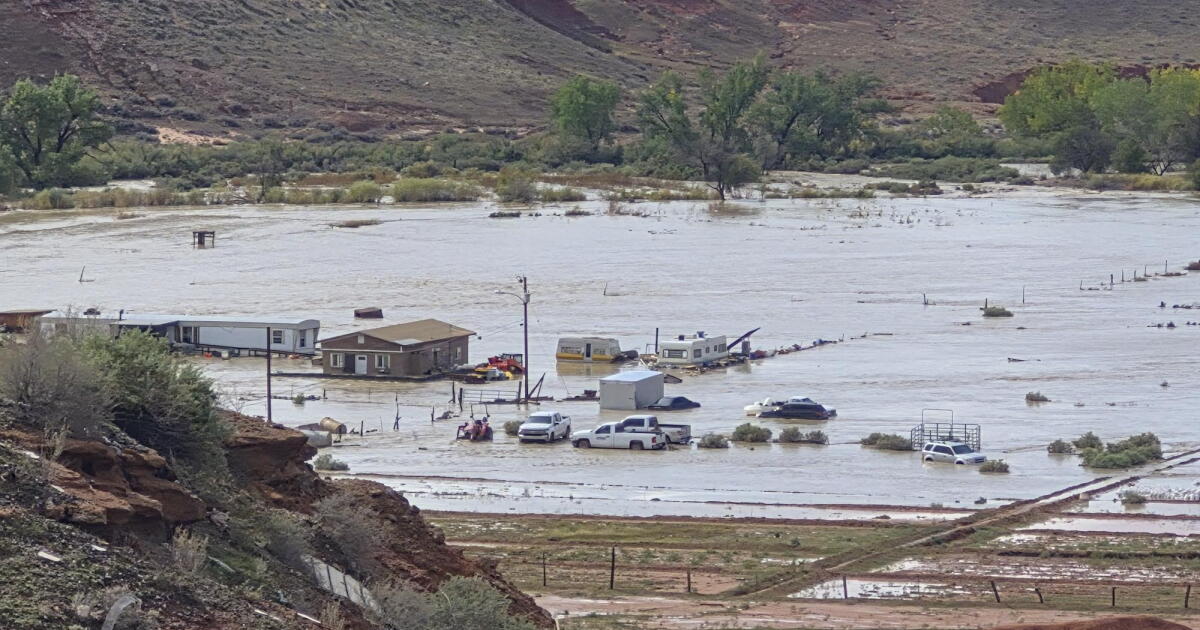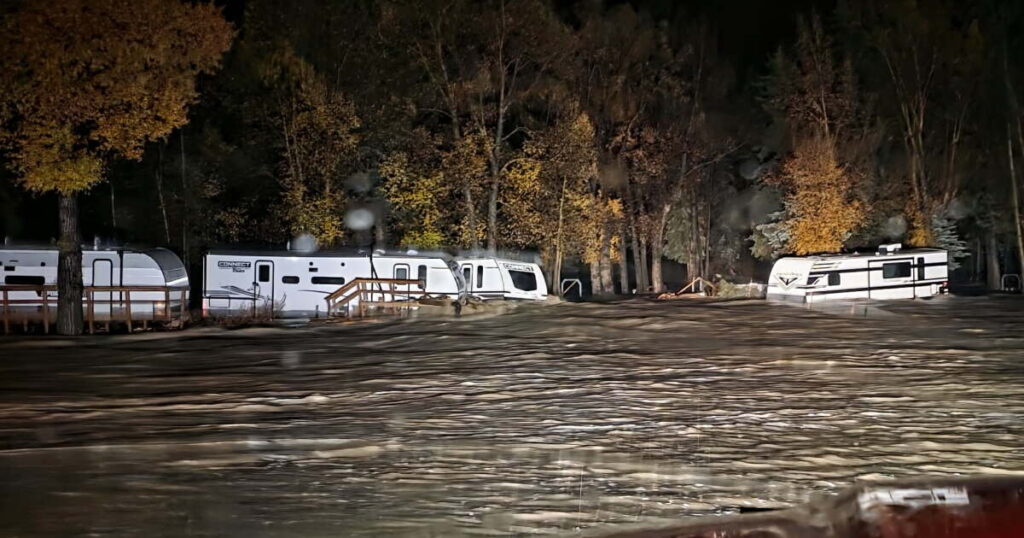
In an unexpected deluge, the normally arid regions of New Mexico and Arizona are contending with the aftermath of heavy rainfall and subsequent flooding. The surge, fueled by more than 5 inches (13 centimeters) of rain in some areas, originated from the Colorado mountains and has left hundreds of homes without electricity.
The San Juan River, once swollen to record levels, is now gradually subsiding. However, additional storms continue to threaten, prompting local officials to advise residents of potential further flooding (source).
“This is not over, and we need you to monitor alerts,” cautioned Farmington, New Mexico, Police Chief Steve Hebbe during a press briefing.
The severe weather has impacted approximately 2,000 individuals in Farmington and surrounding areas near the Four Corners, where Arizona, Colorado, New Mexico, and Utah converge.
Rescue efforts have escalated since Wednesday, with hundreds needing assistance over the following days. San Juan County spokesperson Devin Neeley reported that numerous people were stranded, some on rooftops, necessitating 11 helicopter hoist operations by the New Mexico National Guard.
Despite the extensive evacuations, shelters remain underutilized, suggesting many evacuees are staying with acquaintances. Authorities continue to enforce evacuations due to hazards like downed power lines and leaking gas lines, alongside the ongoing threat of additional storms over the weekend.
South Fork Fire Rescue via AP
/
South Fork Fire Rescue
“There’s a lot of anxiety, and there’s a lot of frustration,” expressed San Juan County Sheriff Shane Ferrari. “But please understand we are blocking those areas for your safety.”
Authorities in both Colorado and New Mexico have advised against the use of drones for property assessment or sightseeing, as they pose risks to rescue operations. Additionally, residents are urged to reserve 911 calls for genuine emergencies only.
Further downstream, the San Juan River has inundated parts of the Navajo Nation, prompting the closure of a 2-mile (3.2-kilometer) segment of U.S. Highway 64 near Shiprock due to water on the road.
In Colorado, the San Juan River has surged through Pagosa Springs, marking a flood event not seen in over a century, surpassing previous 100-year flood levels by 2-3 feet (60-90 centimeters). The Animas River also experienced significant flooding in Durango, though not at record levels.
Flooding has extended to areas as far east as the Conejos River in south-central Colorado, leading Governor Jared Polis to declare disaster eligibility for Conejos County. While some routes remain closed, such as U.S. 160 near Pagosa Springs, the Million Dollar Highway has reopened following repairs.
The current flooding is part of a series of heavy rain events caused by tropical moisture from the Pacific, concluding a prolonged drought. Similar flooding recently impacted the Grand Canyon and parts of New Mexico.
The region’s geomorphology, characterized by rocky deserts, is naturally susceptible to flash floods, and the saturated soils exacerbate the risk.
This week’s severe thunderstorms in northern Arizona have triggered widespread flooding in numerous Hopi communities. Leaders on Thursday declared a state of emergency.
—
Read More Arizona News