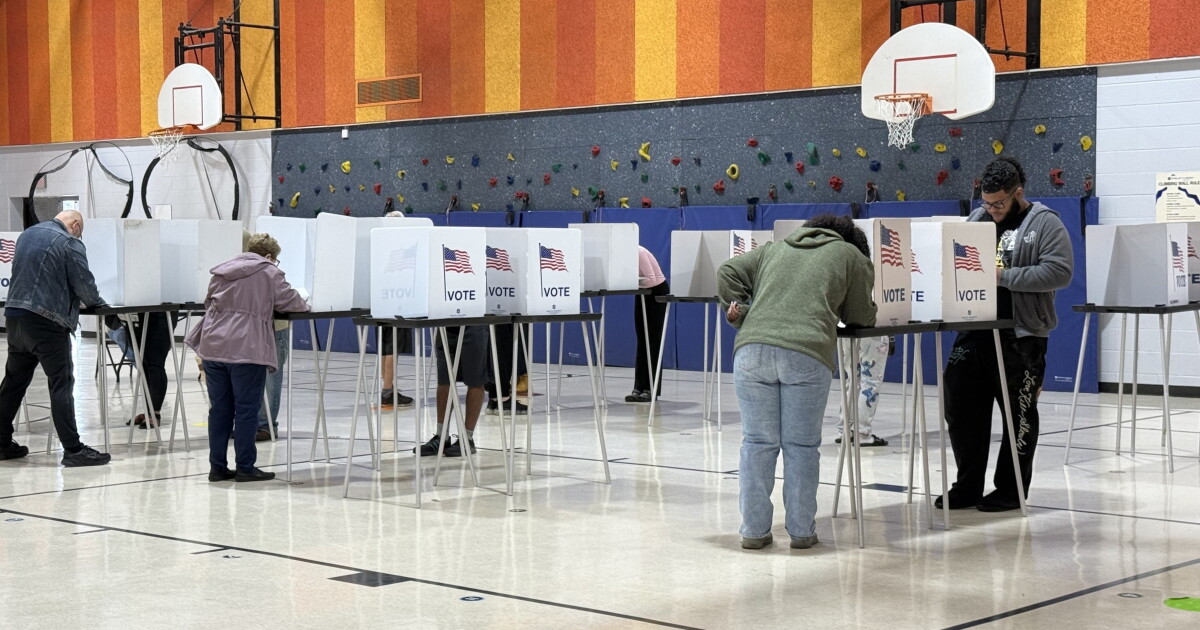
As voters prepare for the November 3rd elections, several statewide propositions invite deliberation on key societal issues ranging from taxation to education. Despite the complexity often embedded in official descriptions, understanding these measures can empower voters to make informed decisions.
This article aims to clarify the statewide propositions to assist voters during the midterms. For more localized ballot measures in northern Arizona communities, KNAU provides a detailed guide.
It’s noteworthy that all statewide questions on this year’s ballot originated from a Republican-majority legislature following Governor Hobbs’ vetoes on similar bills. Despite numerous initiatives by citizen groups, legal challenges prevented any from reaching the ballot.
Prop. 141
Objective: Prohibits taxes based on vehicle miles and unauthorized monitoring of vehicle travel.
Impacted Groups: Vehicle owners, particularly electric vehicle (EV) users, who currently do not pay fuel taxes like gasoline users.
Support Rationale: “I don’t want the government knowing how many miles I drive or tracking my driving habits. I believe the government should encourage adoption of electric vehicles by giving them a tax break.”
Opposition Rationale: “I believe everyone who uses public roads and highways should help pay for them. I don’t believe EV users should get special treatment.”
Prop. 142
Objective: Enhances constitutional bans on preferential treatment or discrimination based on race, ethnicity, or other classes.
- Prohibits requirements supporting preferential treatment based on race or ethnicity in jobs, education, or contracts.
- Bans public funding for race or ethnicity-based preferential initiatives.
- Outlaws different disciplinary practices based on race or ethnicity.
Impacted Groups: Primarily individuals within the public education sector.
Support Rationale: “I believe the law should be colorblind as to race or ethnicity. I don’t think the present law promotes a level playing field.”
Opposition Rationale: “The current law already bans discrimination and doesn’t need to be changed. I think the majority already enjoys privilege in society and current protections for others do not ‘discriminate’ against me.”
Prop. 144
Objective: Strengthens voting requirements, including mandatory ID for all voters and restrictions on foreign national campaign contributions.
- Mandates voter identification, including for mail-in voters.
- Restricts voting to U.S. citizens only.
- Requires government-issued ID.
- Allows voters to have ballots tabulated immediately at polling locations.
- Bans foreign contributions to political campaigns.
- Aligns election law challenge standards with federal law.
Impacted Groups: All voters, with a significant impact on mail-in voters.
Support Rationale: “I don’t believe elections are secure enough now. I want to make sure only citizens are allowed to vote. I want to know the results as soon as possible.”
Opposition Rationale: “The law already bans non-citizens from voting, and it happens very rarely. Forcing mail-in voters to present their ID is difficult or impractical. I want the results to be accurate, no matter how long it takes.”
Prop. 316
Objective: Suspends new local grocery taxes from mid-2025 to mid-2027 and mandates voter approval for future taxes capped at 2%.
Impacted Groups: Consumers in areas with local grocery taxes.
Support Rationale: “Groceries are essential and many people are having trouble affording them today. This measure would lower the price that some shoppers pay.”
Opposition Rationale: “Passing this measure might force some local governments to cut services. Locally-elected leaders should decide what is right for their constituents without interference from the legislature.”
Prop. 317
Objective: Labels drug cartels as terrorist organizations, empowering Arizona’s Department of Homeland Security to combat them.
Impacted Groups: No direct impact on individuals or drug cartels.
Support Rationale: “It sends a message that organized drug trafficking is a form of terrorism.”
Opposition Rationale: “Sending messages without providing the money and resources to back them up accomplishes nothing.”
Prop. 318
Objective: Mandates student-athletes to compete based on their birth-assigned sex, with separate teams for males, females, or coed.
Impacted Groups: Few, with 16 transgender athlete requests in Arizona over five years.
Support Rationale: “I believe there are two sexes, and they are physically distinct. I believe it’s unfair to force biological girls to compete against biological boys.”
Opposition Rationale: “I don’t believe transgender youth should be denied the opportunity to compete on sports teams. I believe school sports should be governed by schools and athletic associations, not the legislature.”
Prop. 319
Objective: Limits traffic camera use, requiring local government consent every decade.
Impacted Groups: Motorists in areas employing photo enforcement.
Support Rationale: “I believe traffic cameras violate my right to privacy. I don’t trust automated systems to replace human police officers.”
Opposition Rationale: “Driving on a public road is a privilege and there is no expectation of privacy. This measure would ban beneficial red-light cameras along with controversial speed-limit cameras.”
Prop. 320
Objective: Requires certain school districts to allocate at least 60% of operational spending to direct instructional expenses.
Impacted Groups: Parents, students, and staff in specific districts.
Support Rationale: “I’m concerned public schools spend too much on non-essential things. I don’t trust local school officials to spend tax money responsibly.”
Opposition Rationale: “I don’t want the state legislature preempting decisions by my locally elected school board. Many students need special support that is not covered under ‘direct instructional expenses.’”
—
Read More Arizona News