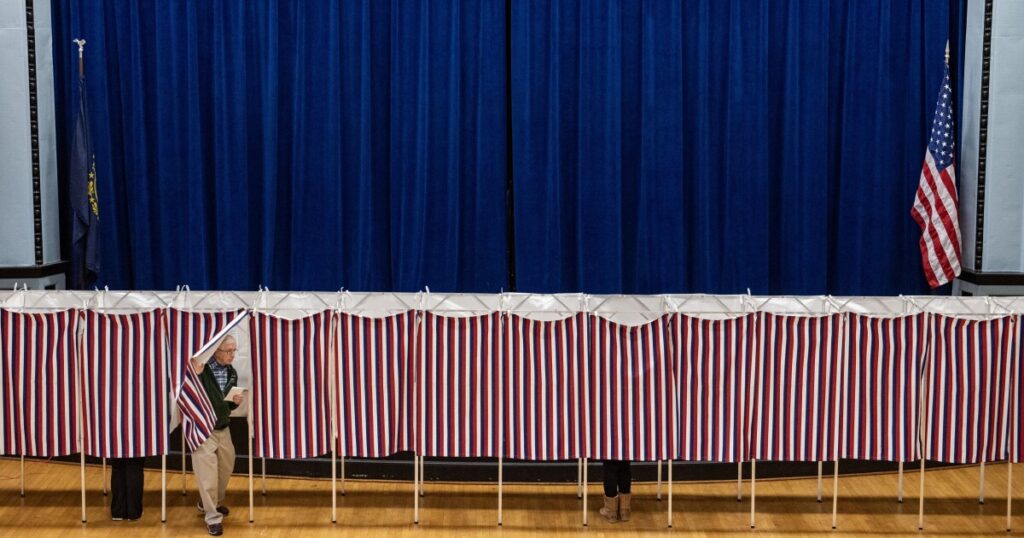
The Trump administration’s recent actions have sparked concern among election security experts as measures to counter foreign interference in U.S. elections are being rapidly dismantled. This reversal of efforts comes despite the significant progress made during Trump’s first term, when Russian meddling in the 2016 elections was brought to light.
According to sources familiar with the developments, the Department of Homeland Security’s Cybersecurity and Infrastructure Security Agency (CISA) has placed staff working on countering foreign misinformation and disinformation, along with 10 regional election security advisers, on administrative leave. These sources requested anonymity due to fear of retaliation.
Alongside these changes at CISA, Attorney General Pam Bondi has disbanded an FBI task force dedicated to combating foreign influence from nations such as Russia and China. The directive emphasizes reallocating resources to more pressing priorities and addresses concerns over prosecutorial discretion. Concurrently, the enforcement of the Foreign Agents Registration Act by the Justice Department has been reduced, affecting prosecutions of Americans receiving covert foreign funding.
Experts warn that the shutdown of the United States Agency for International Development’s technology and digital governance initiatives provides an opportunity for countries like Russia and China to increase their influence. These experts highlight the potential security vacuum created by the Trump administration’s actions.
During his tenure, President Trump expressed dissatisfaction with allegations of Russian interference supporting his campaign. While the 2020 election was marked by his unsubstantiated claims of it being “stolen,” CISA played a role in debunking these assertions, a move that contributed to the firing of the agency’s head.
NPR’s sources indicate uncertainty about the future of CISA employees still engaged in election security work. Experts consulted by NPR express concern over the Trump administration’s approach to civil servants countering election threats, including misinformation and regional security issues.
“Every cut made to our election security and foreign malign influence operations is like handing a gift on a silver platter to our foreign adversaries such as Russia, China and Iran,” stated Kathy Boockvar, president of Athena Strategies and former Pennsylvania Secretary of State. She emphasized the critical role played by CISA’s regional officers and the FBI task force in securing state and local elections.
Trump signed the bill that created CISA in 2018
In 2018, Trump signed a bill establishing CISA to address threats from nation-states and cybercriminals. CISA’s responsibilities included election security, but tensions between Trump and investigators examining Russian disinformation’s impact on the 2016 election persisted.
Although the Mueller investigation did not conclusively prove collusion between the Trump campaign and Russia, it did highlight Russian interference to bolster Trump’s campaign. Trump frequently dismissed the investigation as a “hoax.”
During the 2020 election, Trump’s promotion of false narratives about widespread voter fraud led to his eventual dismissal of CISA Director Christopher Krebs, following CISA’s efforts to debunk these claims through a Rumor Control webpage.
Republicans have criticized CISA for allegedly exceeding its mission and infringing on conservative free speech. Homeland Security Secretary Kristi Noem pledged to reduce CISA’s role in combating online misinformation from foreign adversaries during her confirmation hearing.
Despite hopes of preserving CISA’s independence, recent developments suggest otherwise. CISA’s role in uncovering a Chinese espionage campaign targeting U.S. telecoms initially shielded it from broader government downsizing efforts. However, deferred resignation offers were extended to eligible CISA employees in early February, raising questions about their legality and funding.
Have information you want to share about the ongoing changes at CISA or across the federal government? Reach out to Jenna McLaughlin, who is available through encrypted communications on Signal at JennaMcLaughlin.54
Copyright 2025 NPR
—
Read More Michigan News
![Jody White’s Unconventional Michigan Supreme Court Candidacy Explored[embed]https://www.youtube.com/watch?v=8NfxFIPE4ac[/embed]](https://www.kitchentablenews.org/wp-content/uploads/2026/10/Jody-Whites-Unconventional-Michigan-Supreme-Court-Candidacy-Exploredembedhttpswwwyoutubecomwatchv8NfxFIPE4acembed.com2F842F0e2Fc7223daa43c9876b36a4e00773a42Fme-supc.png "Jody White’s Unconventional Michigan Supreme Court Candidacy Explored[embed]https://www.youtube.com/watch?v=8NfxFIPE4ac[/embed]")