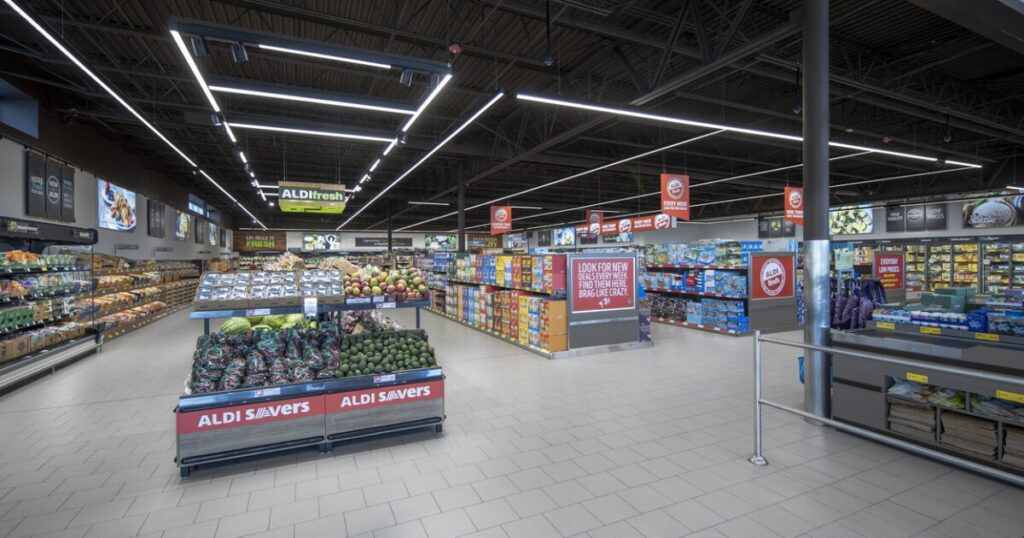
The competitive landscape of the grocery sector is seeing significant shifts, with Aldi making noteworthy strides in the U.S. retail market. As economic concerns drive more consumers to dine at home, the discount grocery chain plans an ambitious expansion, adding over 180 new stores across the country this year.
Aldi, based just outside Chicago, revealed its strategic move to bolster its presence with new distribution centers in Florida, Arizona, and Colorado. This is part of its long-term plan to invest $9 billion in the U.S. by 2028. The company is also targeting a substantial increase in its store count in Colorado and aims to double the number of stores in Las Vegas by 2030.
Since the onset of inflationary pressures in 2021, Aldi has rapidly expanded, achieving a record number of new store openings last year. Although food inflation has experienced a slowdown, it still rose by 2.4% last year and has surged about 25% since the pandemic. In December, grocery prices saw a 0.7% increase from the previous month, with price hikes accelerating at a faster pace in 2025 than in prior years, according to the U.S. Labor Department.
Specific price changes were noted in December, where beef and veal prices went up by 1% from November, marking a 16.4% increase from the previous year. Coffee saw a 1.9% monthly rise, totaling a nearly 20% increase over the year. Meanwhile, egg prices fell by 8.2% in December, continuing their decline after last year’s surge due to a bird flu outbreak.
Amidst these economic dynamics, former President Donald Trump has highlighted inflation in his campaign, promising immediate price reductions if re-elected. However, this stance has not resonated with all Americans, some of whom question the administration’s prioritization of the issue.
Research by The Associated Press-NORC Center for Public Affairs Research indicates that most U.S. adults have noticed unusual price increases for groceries and electricity recently.
Aldi is capitalizing on this economic environment by capturing a larger market share as consumers increasingly turn to cost-saving options. This trend has seen Americans opting for store brands over traditional name brands and choosing discount and thrift store shopping.
This consumer shift, which began before Donald Trump’s trade policies, has gained momentum in the past year. Aldi announced plans in 2024 to open 800 new stores by 2028, with a record 225 locations launched in the U.S. last year, aiming for nearly 2,800 stores by year-end and a target of 3,200 by 2028.
Traditional grocery retailers are facing heightened competition from discount chains and large retailers like Walmart, alongside emerging players such as Amazon.com. In December, Amazon expanded its same-day perishable grocery delivery service to over 2,300 cities and towns, with further expansion plans underway.
—
Read More Arizona News