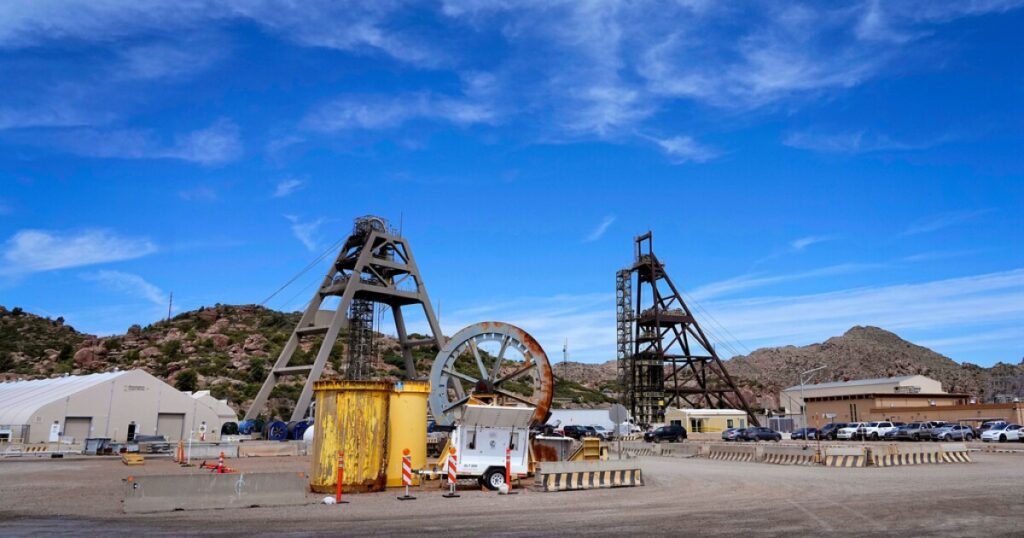
As one of the largest copper deposits in North America is set to be mined, the land transfer for this operation has sparked significant controversy. The federal government has finalized the transfer of forest land in Arizona to international mining companies, despite strong opposition from local Apache groups.
The U.S. government officially handed over the land to Resolution Copper last Friday, following an appeals court decision that dismissed attempts by the San Carlos Apache Tribe and environmentalists to halt the transfer. The court asserted that the legal arguments presented by the plaintiffs were unlikely to succeed, leading to the removal of an emergency injunction previously in place.
This land, notably including Oak Flat, has long been a site for cultural and religious activities for the San Carlos Apache and other Native American tribes. Known as Chi’chil Bildagoteel by tribal members, efforts to preserve its sanctity have been ongoing for years, led by the tribe, Apache Stronghold, and other advocates.
The appeals court acknowledged that the land transfer would drastically change the landscape, potentially destroying areas sacred to the plaintiffs. “Despite those grave harms to Native religious practice, Congress has chosen to transfer this land, and plaintiffs have not raised any viable challenges to that decision,” the court noted.
U.S. Forest Service attorneys have consistently argued that the agency’s hands are tied, as the land exchange was mandated by Congress through a national defense spending bill approved in 2014 under President Barack Obama.
U.S. Agriculture Secretary Brooke Rollins highlighted the project’s alignment with former President Donald Trump’s energy independence goals. She stated, “Completing this land exchange unlocks a major domestic source of copper, essential for defense, grid modernization and next-generation energy, and positions the nation to secure its future by expanding mineral production and unleashing America’s full resource potential.”
Resolution Copper, a joint venture between Rio Tinto and BHP, projects the mine will bring approximately $1 billion annually to Arizona’s economy and generate thousands of jobs. The initiative has received backing from the local community of Superior.
The company asserts that the project has undergone thorough evaluation by the Forest Service, which engaged in consultations with tribes linked to the land. “Courts at every level have consistently ruled in favor of Resolution Copper, and three different presidential administrations have supported this project,” said Vicky Peacey, the president and general manager of Resolution Copper. “It is time for the meritless litigation to end.”
Nevertheless, questions about the timeline for initiating work at the site remain unanswered by the company. Meanwhile, Wendsler Nosie Sr. of Apache Stronghold voiced ongoing concerns about water use and potential contamination, emphasizing the broader implications of the Oak Flat conflict. “The fight for Oak Flat raises critical issues about the environment and our nation’s commitment to Native rights and religious freedom,” Nosie remarked. “But at its heart, it is a battle for our sacred and holy land, the faith that has always been defined by it, and the right to have our religious traditions respected and protected.”
Tribal leaders testified before a Senate committee in support of a landmark agreement that would provide Colorado River water to the Navajo Nation, Hopi Tribe and San Juan Southern Paiute Tribe.
—
Read More Arizona News