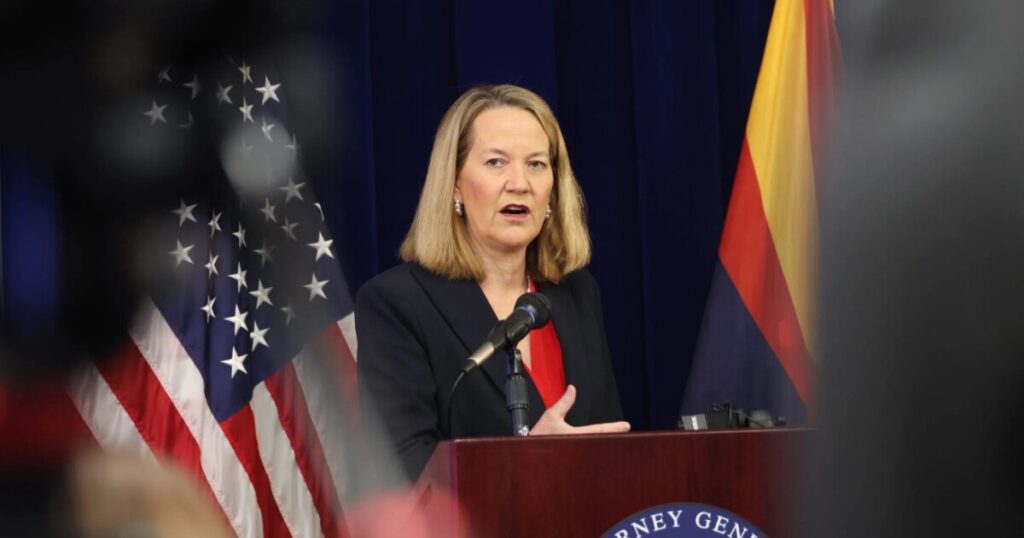
In an unfolding legal battle, the Arizona Attorney General’s Office has taken action against nine health insurance companies, accusing them of collaborating with a technology firm to reduce payments to healthcare providers while increasing patient costs. The lawsuit, lodged in Maricopa County Superior Court, targets MultiPlan, a billing and data analytics firm, for allegedly aiding insurers in minimizing out-of-market medical care payments.
The lawsuit claims MultiPlan used data from insurers to identify the lowest payment a healthcare provider might accept, with insurers then adopting these rates instead of determining their own. This practice reportedly led to a cycle of below-market payments being reinforced by an algorithm, according to Attorney General Kris Mayes.
“Insurers would point to MultiPlan. MultiPlan would point to insurers. And in a coordinated effort, they would pressure providers, doctors, nurses, and hospitals into accepting that low offer,” Mayes stated. She further explained how the insurance companies allegedly shared data to suppress competition, breaching the Arizona Uniform State Antitrust Act.
MultiPlan has refuted these allegations. Jen O’Connor from Claritev, MultiPlan’s parent company, emphasized, “The allegations are without merit, and the company stands by its position that it complies with state and federal antitrust laws.” Similarly, Aetna and Health Care Service Corporation, two of the insurers named, have denied wrongdoing.
Who is impacted?
The alleged scheme notably impacts individuals with preferred provider organization (PPO) plans. These customers might face unexpectedly high out-of-pocket expenses due to lower reimbursements made by insurers to providers. The lawsuit draws parallels with a past settlement involving Ingenix, accused of similar practices.
The suit also claims that by misleading consumers about the benefits of PPO plans, the insurers violated Arizona’s Consumer Fraud Act. Dr. Andrew Carroll, a family medicine doctor, illustrated the practical implications, describing how limited specialist availability can leave patients vulnerable under such insurance plans.
Howard Fischer
/
Capitol Media Services
Carroll highlighted the urgency, saying, “If I find a patient who has a bone tumor, like a sarcoma, and I have to send them to one of these doctors, I have to pray to God that that doctor is going to accept that insurance at whatever rate they’re going to want to set.” The delay in treatment due to these payment negotiations, he said, could have dire consequences.
Moreover, this issue extends to medical providers, particularly those in private practices or underserved areas, who may struggle to absorb the financial impact of reduced reimbursements. Carroll noted the administrative burden this places on smaller practices.
Dollars and cents
The lawsuit reveals that MultiPlan benefits financially from these “underpayments,” reportedly saving partner insurers $6.4 billion in the third quarter of 2024. Mayes remarked, “The more they squeeze our doctors and hospitals, the more MultiPlan makes profits.”
Though the exact number of affected Arizonans remains uncertain, Mayes believes the alleged actions resulted in significant financial harm statewide, damaging patient care quality. The Attorney General’s Office seeks restitution for patients and providers and demands that the alleged collaboration cease.
—
Read More Arizona News