Innovative Bridge Aims to Mitigate Wildlife-Vehicle Collisions on Arizona’s I-17
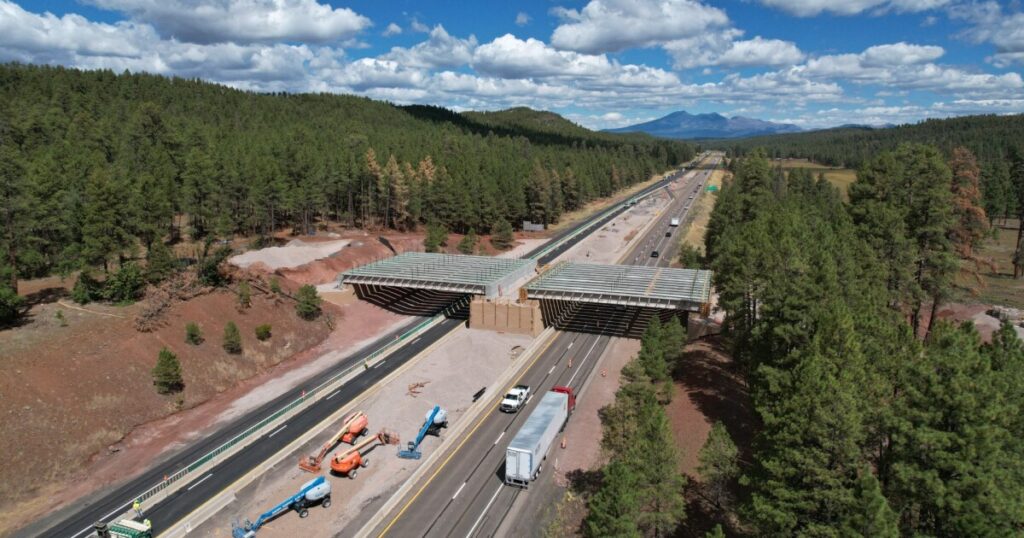
In a bid to reduce the dangerous encounters between vehicles and wildlife, a new bridge is under construction over Interstate 17 in Arizona. This engineering marvel is designed to facilitate safe passage for elk, deer, and other animals that frequently traverse this busy roadway.
Located 12 miles south of Flagstaff, the wildlife overpass is a collaborative effort by the Arizona Game and Fish Department, the Arizona Department of Transportation, and federal partners. The structure is a 100-foot-wide concrete bridge that spans the highway’s four lanes, featuring high parapet sides to guide the animals safely across.
The design of this bridge includes additional elements like fencing, escape ramps, and auxiliary structures, all intended to direct wildlife onto the bridge and away from oncoming traffic. The placement of the overpass was strategically chosen based on data from radio-collared elk, which tracked their migration patterns, feeding habits, and mating activities. Considerations also included the surrounding landscape and public land ownership.
Statistics highlight the necessity of this project, as over half of the vehicle collisions on this stretch of I-17 in the past four years have involved wildlife, particularly elk. The impact of a collision with a 700-pound elk can be severe, both for the animal and the vehicle occupants.
Arizona has been proactive in implementing wildlife corridors, with more than 20 such crossings already in existence, including overpasses, underpasses, and warning systems. These initiatives have been effective, achieving an average reduction of 90% in wildlife-related accidents.
The I-17 wildlife overpass is anticipated to become operational this fall. To evaluate its effectiveness, the Arizona Game and Fish Department plans to re-collar elk and utilize cameras for ongoing monitoring. This initiative holds the promise of ensuring safer journeys for both wildlife and drivers alike.
This Earth Note was written by Rose Houk and produced by KNAU and the Sustainable Communities Program at Northern Arizona University.
Learn more about the Sustainable Communities Program at Northern Arizona University.
—
Read More Arizona News