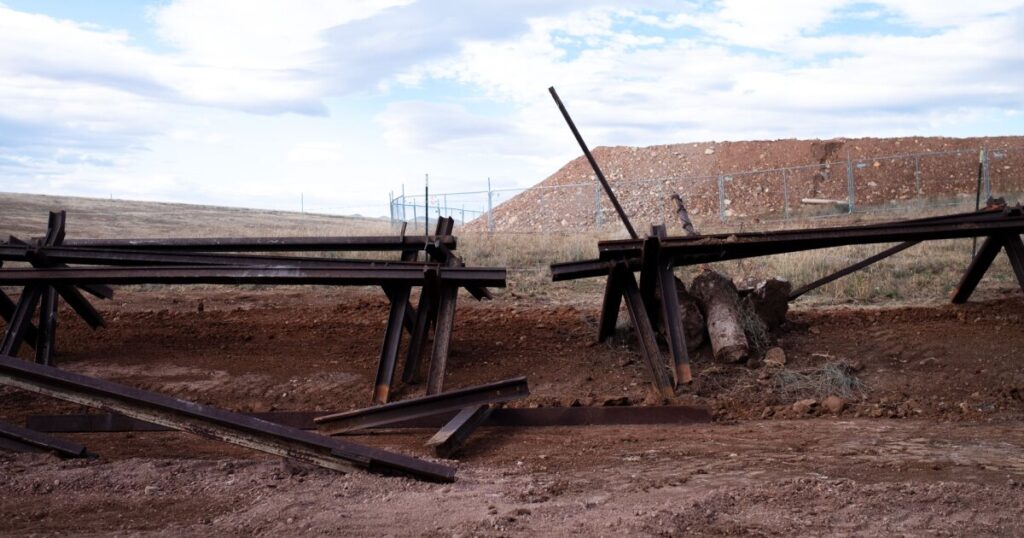
Arizona Court Approves Fast-Tracked Border Wall Construction Amid Environmental Concerns
The construction of a border wall in southern Arizona is set to proceed rapidly following a recent federal court decision. This development has sparked significant debate due to the project’s potential environmental impact.
In a recent ruling, a federal court in Arizona has granted the Trump administration the ability to bypass several environmental laws to expedite the building of a 30-foot steel bollard wall over a 27-mile stretch in the San Rafael Valley. This region, recognized as a biodiversity hotspot, is home to endangered species such as ocelots and jaguars that traverse between the U.S. and Mexico.
The Department of Homeland Security has been empowered to override the Endangered Species Act, the Clean Water Act, and other environmental protections, thanks to a law from the 1990s. This waiver authority has drawn criticism from environmental groups, who argue that it undermines constitutional checks and balances.
Russ McSpadden, the southwest conservation advocate for the Center for Biological Diversity, which challenged the waiver’s constitutionality, expressed concerns: “This decision leaves the unelected secretary of Homeland Security with sweeping and essentially unchecked power to waive dozens of bedrock laws in the name of border wall construction.”
On Friday, U.S. District Judge Angela Martinez sided with the government, affirming the legality of the waiver authority and closing the case. Despite the ongoing legal proceedings, construction has continued, with over five miles of the wall already erected in the San Rafael Valley. The use of dynamite to navigate the challenging terrain of the area has been reported.
McSpadden highlighted the broader implications as the Trump administration aims to extend the wall along the entire U.S.-Mexico border, with plans for double walls in certain areas. “Again and again I think we’re seeing, you know, dangerous authority concentrated in this agency,” he remarked. “Across the landscapes of Arizona, and all the way to Minneapolis, these consequences are incredible.”
The Department of Justice has not provided any comments regarding the court’s decision.
—
Read More Arizona News