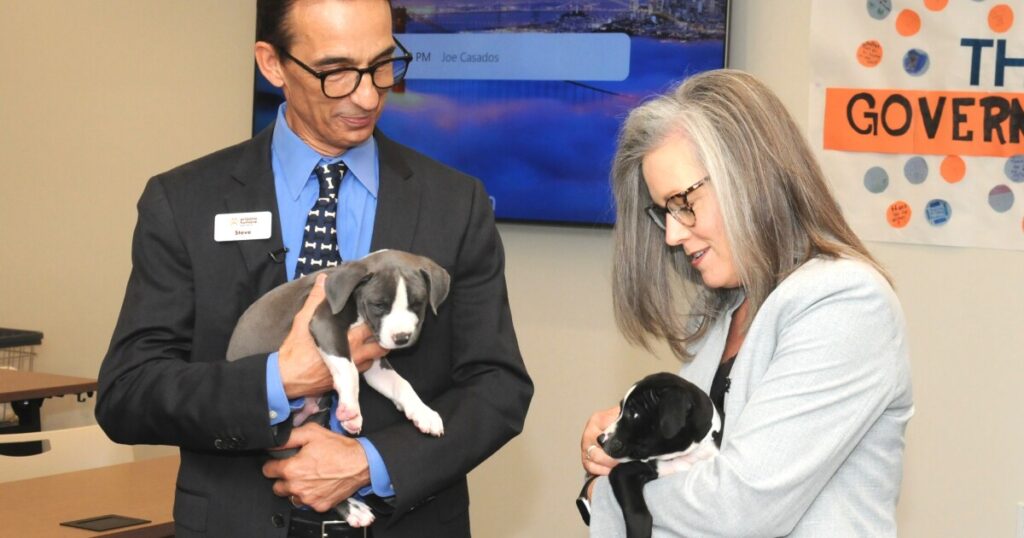
The Arizona Humane Society recently hosted a ceremonial event where Gov. Katie Hobbs marked the signing of a significant animal cruelty bill. This legislation, finalized at the end of June, has garnered support from various animal advocacy groups and law enforcement agencies.
Maricopa County Sheriff’s Office, notably active in advocating for stricter animal cruelty laws, endorsed the new legislation. David Evans, a Deputy from the Animal Crimes Unit, expressed a sense of relief, stating, “A lot of years nothing happened and it’s kind of disappointing. So I was kind of holding my breath until it actually got signed.”
The bill emerged as a response to a high-profile animal abuse case in Chandler last year, which involved the hoarding of numerous dogs. This incident, referred to as the Chandler 55 case, underscored the urgency for legislative reform. Rep. Matt Gress highlighted during a committee meeting, “The urgency of this legislation became very clear with what happened in Chandler, the Chandler 55 case. But because of vague statutes and legal loopholes law enforcement had limited options and leaving many of these dogs in insufferable conditions.”
Howard Fischer/Capitol Media Services
The bill does not increase penalties; rather, it refines and strengthens current definitions to close existing loopholes. Rep. Gress reiterated, “What this bill does not do — it does not increase penalties on animal cruelty. What this does, it closes loopholes by clarifying and strengthening definitions of cruelty and that’s the issue here.” The law is set to take effect on September 26.
Initially proposed by Sen. Shawna Bolick, the bill faced initial challenges in the House. After revisions, it successfully passed during the legislative session. The importance of the law is underscored by the fact that animal cruelty cases in Maricopa County surged by 20% last year, with similar trends noted statewide.
The newly expanded legislation now includes protections for birds, amphibians, and reptiles, alongside existing provisions for dogs and cats. It mandates that animals receive appropriate food, water, shelter, and medical care that meets species-specific standards. Rep. Lupe Diaz raised concerns about the potential for felony charges, stating, “That if there is any animal under your control, you could be subject to a felony and I really do question this bill for its standing in merit. I think that a felony is really stiff for this kind of penalty.”
Failure to comply with these requirements can result in penalties ranging from misdemeanors to class six felonies. Deputy Evans expressed optimism about future enhancements to animal cruelty laws, suggesting Arizona could consider measures similar to Phoenix’s ban on tethering dogs outdoors when temperatures exceed 100 degrees. “With Arizona and the heat to me it’s a no brainer, and I think that’s why Phoenix passed it,” Evans noted. “I have heard nothing but good things from Phoenix after they passed it.”

Howard Fischer/Capitol Media Services
—
Read More Arizona News