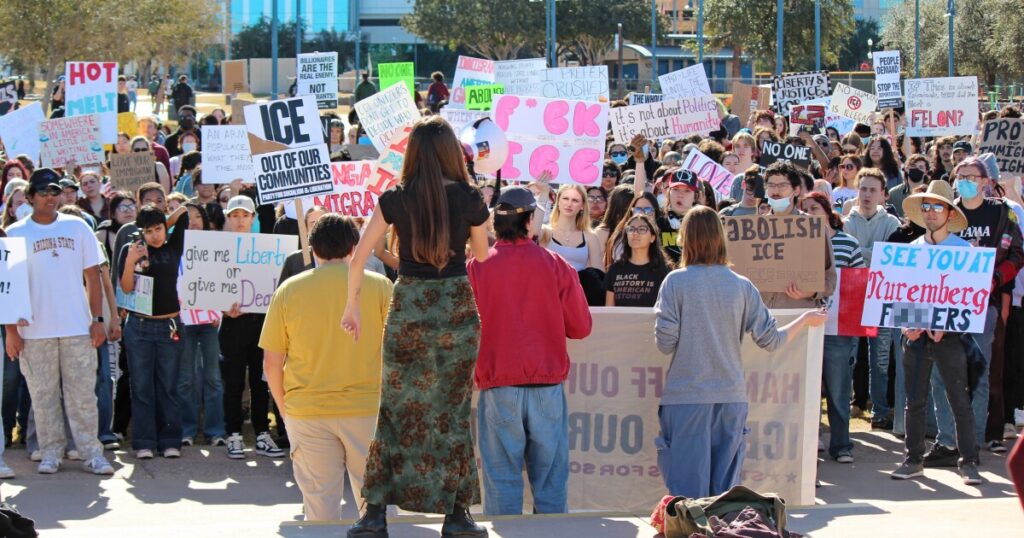
Arizona’s legislative body is set to deliberate on a controversial proposal that seeks to define new criminal offenses: civil terrorism and subversion. This initiative has sparked a robust debate among lawmakers regarding its potential repercussions, particularly on protesters who oppose Immigration and Customs Enforcement (ICE).
Howard Fischer from Capitol Media Services provided insights on the bill’s journey through the legislative process and its anticipated impact.
Inside the Legislative Debate
BRODIE: Good morning, Howie.
FISCHER: Good morning. But I’m out filling up gas cans because Lord knows what’s going to happen.
BRODIE: Tell me more about this bill that is up for a vote today. It seems to have undergone several amendments recently.
FISCHER: This proposal originated from the Manhattan Institute, known for its conservative stance. The goal is to address perceived loopholes related to activities aimed at undermining the government. However, the language used has raised concerns.
For instance, Rep. Alexander Kolodin (R-Scottsdale) questioned the bill’s broad definitions, wondering whether discussing potential issues like water shortages could be misconstrued as civil terrorism.
The bill, which has been modified from its original version, is slated for a vote today. However, opinions remain divided on whether it overreaches.
Potential Partisan Divide
BRODIE: Could this vote follow party lines?
FISCHER: It seems likely. Democrats express concerns about the broad terms potentially criminalizing legitimate protests. Questions arise about whether actions like blocking traffic could be interpreted as attempts to subvert societal norms.
Marijuana Smoke Regulations
BRODIE: Another hot topic is the proposal concerning marijuana smoke in neighborhoods, which has also seen revisions. What’s the latest on this?
FISCHER: Initially, the proposal criminalized odor from neighbors’ marijuana. The revised bill defines “excessive marijuana smoke” as detectable by a reasonable person for over 30 minutes and interfering with property enjoyment.
The criminal penalties have been removed, but concerns persist since marijuana is legal for medical and recreational use. The debate continues on balancing personal freedom and neighborhood comfort.
BRODIE: You mentioned the bill excludes cigarette and pipe smoke. Are there constitutional concerns about targeting marijuana specifically?
FISCHER: Legal experts question whether it’s constitutional to single out marijuana smoke. The issue is whether it is more offensive than other odors like tobacco smoke or lighter fluid. Courts may find it challenging to decide what constitutes an offensive odor.
—
Read More Arizona News