Controversial Bill on License Plate Readers Moves Forward in Arizona Legislature
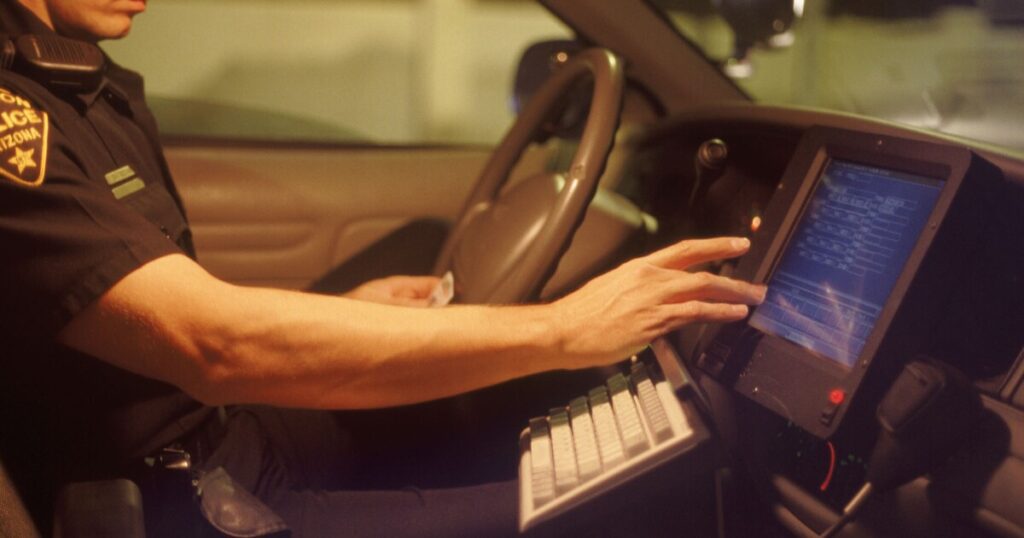
In a significant development, Arizona state senators have given preliminary approval to a bill aimed at regulating the use of automated license plate readers by police, marking a potential first step toward establishing legal guardrails for this surveillance technology.
Senate Bill 1111, introduced by Sen. Kevin Payne (R-Peoria), seeks to address the currently unregulated use of these cameras, focusing on when and how law enforcement can access the collected data. However, the bill has sparked debate among lawmakers, with some arguing it contains too many loopholes.
Sen. Jake Hoffman (R-Queen Creek) criticized the bill, suggesting its exceptions could be exploited, likening them to a “Mack truck.” He proposed an outright ban instead, which failed to gain traction among his Republican colleagues, although Senate Democrats shared his concerns about potential misuse.
Despite the preliminary approval, the bill’s future remains uncertain. Sen. David Farnsworth (R-Mesa) supported the initial vote to advance the bill but expressed reservations, stating he was aligning with GOP leadership procedurally. He noted his discomfort and the concerns of constituents, withholding commitment to backing the final version.
The bill’s defeat could leave Arizona without any legal framework governing the use of these cameras, which are currently utilized by state and local law enforcement and can record vehicle data 24/7, storing it for up to 30 days. Payne argues this would leave Arizonans unprotected, while Hoffman believes a better-crafted bill could be introduced if SB 1111 fails.
Debate Over Loopholes and Language
The bill has undergone multiple revisions to gain broader support. Earlier drafts offered minimal controls, such as data storage procedures and penalties for unlawful disclosure. Payne introduced amendments to ensure the cameras are used for “legitimate” law enforcement purposes and that data is stored securely.
Additional restrictions were added, requiring a warrant or subpoena for accessing data older than 48 hours. However, exceptions like tracking stolen vehicles and “exigent circumstances” remain contentious. Hoffman questioned whether these exceptions allow targeting only specific license plates or broader surveillance.
He cited the potential for abuse under exceptions for sex or human trafficking investigations, suggesting they could lead to constant surveillance, contradicting Fourth Amendment protections. Hoffman drew parallels to post-9/11 legislation like the Patriot Act, which was criticized for government overreach.
Senate President Warren Petersen (R-Gilbert) defended the bill’s balance between necessary data use and protecting citizens, emphasizing safeguards like requiring warrants and making improper disclosure a felony. “We want this data to be used to save lives,” Petersen stated, citing scenarios like child abductions and violent crime prevention.
Concerns Over Potential Police Overreach
Democratic senators unanimously opposed the bill, fearing it could lead to a “secret police” situation. Sen. Mitzi Epstein (D-Tempe) highlighted the lack of clear definitions for legitimate use, warning of potential misuse for activities like tracking firearm purchases or abortion-related cases.
These fears are fueled by reports of out-of-state law enforcement accessing nationwide camera networks for controversial purposes, such as tracking women suspected of self-administered abortions.
Petersen argued that without SB 1111, there would be no accountability or legal consequences for misuse. Yet, Hoffman maintained that poorly implemented government action undermines public trust. He remains committed to crafting legislation that better protects civil liberties if the current bill fails.
—
Read More Arizona News