
In a landmark decision, the Arizona Supreme Court has empowered residents with the ability to challenge and potentially overturn local government projects through the ballot box. This ruling emerged from a contentious debate in the city of Page, Arizona, where a plan to revamp a section of downtown met with significant opposition.
The Supreme Court’s decision underscores the citizens’ right to propose their own laws, even if local officials have already set plans in motion. This could pave the way for voters statewide to veto projects involving infrastructure changes, such as road expansions and redesigns.
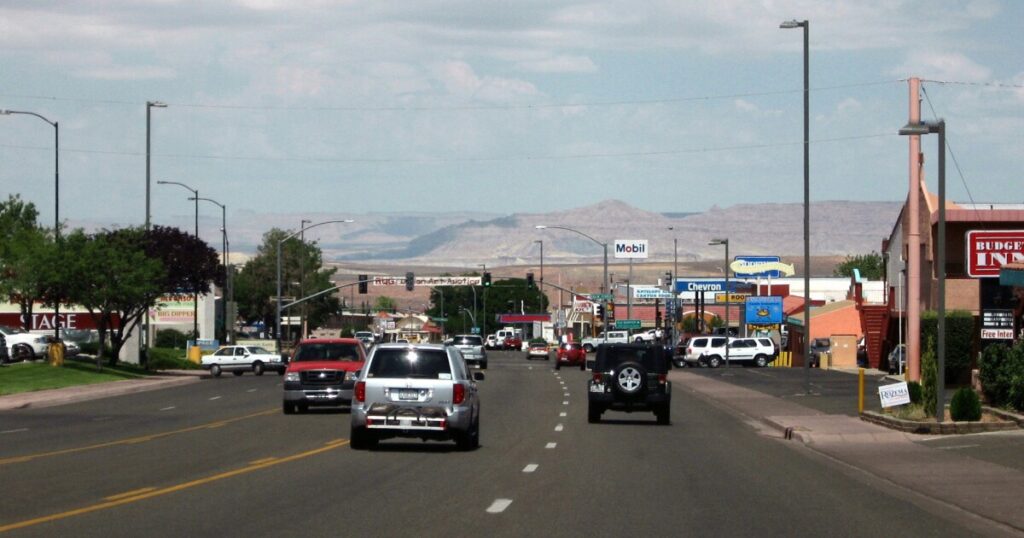
Page, a small city in northern Arizona, became the focal point of this legal battle when residents opposed a city council plan aimed at revitalizing a 1.4-mile stretch of downtown. The proposed Streetscape Project intended to reduce Lake Powell Boulevard from four lanes to two, introduce additional parking, and widen sidewalks to attract tourists and locals for shopping and events.
The city initially blocked a citizen-driven ballot measure to halt the project, labeling it as an administrative matter exempt from the initiative process outlined in the Arizona Constitution. This stance was upheld by a trial court and the Arizona Court of Appeals, with an opinion penned by Justice Maria Elena Cruz before her appointment to the high court.
However, the Arizona Supreme Court reversed these decisions, determining that the initiative was indeed legislative, granting residents the authority to propose it. Justice Clint Bolick, writing for the unanimous court, stated, “The foundational principle that informs this case is that the people’s power to make laws is co-equal to their elected representatives’ authority to create legislation.”
The ruling mandates that the initiative be placed before voters, though no election date has been set. This outcome has raised concerns among local government representatives, including Nancy Davidson, general counsel for the League of Arizona Cities and Towns. Davidson highlighted the potential for this decision to disrupt infrastructure planning across the state.
Page’s redevelopment plan was in part a response to the closure of the Navajo Generating Station and its associated coal mine, which resulted in the loss of over 500 jobs. Former mayor Bill Diak explained that the plan was developed over several years to pivot the local economy towards tourism, with financial backing from a $5 million federal grant and additional city funds.
The battle over the Streetscape Project has led to significant political shifts in Page, with opponents of the plan, such as Debra Roundtree, gaining seats on the city council. Roundtree, who has criticized the council for alleged deception, argued against the project’s cost and its potential to cause traffic congestion.
Despite the court victory, the political climate in Page remains tense. Diak, a long-term resident, attributed the turmoil to unfounded allegations and cautioned that such conflicts could deter civic participation. “It’s hard enough to get someone that wants to step up and help their community by running for public office,” he remarked, expressing concern about the implications of the public discourse.
Nevertheless, the Page City Council recently voted to terminate the Streetscape Project, although its future could still be decided by a voter initiative.
—
Read More Arizona News


