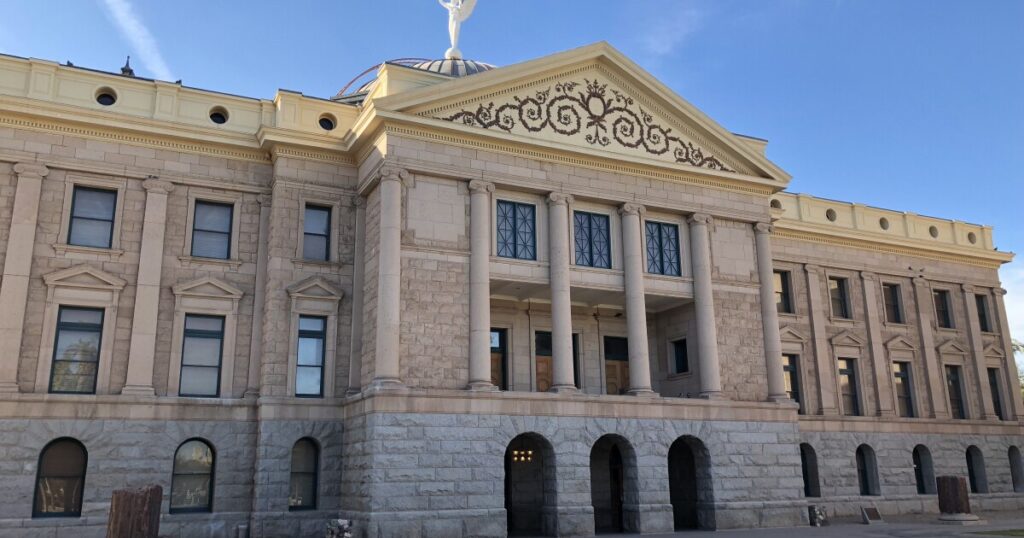
Arizona’s political landscape is heating up as lawmakers clash over how to align state tax policies with federal tax cuts. Governor Katie Hobbs is expected to veto a Republican-backed plan, despite significant financial implications for the state.
Republicans in Arizona have championed a $440 million proposal to largely conform to federal tax cuts, while Governor Hobbs has put forward a $250 million alternative that does not fully align with federal changes. The Arizona Department of Revenue, under Governor Hobbs’ oversight, issued guidance that does not match either proposal, leaving taxpayers in a potential bind.
Senate President Warren Petersen has urged Governor Hobbs to approve the GOP plan, emphasizing the need for consistency and expressing surprise at the discord between Hobbs and the Department of Revenue. “We have to move this now to provide certainty, it’s the right thing to do,” Petersen stated.
In the event of a veto, Rep. Justin Olson has suggested that lawmakers should adopt the Department of Revenue’s existing guidelines. “If she vetoes this bill, then we should send her up something that is exactly what her department of revenue has already told taxpayers to file,” Olson remarked.
Critics have accused Governor Hobbs of not convening a special legislative session to address the tax issue earlier, unlike other states. The current impasse leaves taxpayers in a dilemma: file now and risk needing to amend returns, or wait for a resolution that remains uncertain.
It’s still unclear how Democratic Gov. Katie Hobbs and Republican lawmakers plan to pay for their dueling plans to cut taxes by hundreds of millions of dollars.
Senator Mitzi Epstein argues against immediate tax cuts, citing the need to first determine funding for essential state services, including education and infrastructure projects. She challenges the idea that tax reductions should precede budget planning.
Despite these debates, differences persist over who should benefit from tax cuts. For instance, Hobbs’ proposal includes a deduction aimed at seniors, but Republicans have redirected this to cover retirement income, potentially excluding those reliant solely on social security.
The GOP also proposes child care deductions, which Senate Minority Leader Priya Sundareshan critiques as insufficient for those unable to afford high child care costs initially. Sen. Eva Diaz suggests redirecting funds to reduce the state assistance waitlist for child care.
Business tax breaks are another contentious issue. While some argue they strengthen Arizona’s economy, others question the state’s ability to handle these financial adjustments. Sen. John Kavanagh defends such tax breaks, linking them to overall economic health.
The debate over tax policy in Arizona is not only about numbers but also about values and priorities, with both parties holding firm to their visions for the state’s financial future.
—
Read More Arizona News