California Condors Soar on Rising Currents, New Study Finds
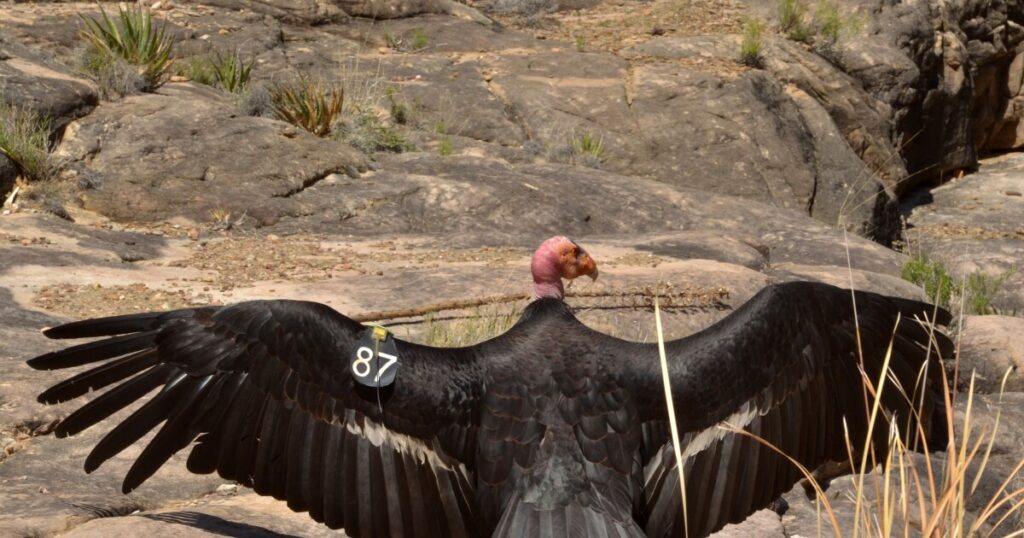
The majestic California condor, with its impressive wingspan and hefty build, relies heavily on the invisible highways of the sky. Recent research has unveiled the critical role that rising air currents play in the daily life of these endangered birds.
Aeroecology, the exploration of how life forms navigate the skies, has traditionally examined the effects of weather on migration. A groundbreaking study has shifted this focus, using a comprehensive computer model spanning California and Oregon, divided into an astonishing 94 million pixels. Researchers meticulously cross-referenced GPS data of condors with atmospheric factors such as thermal updrafts and terrain-induced air movements.
Challenging previous assumptions, the study discovered that condors prioritize rising air currents over food resources. In the warm summer months, thermals become crucial, while terrain-related updrafts offer constant assistance throughout the year. This reliance is especially pronounced during colder periods when thermals are less accessible.
The findings reveal that condors utilize a mere fraction of the terrain available—only 2 to 5% in the winter and 6 to 11% during warmer seasons. This surprising preference underscores the importance of air currents over food availability in shaping condor behavior, affecting their perching choices and their flight capabilities.
With wings spanning over nine feet and weighing up to 25 pounds, condors can endure long periods without food. However, their movement is significantly dependent on these upward air drafts, which facilitate their soaring journeys.
While the research focused on California and Oregon, its implications likely extend to Arizona, offering valuable guidance for future conservation strategies. Understanding these patterns is vital for the preservation of these magnificent birds, ensuring that efforts are directed where they are most needed.
This Earth Note was written by Diane Hope and produced by KNAU and the Sustainable Communities Program at Northern Arizona University. I’m Melissa Sevigny.
—
Read More Arizona News