Unraveling the Mysteries of Bird Feathers
Bird feathers can be mysterious, intriguing, and sometimes even evidence of illegal activities. But how does one identify which bird a feather came from? This question was a frequent challenge for special agents at the U.S. Fish and Wildlife Service, prompting an ornithologist in their Forensic Laboratory to take action.
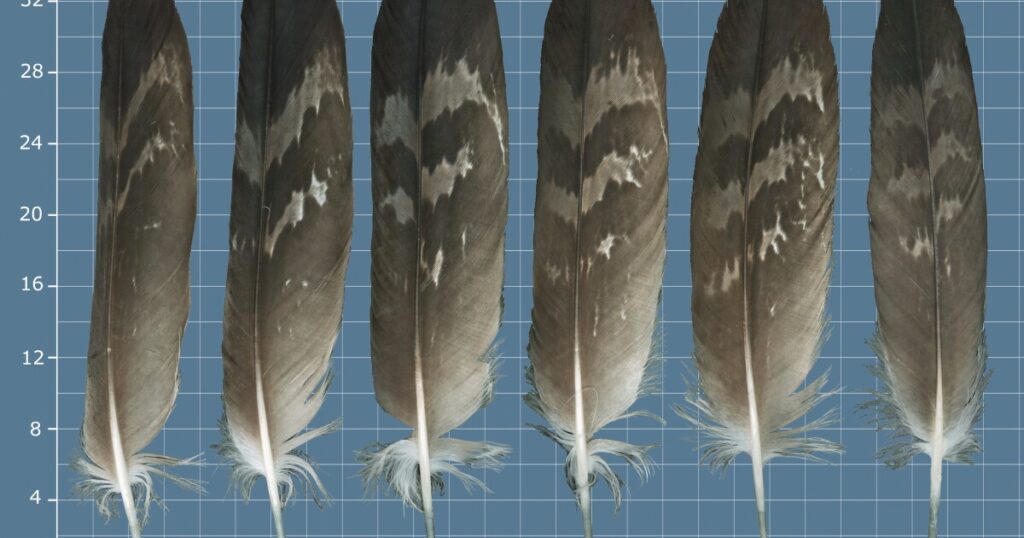
The ornithologist began by meticulously scanning feathers from Golden Eagles and Bald Eagles at different life stages. These images were then uploaded to a website, enabling agents to quickly identify illegal eagle feathers. This resource was later expanded to include feathers from various bird species, resulting in the creation of The Feather Atlas.
The Feather Atlas: A Comprehensive Database
The Feather Atlas serves as an essential image database focusing on the flight feathers of North American birds. Forensic ornithologists rely on this tool when tasked with identifying bird species at crime scenes, air crash sites, or in potential cases of wildlife smuggling.
Beyond its use in forensic science, The Feather Atlas is also a valuable resource for educators, artists, and bird enthusiasts. Users can search for feathers by attributes such as color, pattern, and size, or they can explore specific bird groups like owls or ducks.
Legal Considerations and Responsible Observations
It’s crucial to be aware that all native North American bird parts, including feathers, are protected under federal law. This regulation is intended to prevent illegal trade and harm to birds. Collecting feathers is prohibited unless you possess an Indigenous use exemption or a hunting permit. Even feathers found on the side of the road should be left untouched and only admired from a distance.
Therefore, when encountering feathers in the wild, it’s best to appreciate and photograph them, ensuring they remain undisturbed in their natural setting.
This report is brought to you by Diane Hope, in collaboration with KNAU and the Sustainable Communities Program at Northern Arizona University.
—
Read More Arizona News