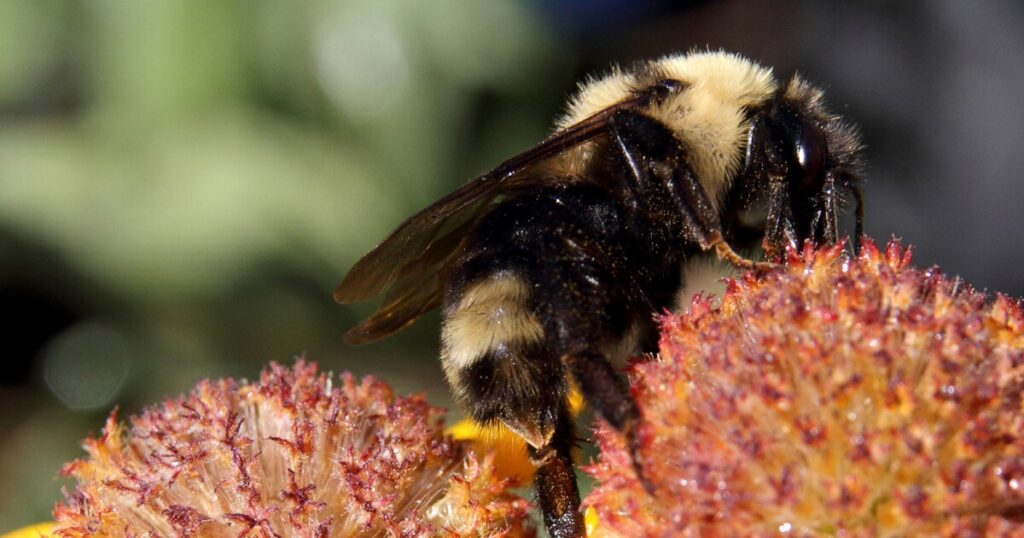
The Intriguing Survival Strategy of Suckley’s Cuckoo Bumble Bee
In the world of bees, Suckley’s cuckoo bumble bee stands out for its unique approach to survival. Much like the cuckoo bird, this bee species relies on the nests of other bees to rear its young, abandoning the traditional colony structure.
While typical bumblebees thrive in colonies composed of workers and a queen, cuckoo bumble bees follow a different path. After mating, the males perish, leaving the females to hibernate through winter in natural shelters like logs or underground burrows. Emerging later in spring than their bee counterparts, these females invade a host hive, eliminate the resident queen, and assume control over the hive’s workers. Through pheromones, they manipulate the worker bees to nurture the cuckoo eggs and larvae.
Unlike other bees, cuckoo bumble bees lack pollen baskets on their hind legs since they do not feed their own offspring. However, they still engage in “buzz pollination,” a process where they shake flowers to release pollen, which benefits both the bees and plant life.
Once widespread across western Canada and the western United States, sightings of this bee in the U.S. have not been recorded since 2016. The Xerces Society for Invertebrate Conservation cites pesticides, habitat destruction, climate change, and diseases as contributing factors to the decline of native bee populations.
Despite this decline, it is speculated that Suckley’s cuckoo bumble bees may still persist in secluded areas such as the Rocky Mountains or Sierra Nevada. Currently listed on the International Union for Conservation of Nature’s “red list” for endangered species, they are also under consideration for inclusion under the Endangered Species Act.
This Earth Note was written by Melissa Sevigny and produced by KNAU and the Sustainable Communities Program at Northern Arizona University.
“`
—
Read More Arizona News