Have you ever noticed an eerie white glow rising from the eastern horizon before dawn? This phenomenon, known as zodiacal light, is visible when comet and asteroid collisions leave behind space dust that reflects sunlight in the pre-dawn sky.
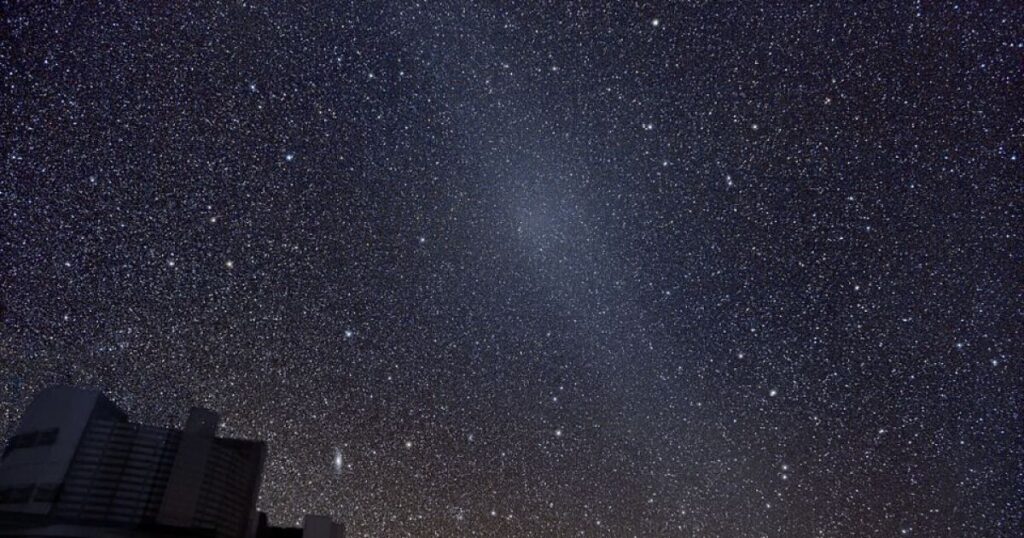
However, for those seeking a more elusive celestial event, the gegenschein, or “counter-shine” in German, presents a unique challenge. This faint glow, also a result of space dust, occurs when sunlight hits the dust particles directly in Earth’s shadow, on the opposite side of the Sun.
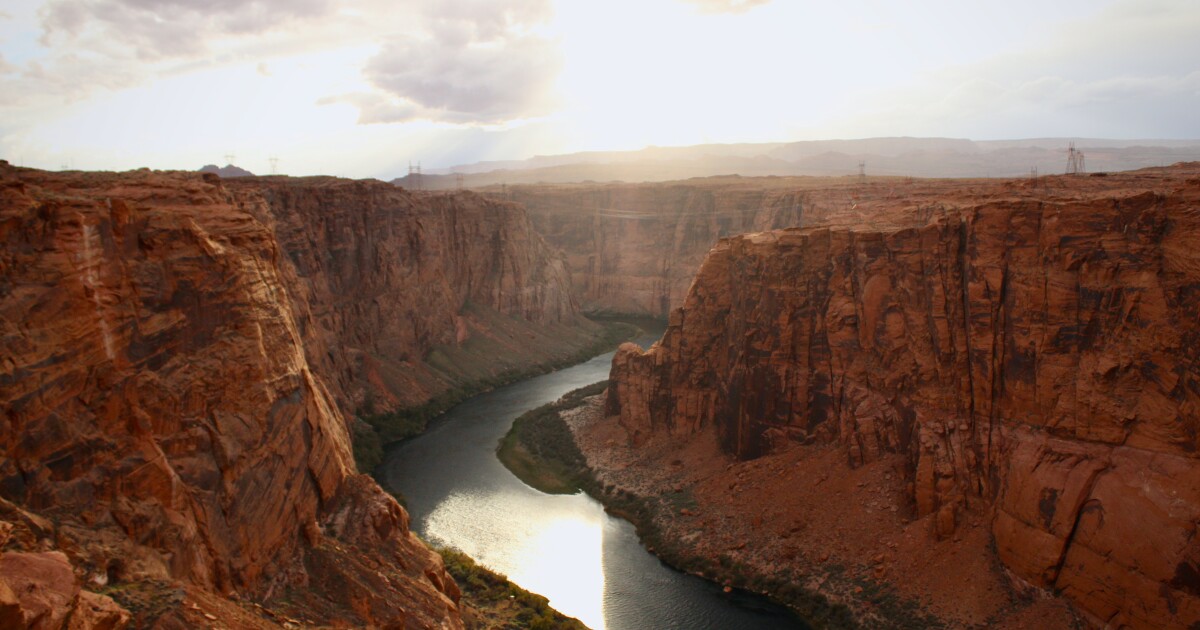
The Colorado Plateau’s exceptionally dark skies provide a prime location for witnessing gegenschein, particularly during October, November, February, and March. During these months, this subtle glow is positioned higher in the sky, away from the bright band of the Milky Way.
To spot gegenschein, venture out on a clear, moonless night around midnight, far from city lights. Allow your eyes to adjust to the darkness, then look nearly overhead for a soft, oval-shaped glow about the size of a fist at arm’s length.
If, after an hour, the glow has drifted westward along with the stars, you’ve successfully spotted the gegenschein. At this point, the Sun is directly beneath you, and you are looking up at a vast cloud of interplanetary dust, much larger than Earth itself.
This Earth Note originally aired on December 21, 2016. It was written by Diane Hope and produced by KNAU and the Sustainable Communities Program at Northern Arizona University.
—
Read More Arizona News