
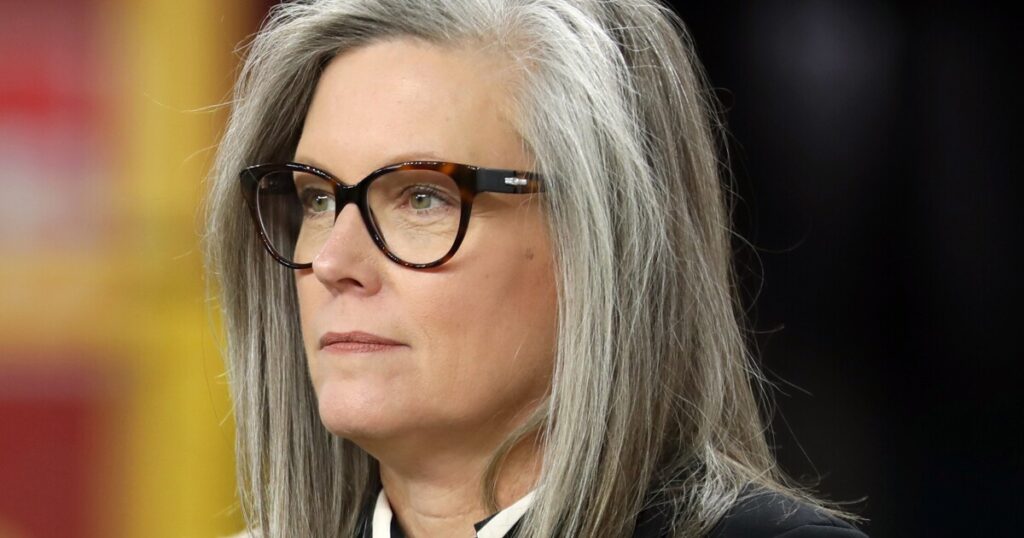
Amid ongoing debates over budget allocations, Democratic Governor Katie Hobbs has unveiled a $17.7 billion state budget proposal concentrating on affordability initiatives. This plan, however, hinges on uncertain federal reimbursements and unresolved negotiations with Republicans.
Central to this year’s budget talks are tax cuts, following the endorsement of H.R.1, referred to as President Donald Trump’s “big beautiful bill.” Governor Hobbs is advocating a “middle-class tax cut package,” costing approximately $250 million, though it doesn’t align entirely with H.R.1 or the Republicans’ plan, which is projected to cost $441 million this fiscal year. For more details on the Republican plan, visit here.
Hobbs aims to use leftover federal funds from the American Rescue Plan Act, initially allocated for COVID-19 relief, to establish a Housing Acceleration Fund. This initiative, alongside private investments, could leverage up to $300 million for workforce housing. Additionally, a proposed $3.50 tax on short-term rentals would fund another housing program, enhancing utility bill assistance eligibility for more Arizonans.
The budget also proposes to expand weatherization projects, aiming to improve housing efficiency and reduce utility costs. Funding to support affordable child care, kids’ meals, and vehicle repairs for eligible residents will continue, including grants for school meals and the SUN Bucks program, assisting families during summer months. The Child Care Assistance Program is set to receive $44.8 million, while vehicle repair support for emissions failures remains intact.
Big, Beautiful Budget Cuts
H.R.1 introduced substantial cuts to Medicaid and SNAP food assistance, claiming to save billions but also increasing state expenses. Hobbs’ budget allocates over $60 million to hire state employees needed for new SNAP and Medicaid requirements, and to address penalties on SNAP programs with high error rates potentially costing the state $190 million. Additionally, the budget proposes tens of millions to mitigate these impacts, which could result in 190,000 Arizonans losing medical coverage and hospitals losing federal funding. This includes over $4 million for hospitals and $3 million for Medicaid navigation assistance.
How to Pay for It
To fund her priorities, Hobbs suggests increasing fees on sports betting operators like DraftKings and FanDuel from 10% to 45% for companies with at least $75 million in monthly revenue. Currently, Arizona ranks 20th among 30 states with legal mobile sports gambling. Raising the fee would place Arizona among states with the highest sports gambling fees. For more on Republican reactions to funding proposals, see here.
Additional funding sources include a $3.50 levy on short-term rentals and a proposed water usage fee for data centers to fund water projects, both facing Republican resistance. Hobbs also aims to cap school voucher eligibility at families earning $250,000 annually, potentially saving $89 million, though similar efforts have been blocked by Republicans in the past.
Arizona could see nearly $760 million in federal reimbursements for border security, part of a $13.5 billion fund. However, competition with other states like Texas, which seeks $11 billion, makes this uncertain. Both Hobbs and Republican leaders are advocating for full reimbursement after the state received less than requested for rural hospital aid.
Trimming the Fat
The budget anticipates saving $100 million by 2029 by enhancing state government efficiency without laying off employees. This involves training in artificial intelligence, optimizing procurement processes, and selling or leasing state-owned properties for solar projects, pending local zoning approvals.
Other Priorities
The budget also considers extending Proposition 123, using the state land trust for education funding. While Democrats propose broader use, Republicans focus on teacher raises and codifying private school vouchers. Unresolved, lawmakers spent $300 million last year compensating for Prop. 123 losses.
Proposed funding includes $37 million in state funds and $14 million from ARPA for the Department of Child Safety, aiming to enhance group home and foster care services, improving outcomes for foster children.
—
Read More Arizona News


