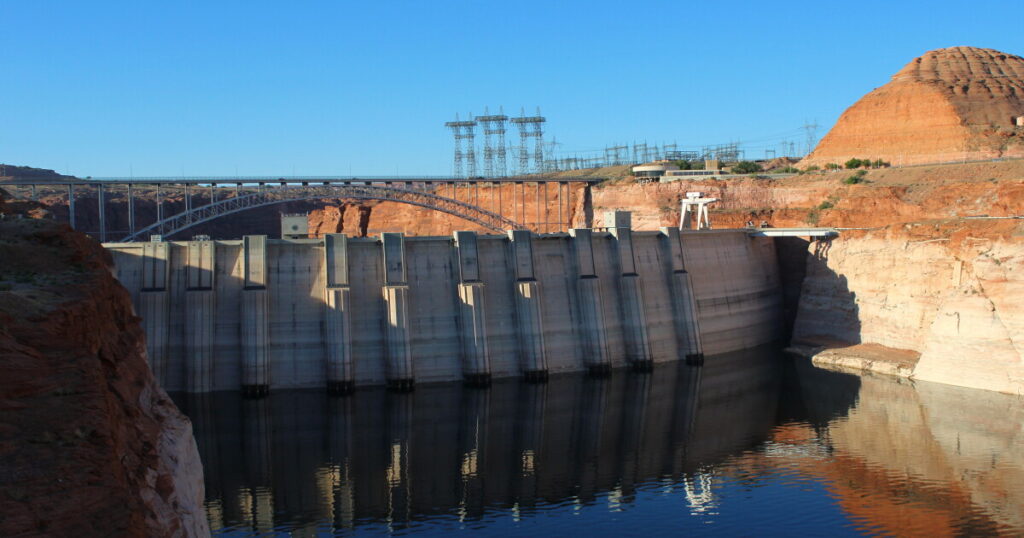
In recent weeks, the Southwest has experienced a series of powerful storms that have drenched areas across Arizona and the Four Corners with heavy rainfall. Cities such as Flagstaff, Winslow, and Durango, Colorado, witnessed the impacts firsthand as surging waters flooded rivers, inundated streets, and entered homes.
These weather conditions persisted throughout October, leading to a soggy Halloween in Phoenix and complicating voter access in some parts of Navajo Nation due to damaged roads. Despite the deluge, the Southwest’s enduring water crisis remains largely unresolved.
“Don’t want to dim the news too much,” expressed Nolie Templeton of the Central Arizona Project, which monitors Colorado River reservoirs. While the rainfall was welcome, Templeton noted, it contributed only marginally to alleviating a 27-year-long drought.
The Central Arizona Project, responsible for transporting water from the Colorado River to areas like Phoenix and Tucson, closely tracks upstream conditions. Despite the heavy rains, the effect on these conditions was minimal.
For instance, Lake Powell, the country’s second-largest reservoir, saw a rise of 14 feet due to the storms, yet it remains significantly lower than levels recorded the previous year. From October 20 onwards, its water volume increased from roughly 23% to 26% full.
Rainfall during October led to an inflow of 232,000 acre-feet into Lake Powell, more than three times the average for the month over the past five years. Nonetheless, the reservoir’s primary water source remains Rocky Mountain snowmelt, which significantly outweighs rain contributions.
Despite this influx, Lake Powell and the Colorado River system are severely stressed due to prolonged drought and climatic changes, compounded by states’ inability to reach a consensus on reducing demand.
According to Templeton, it would require five consecutive winters of above-average snowfall in the Rockies to fill Lake Powell halfway, a scenario that seems improbable given the trend of warmer, drier winters.

These recent weather events have, however, provided some advantages. The rains helped recharge soil moisture in key mountain areas, potentially allowing more snowmelt to reach streams and reservoirs come spring. Additionally, smaller reservoirs like Navajo Reservoir in New Mexico saw significant increases in water levels, reaching about 80% full by early November.
Though minor compared to Lake Powell, the Salt and Verde Rivers’ reservoirs, crucial to the Phoenix area, benefited from the rain, now holding 69% capacity compared to 48% at the start of October. The Salt River Project released excess water from Bartlett Lake, contributing to groundwater recharge beneath the metro area.

Templeton and Kathryn Sorensen from Arizona State University acknowledged the temporary relief these rains provide but emphasized the need for long-term planning to address the water management challenges facing the region. Despite the rainfall, planned cutbacks to Arizona’s Colorado River water supply remain imminent, underscoring the necessity for sustainable solutions.
—
Read More Arizona News