Soundscapes Reveal Secrets of Southwestern Forests
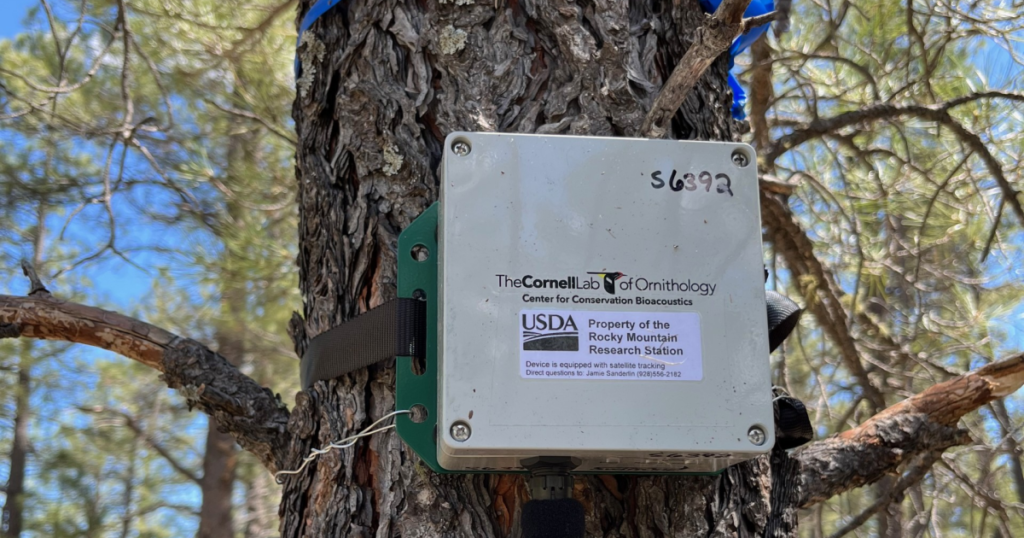
In the quiet expanses of the Southwest’s pinyon-juniper forests, a new method of ecological monitoring is quietly unfolding. Hidden recording devices are capturing the natural symphony of the forest, including the distinct whistles of the pinyon jay, as part of an innovative approach to track environmental changes through sound.
Researchers have embarked on a pilot study in the Gila, Kaibab, and Cibola National Forests, utilizing an approach that blends machine learning with expert analysis. Throughout 2022, these recording units amassed over 50,000 hours of audio data, capturing the subtle and diverse sounds of the forest environment.
The collected audio is processed through BirdNET, an advanced AI-driven platform capable of identifying over 6,000 bird species using deep learning algorithms. Widely adopted for bird monitoring across the country, BirdNET’s role in this project is crucial to analyzing the vast amount of acoustic data.
Following the automated identification process, experts meticulously verify the findings. The current methodology has proven effective in recognizing at least 52 different bird species. The study has highlighted six “priority” species, notably the pinyon jays and Mexican spotted owls, with a high degree of accuracy. Intriguingly, the recordings also captured the solitary calls of the Mexican gray wolf amidst the nocturnal soundscape.
This acoustic monitoring approach offers a more efficient and cost-effective means for land managers to monitor avian populations compared to traditional survey methods. It underscores the potential of auditory analysis to deepen our understanding of ecological shifts and the evolving dynamics of these landscapes.
This Earth Note was written by Danika Thiele and produced by KNAU and the Sustainable Communities Program at Northern Arizona University.
—
Read More Arizona News