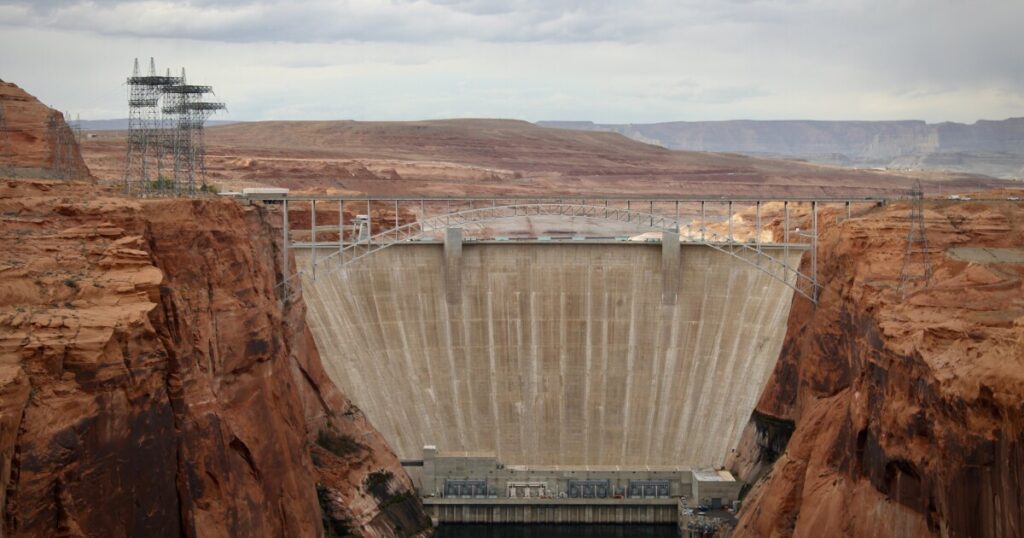
As drought conditions intensify across the Colorado River Basin, Lake Powell is on track to dip to unprecedented levels by year-end, according to federal water officials. In their latest 24-month projection, the U.S. Bureau of Reclamation foresees the lake potentially descending to 3,490 feet by December. This marks the “minimum power pool” threshold, the lowest elevation at which Glen Canyon Dam can still generate electricity.
Should the dry spell continue, projections indicate that by March 2027, the lake might plummet further to 3,476 feet, representing a historic low. Such a drop could jeopardize the dam’s capacity to release water, posing significant challenges for water management in the region.
Acting Commissioner Scott Cameron emphasized the importance of cooperation, stating, “The basin’s poor hydrologic outlook highlights the necessity for collaboration as the Basin States, in collaboration with Reclamation, work on developing the next set of operating guidelines for the Colorado River system.” He added that employing available resources and collaborating with partners will be crucial to reservoir management and infrastructure protection.
Lake Powell faces the risk of reaching “dead pool” status at 3,370 feet, a level where water would no longer flow through the dam’s regular channels. Since December 1, 2025, water managers have been temporarily holding more water in the lake, with plans to implement further measures if drought conditions persist.
Secretary of the Interior Doug Burgum announced plans for federal intervention in managing the Colorado River’s future, as seven western states missed the deadline for a new water-sharing pact beyond this year. “Negotiation efforts have been productive; we have listened to every state’s perspective and have narrowed the discussion by identifying key elements and issues necessary for an agreement. We believe that a fair compromise with shared responsibility remains within reach,” Burgum said. He acknowledged the collaborative efforts of the seven Basin States’ governors and expressed commitment to reducing litigation risks through shared solutions.
The Bureau of Reclamation stressed that new operating guidelines are imperative, with considerable water-use reductions needed in the increasingly arid basin. Recent months saw a 1.5 million acre-feet decrease in the forecast for Colorado River inflow, equating to a 50-foot drop in Lake Powell’s elevation. Currently, the inflow is just 52% of the average for the water year.
Existing regulations governing river use will expire at the year’s end. Proposed solutions range from taking no action to imposing water cuts on lower-basin states like Arizona. Some plans propose incentives for states and water users to voluntarily conserve the river’s resources.
—
Read More Arizona News